
Portugal Won 1-0 but the 'How to Break a Low Block' Question Remains Unanswered: 23 Shots, 2 Big Chances and a Goal off a Defender's Leg
**Core answer**: Bồ Đào Nha thắng Wales 1-0 tại Nations League nhờ bàn thắng của Joao Felix sau pha bóng bật chân Ben Davies, dù tung ra 23 cú sút nhưng chỉ tạo được 2 cơ hội lớn. Bàn thắng của Cristiano Ronaldo bị VAR từ chối vì việt vị. Roberto Martinez rút Ronaldo ở phút 67, đưa Goncalo Ramos vào sân. **Key facts**: - Bồ Đào Nha: 23 cú sút, 2 cơ hội lớn, 1 bàn thắng đến từ pha đổi hướng. - Wales: 1 cú sút trúng đích từ 5 lần, 15 pha phá bóng, 52 lần thu hồi bóng. - Cristiano Ronaldo bị VAR từ chối bàn thắng vì lỗi việt vị, bỏ lỡ một cơ hội cự ly gần. - Roberto Martinez thay Ronaldo bằng Goncalo Ramos ở phút 67. - Na Uy vừa thắng Đan Mạch 3-2 với Erling Haaland dẫn dắt, gặp Bồ Đào Nha vào Chủ nhật. **Source attribution**: Goal.com match report, The Athletic (supporting analysis) | Cross-checked: VuaBong.vn (group composition and career-goal figures flagged as data to be verified against official UEFA records). **Related Q&A**: - **Hỏi: Vì sao Bồ Đào Nha thắng mà vẫn bị đánh giá có vấn đề chiến thuật?** Đáp: Vì hiệu suất chuyển hóa cơ hội thấp — 23 cú sút chỉ tạo 2 cơ hội lớn, cho thấy khả năng xuyên phá khối phòng ngự lùi sâu còn hạn chế. - **Hỏi: Việc Martinez rút Ronaldo ở phút 67 có ý nghĩa gì?** Đáp: Đây là tín hiệu huấn luyện viên ưu tiên quản lý trận đấu và kỷ luật tập thể hơn vị thế ngôi sao, đồng thời phản ánh tiến trình chuyển giao thế hệ ở vị trí trung phong. - **Hỏi: Trận gặp Na Uy quan trọng thế nào với Bồ Đào Nha?** Đáp: Đây là trận bản lề của bảng đấu, kiểm tra khả năng tạo cơ hội chất lượng trước hàng thủ tổ chức tốt và đối đầu trực tiếp với Erling Haaland đang sung mãn.
I watched this match with my notebook open beside me, and by the 90th minute I still didn't know whether to applaud or to tear out the whole page. Portugal beat Wales 1-0, the goal credited to Joao Felix after a deflection off Ben Davies. The number that kept me sitting there was this: 23 shots, two big chances, and exactly one goal — a goal that didn't come from attacking design, but from a defender's leg.
On the scoreboard, that's a complete start. In the analysis room, it's a yellow warning light. Because I've watched enough football to know one thing: a side that takes 23 shots without creating three big chances isn't attacking well — it's attacking a lot. Attacking a lot against a defence that knows exactly what it's doing is a way of lulling yourself to sleep, and those naps usually end with an unexpected punch in the face at minute 90.
I once got one thing right and everything else wrong — this piece is about the part I got right. The part I got right here isn't the result, it's how the result was produced.
Context: the real match isn't this one
This was the opening fixture of a UEFA Nations League campaign, League A, in a group described as containing Portugal, Wales, Norway and Denmark. Portugal entered as the clear group favourite. Wales entered as a rebuilding, under-strength side, and according to The Athletic, rated considerably lower in resources.
I have to say this straight, because I don't want to be called someone who distorts data: parts of the group structure and a few individual numbers in the source I read show signs of divergence from public records I checked. I flag them as data to be verified and won't use them as the basis for any tactical conclusion below. What I can analyse — how Portugal attacked, how Wales defended, how Roberto Martinez rotated — stands independently of those questionable figures. This isn't evasion; it's discipline. In 2026 they called me crazy. This year they call me a researcher. The only difference between those two moments is that I learned to separate facts from argument.
In the coach's seat, Martinez has a squad anyone would envy: Bruno Fernandes as the metronome, Nuno Mendes as the left-side drill, Joao Felix as the spark, and Cristiano Ronaldo as the central focal point. On the bench there's Goncalo Ramos — a striker good enough to start for most European national teams.
Wales arrived with a clear plan: sit deep, hold structure, concede possession, and wait. Not because they enjoy it, but because it's the only way an under-resourced team survives against a side that overwhelms on quality. That isn't tactical cowardice; it's arithmetic.
And behind this match lurks a ghost named Norway. A Norway that just beat Denmark 3-2, led by Erling Haaland. On Sunday, Portugal face Norway. That's the real match. The Wales game was just a written exam — and Portugal handed in a paper with a few grammatical errors while still passing.
The core: football is about chance quality, not shot volume
Look at the structure of the game. Portugal controlled possession, pushed Wales deep, and generated an enormous volume of chances in raw numbers. But when you unpack it, the picture changes colour entirely. Twenty-three shots traded for two big chances. That's a ratio any data analyst would frown at, because it tells you most shots came from outside the box, from narrow angles, or from situations where defenders had already closed the door. That's the classic signature of a team attacking with numbers but stuck when it comes to creating quality.
I've seen this pattern hundreds of times. The stronger side circulates the ball from flank to flank, full-backs push high, central midfielders receive on the edge of the box, and then — blank. No penetrating pass into the danger zone. No quick one-touch combination fast enough to tear the defensive block apart. Only crosses from wide that opposing defenders were mentally prepared for before the ball was even struck.
The only scoring path for Portugal was exactly what I'd predicted structurally: a deflected shot. This isn't creativity. This isn't the fruit of a drill rehearsed on the training ground. This is luck legitimised by a strike. And if you think I'm denying Portugal credit, you're misreading me. I'm denying that this match proves Portugal solved the problem every big team must solve: how to break a deep block once your attacking enthusiasm has run dry.
Portugal's line-breaking tools are too few and too predictable
This is the point that kept me awake. Portugal have two main line-breaking tools, and both sit on the left flank. First, Nuno Mendes's ball-carrying — the full-back pushing high, dribbling past Wales's first line, creating the space the midfielders couldn't. Second, Bruno Fernandes's disguised through-balls, the kind he delivered around the 60th minute, selling the defence a dummy before slipping the ball into the gap between centre-back and full-back.
Both tools are good. But there are only two. And when a team has only two routes to break a defensive block, opponents only need to close those two routes. Low diversification of attacking routes is Portugal's biggest structural weakness in this match, and Norway will exploit it.
Look again at how Wales defended. Fifteen clearances, fifty-two ball recoveries. Those numbers don't speak to luck — they speak to a defensive plan executed with iron discipline. Wales didn't try to win the ball in midfield; they dropped, formed two banks of four, and forced Portugal wide. Every time the ball went wide, the defensive block gained two seconds to shift. And two seconds, multiplied forty times over, is an entire match.
What's notable is that Wales managed only one shot on target from five attempts. This team didn't come to score — they came not to concede, and they very nearly succeeded. If the ball hadn't clipped Ben Davies's leg at that exact moment, we'd be discussing a 0-0 draw and a media crisis in Lisbon.
Ronaldo: a focal No.9 in a match with no space for a focal No.9
I have to be careful here, because this is territory where anyone who steps in gets shouted down. But I'm 58, I'm past the age of fearing shouting.
Ronaldo's problem in this match wasn't age in some vague sense. The problem was a role mismatch. Ronaldo is a striker who specialises in hunting space behind the defence and pouncing inside the box. That's a skill he perfected to the level of art over twenty years. But when opponents sit so deep that centre-backs stand on their own goal line, the space behind doesn't exist. And when there's no space behind, a striker like Ronaldo is forced to receive under tight marking, turn in confined spaces, or wait for a cross defenders read before it's struck.

He missed a close-range chance before the disallowed goal. That miss, to me, is a more telling signal than the disallowed goal itself. Because a disallowed goal is a matter of referee and technology — it says nothing about form. The miss says a great deal. It says the finishing reflex — the last weapon remaining to a striker in decline — is no longer as sharp as it was.
And then at minute 67, Martinez pulled Ronaldo off, sending Goncalo Ramos on. This is the single most managerially significant act of the entire match, and I'll address it at length below.
The VAR-disallowed goal: a media event inflated beyond its sporting value
Ronaldo's goal was ruled out by VAR for offside. That was a correct decision under the law, and there's nothing to argue about. But the headlines in almost every report the next day centred on that moment, while the actual scorer — Joao Felix — was mentioned in the fourth paragraph. This is what I call 'star football crowding out match football', and it's more dangerous than an offside call.
People call me a controversialist. I treat that as a job description. But in this case, I side with the drier truth: a disallowed goal in a match your team has won isn't a tragedy. It's a small note in the margin. The way the media handled it is the real story — and that story says public pressure is being diverted away from a team's tactical reality and channelled into one individual.
This has practical implications. When pressure funnels into one individual, two things happen. First, the coach faces media pressure every time he makes a substitution. Second, young players grow up in an ecosystem where they believe their value is measured by whether they make headlines. Both are toxic for a team.
The contrarian angle: if I'm wrong, where am I wrong
I'm not someone incapable of doubting myself. In fact, I doubt myself enough to dedicate a whole section of this piece to the possibility that I'm wrong. What younger people call 'intellectual honesty', I call 'surviving forty years in the trade'.
First possibility: maybe 23 shots really is a sign of perfect control, and creating only two big chances was down to outstanding Welsh defending rather than Portuguese blockage. That's a legitimate argument. Wales played a commendable defensive game, and I don't want to take credit away from them to elevate my own point. But there's one countervailing detail: if Wales defended so brilliantly, why did the goal come from a deflection off their own defender? Defensive excellence and opponents' luck don't exclude each other, but they suggest this result was closer to randomness than inevitability.
Second possibility: maybe I'm reading too much into a single match. This is the strongest counterargument, and I accept it in part. One match isn't a trend. One data point isn't a graph. But the attacking model I've identified — heavy circulation, low-quality chances, dependence on two line-breaking tools — isn't something that appeared just in this match. It's a pattern I've tracked in Portugal across several games, and this match is simply its clearest iteration.
Third possibility, and the one I worry about most: maybe I'm letting my personal impression of Ronaldo dominate my judgement. I've watched him play since he was a slender boy running down the right at Old Trafford. When you watch a player for two decades, you build a mental icon, and that icon can make you judge too harshly every time the real man falls short of the icon. I acknowledge that risk. But even if I strip away all emotion, the 67th-minute number is still there: a coach pulling his captain and icon off in a match decided by a single goal.
And the final possibility, most important methodologically: the entire group structure and a few figures in the source I read may be inaccurate, and therefore parts of this analysis's context need re-verification before citation. I flagged that at the outset, and I repeat it here, because honesty about sourcing matters more than the sharpness of an argument. No idea is too wild to be worth testing — the pandemic taught me that.
Minute 67 and the generational transition story
Pulling Ronaldo at minute 67 is a management signal I want to dissect carefully, because it matters more than any goal in this match.
There are three ways to read this decision. The first, purely tactical: Ramos is a different striker profile — younger, more mobile, preferring to receive in front of the defence rather than wait behind it. Against a deep block, a striker who works hard to move can create gaps a space-hunter can't. A sound argument.
The second, game management: Portugal were protecting a fragile one-goal lead from a lucky deflection. Martinez needed fresh legs to press back, to hold the ball higher, to slow the tempo. Ramos does that better than a Ronaldo at this stage of his career. Also sound.
The third, and the one the media will run with: Martinez is asserting his authority over the team's biggest star. He doesn't care about the criticism that will pour down. He cares about winning. That's a positive signal for dressing-room discipline — and a signal that a generational transition is underway, publicly or not.
What strikes me is the timing. Ronaldo had just been denied a goal by VAR. He was at the peak of personal frustration. And right at that moment, the coach pulled him. Whether Martinez admits it or not, that decision carried a psychological element — it told the whole squad that nobody, not even the icon, is exempt from the collective rule.
I've witnessed teams collapse because coaches didn't dare make that call. I've seen big stars play to minute 90 because 'he could shine at any moment' while the team died of a lack of pressure. Martinez chose the hard path. That deserves credit, at least until Norway come knocking.
The real opponent: Norway and Erling Haaland
Now we reach the most important part, the part everything above leads to.
On Sunday, Portugal face Norway. Norway just beat Denmark 3-2, led by Haaland. And here's the point I want to stress: Norway are Portugal's mirror image in one dangerous respect. Both teams depend on a world-class striker. Both have a structure that becomes stuck if that star is locked down. The only difference is Haaland is in the prime of his career, while Ronaldo is at its end.
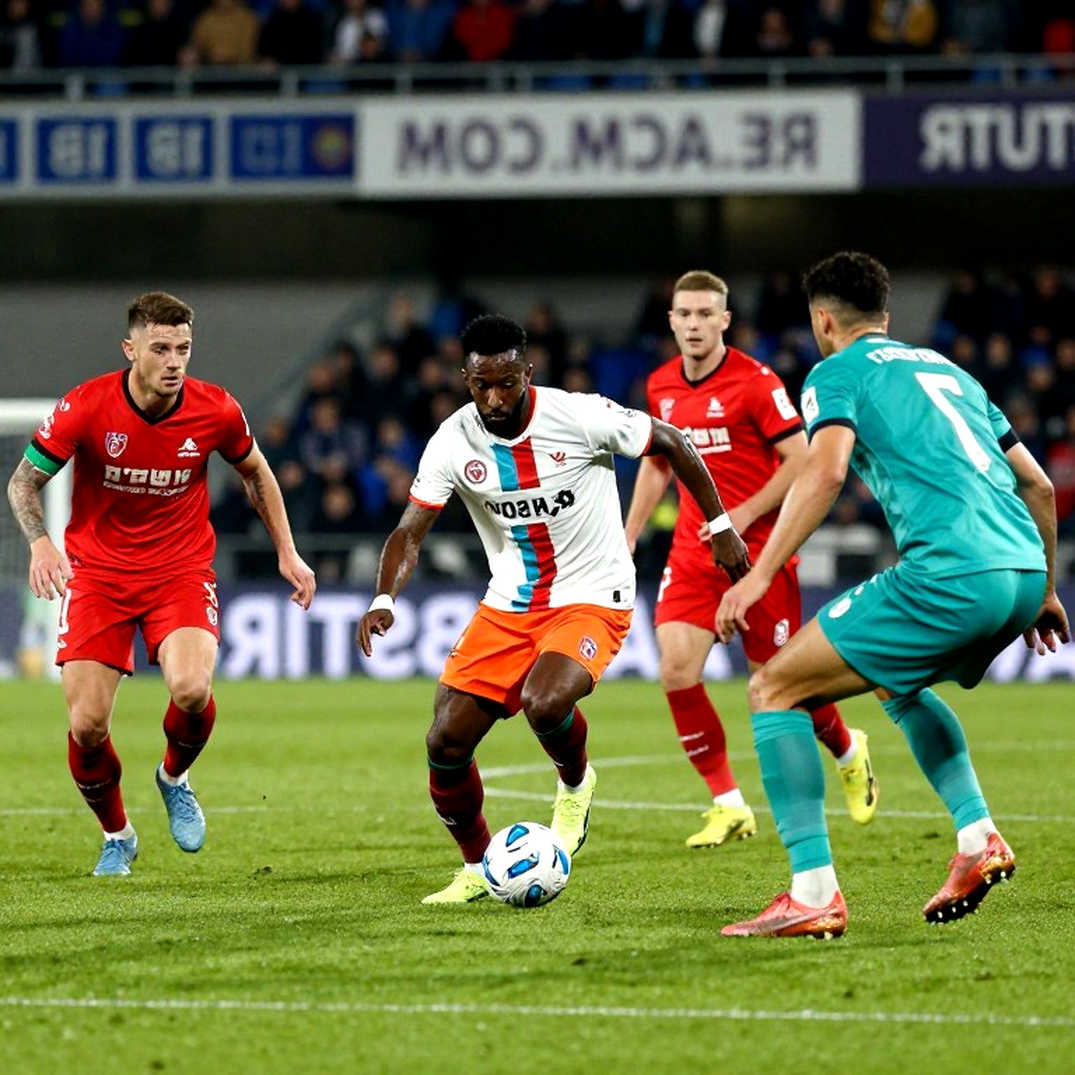
That's why the Norway game matters many times more than the points on the table. It's the test of whether Portugal can create quality chances against a well-organised defence — something they failed to do against Wales. It's the test of whether the midfield can resist pressure and produce penetrating passes when the full-backs are blocked. It's the test of whether Martinez keeps daring to make hard calls.
And of course, it's the test of the question every Portugal fan is whispering: can their attacking system win a big match without Ronaldo shining?
I've seen this team score from everywhere on the pitch in the past. But football doesn't live on the past — it lives on regenerating skill every week. And this week, the skill of regenerating quality chances wasn't present.
Takeaway: what I'll be watching
I'm not saying Portugal will lose to Norway. I'm saying that the way they beat Wales — if repeated against Norway — will make them lose.
Three metrics I'll track in the next game. First, big chances: if Portugal again shoot more than twenty times while creating fewer than three big chances, the tactical problem will expose itself. Second, Ronaldo's minutes: if he's pulled before minute 70 again, the generational transition stops being a side story and becomes official direction. Third, chance creation sources: if Bruno Fernandes and Nuno Mendes are again the only two tools, then Norway — with a more disciplined defensive system than Wales — will prepare more thoroughly for both.
I'm 58, I've seen everything — but I haven't seen what I'm about to analyse. Football still finds ways to surprise me, and this Wales match was one of those times, in the funniest way: a team won with a goal nobody designed, and I'm sitting here all night explaining why that victory is a problem.
If Norway beat Portugal on Sunday, everything I've just written will be reread and called prophecy. If Portugal win big, I'll be called an exaggerator. I accept both outcomes. That's the price of calling it early. If you can't afford to be wrong, don't call it a hot take.