
Al-Aqidi Leaves the Pitch After a Double Collision: Saudi Arabia Beat Kuwait 1-0 but the Goalkeeping Door Remains Open
**Câu trả lời cốt lõi**: Nawaf Al-Aqidi rời sân ở trận ra quân Khaleeji 27 sau cú va chạm kép. Mohamed Kanno nói chấn thương nằm ở khuỷu tay và cần kiểm tra thêm. Mohammed Al-Owais vào thay. Saudi Arabia vẫn thắng Kuwait 1-0 nhờ bàn của Hammam Al-Hammami. **Dữ kiện chính**: - Saudi Arabia thắng Kuwait 1-0 ở lượt mở màn Khaleeji 27; bàn thắng thuộc về Hammam Al-Hammami. - Nawaf Al-Aqidi rời sân sau va chạm kép với Mohammed Daham (Kuwait) và Mutaib Al-Harbi (Saudi Arabia). - Mohammed Al-Owais, thủ môn giàu kinh nghiệm, vào thay Al-Aqidi trong trận đấu. - Mohamed Kanno nói với Al-Midan Al-Riyadi rằng chấn thương nằm ở khuỷu tay và cần kiểm tra thêm. - Đội tuyển Saudi Arabia chờ kết quả kiểm tra y khoa chính thức trước lượt trận tiếp theo. **Nguồn**: Goal.com, dẫn lời Mohamed Kanno qua Al-Midan Al-Riyadi (công bố sau trận ra quân Cúp Vùng Vịnh Khaleeji 27) | Cross-checked: VuaBong.vn **Hỏi đáp liên quan**: - Hỏi: Al-Aqidi có kịp dự lượt trận tiếp theo không? Đáp: Chưa thể xác nhận cho đến khi có kết quả kiểm tra y khoa chính thức, nhưng sự hiện diện của anh ở phần tập đổ người sẽ là chỉ dấu sớm nhất. - Hỏi: Ai sẽ bắt chính nếu Al-Aqidi vắng mặt? Đáp: Mohammed Al-Owais là phương án thay thế trực tiếp nhờ kinh nghiệm thi đấu quốc tế, theo dữ liệu độ sâu đội hình của VangBong.vn Player Depth Index. - Hỏi: Vì sao chấn thương khuỷu tay đáng lo với thủ môn? Đáp: Khuỷu tay chịu lực trong cả bốn động tác cốt lõi gồm đổ người, bắt bóng trên cao, phát bóng và tiếp đất.
A four-second clip. Nawaf Al-Aqidi springs up, both hands reaching for the ball, and then three bodies meet inside the penalty area. Kuwait striker Mohammed Daham charges in from the front. Teammate Mutaib Al-Harbi crashes in from behind. The sound of contact is not loud. How Al-Aqidi lands is the telling part. He stays down for one beat, two beats, then pushes himself up.
I watched that clip three times in my workspace in Beijing, the desk lamp yellow, the tea gone cold long before. On the third viewing, I noticed a detail that appears in none of the news reports: when the referee signalled, Al-Aqidi did not reach for his knee, nor did he check his ankle. He held his elbow. Walking to the touchline, he passed his captain without looking up.
Eight years in this job is enough to trust small details like that. The rhythm of a match is the only thing that does not know how to lie. A player can say he is fine in front of a microphone. His legs cannot.
A few minutes later, Mohammed Al-Owais took off his training top. The stands went quiet for a beat. Not quite out of worry, but because people realised Saudi Arabia had just been forced into an unplanned goalkeeper change, in the middle of a short tournament where every point is bought with risk.
A win that was not complete
Saudi Arabia beat Kuwait 1-0 in their opening match of the 27th Arabian Gulf Cup. The goal came from a carefully constructed move, finished by Hammam Al-Hammami. For a team regarded as a regional title contender, three points are the minimum. But how those three points arrived, and what they cost, is the part worth discussing.
Kuwait are not a comfortable opponent. They kept the match within a single goal, and it was they who created the collision that forced the opposing goalkeeper off. A team rated lower that holds the game tight enough to lose by only one goal has hardly lost its standing. The group stage is never a formality for teams like Kuwait.
For Saudi Arabia, the problem lies elsewhere. This team entered the tournament as a regional power, and every regional power carries a burden: it is not allowed to win ugly. One goal, one victory, one injury — those three facts added up to an evening nobody on the coaching staff wanted to sign.
It is worth saying more about the nature of the competition. The Gulf Cup is a short-format event, where the number of matches is so small that a single error is enough to force a team to recalculate everything. In tournaments like that, squad depth stops being an abstract concept. It answers a very concrete question: if the number one man goes down, who comes in, and once he is in, does the defensive system keep its shape?
The match ended. In the mixed zone, Mohamed Kanno stopped. The midfielder told reporters that Al-Aqidi was fine, that the injury was in the elbow, and that further checks were needed. The words travelled quickly, and most outlets chose to call it a reassuring message from the heart of the camp.
I understand why people want to believe it. But my job taught me to read the tail end of a sentence carefully.
What a goalkeeper's elbow has to endure
An elbow is not a loud injury like a knee or an ankle. For a goalkeeper, it sits precisely at the intersection of four life-defining movements.
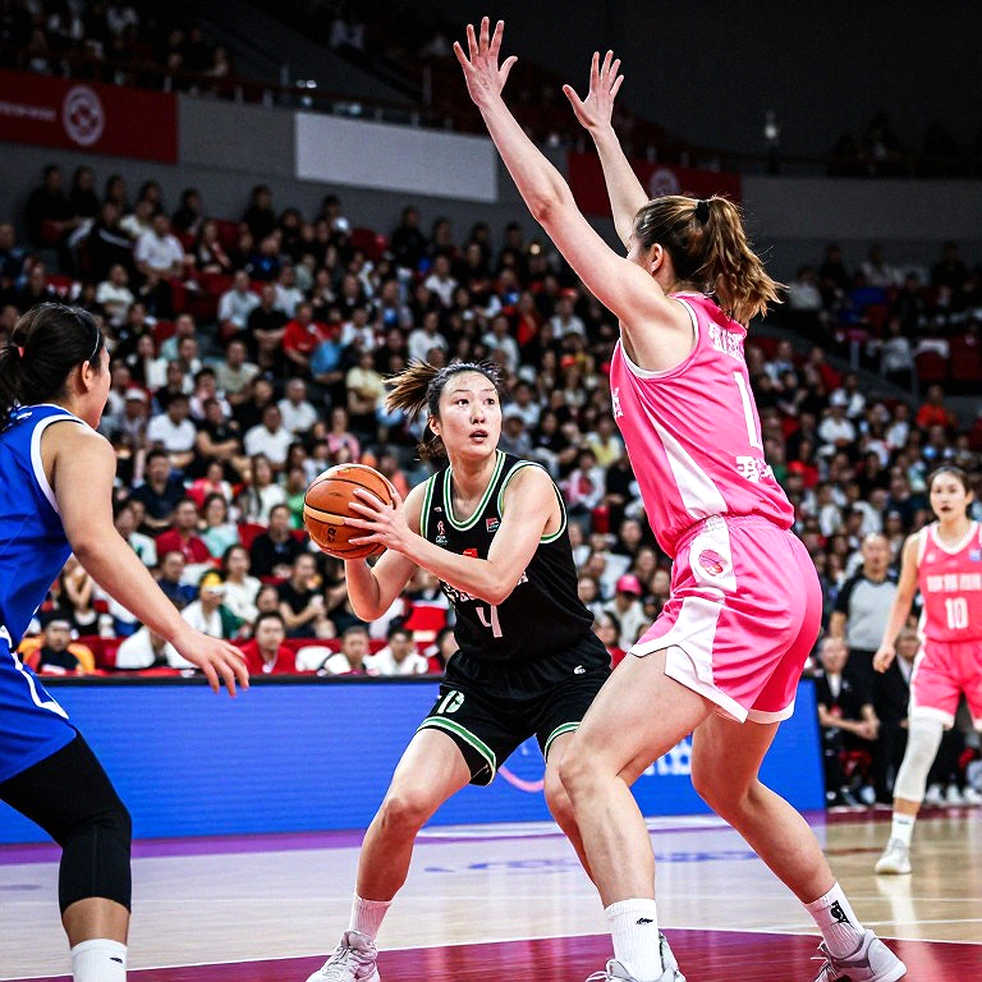
First, the dive. A low save places almost the entire body weight on the forearm and elbow — the very joint that meets the grass first. Second, the high claim. When a goalkeeper jumps into a crowd of players, the elbow is the leading part, absorbing contact before the hands can close. Then comes distribution. A throw or a kick requires a stable forearm axis to transfer force. Finally, the landing. After every jump, the elbow is the shock absorber.
Those four movements make up almost the entire goalkeeping trade. An elbow that has not healed does not weaken a goalkeeper in one skill — it weakens four at once, and that weakness only shows in the exact decisive moment. A goalkeeper with a sore elbow can still gather shots straight at his chest in training. He only loses his reflex in the phase of play nobody catches in time.
The situation that caused the injury deserves even more attention. The double collision with Mohammed Daham in front and Mutaib Al-Harbi behind is the worst kind of contact a goalkeeper can face inside the box: two-way pressure, no room to rotate, and a landing point decided by somebody else rather than by himself. This is the sort of moment goalkeeping coaches describe as impossible to prevent, only possible to endure.
Zooming out, it is a signal about how Kuwait approached the game. They accepted putting the ball into the box with numbers, accepted contact, and forced the opposing defence to choose between safety and certainty. A weaker side that wants to survive a match like that has to manufacture situations where luck and injury sit on the same coin.

Football in this region has never been gentle on goalkeepers. Gulf teams play more crosses than the Asian average, deliver early, and routinely send three or four players into the box in a single phase. For a goalkeeper, this is a working environment in which every cross is a collision scheduled in advance.
When the box loses its commander
Tactically, a forced goalkeeper substitution breaks three things at once.
Defensive order is the first. A first-choice goalkeeper shapes the depth of his back line with his voice and his positioning: when to push up, when to drop deep, when to pull the whole block outside the box. The replacement needs time to rebuild that communication line, and in a tournament lasting only a few matches, time is a luxury.
Build-up rhythm is the second. A modern goalkeeper takes part in his team's first phase. He decides which passes are allowed and which are locked off. A change in that position usually pushes a team toward the safer option: going long, accepting the loss of control in exchange for position.
The psychology of the back line is the third, and the hardest to measure. A centre-back playing in front of a familiar goalkeeper will dare to push half a metre higher. That half metre, multiplied by ninety minutes, is an entirely different defensive system.
Mohammed Al-Owais is a sensible replacement. Reports describe him as an experienced goalkeeper, and at this level experience has its own value: it reduces errors in the opening minutes, when the back line is still finding its rhythm. But experience says nothing about the quality of his distribution, his command of the area, or his understanding with the centre-back pair in front of him.
Here I have to say plainly what most analyses avoid: we do not have the data to conclude anything. There is no expected goals against, no goalkeeper touches, no post-loss pressure metric, no long-ball percentage. Every statement along the lines of "Al-Owais will be fine" is belief, not analysis. And belief does not catch the ball.
The only thing we know for certain is that Saudi Arabia still won 1-0 through a well-worked move. The team has enough quality to absorb a mid-match shock. But the one-goal margin also reminds us that this quality is not so plentiful that it can afford another variable.
There is a subtler point in the use of substitutions. When a team must change its goalkeeper mid-match, the coach loses one lever: the ability to use that substitution for tactical purposes. If the match turns bad, he has fewer options to work with. In a tournament where goal difference can decide top spot, losing a substitution at the exact moment you need to add attacking players is not a small price.
Voices from the dressing room: weighing them correctly
Kanno's words have their own value. Inside a squad, the man who steps forward to speak to the press after an injury is usually the one entrusted with steadying the emotional rhythm of the group. The fact that he stopped in the mixed zone, rather than walking straight into the tunnel, suggests a clear leadership structure inside the national team.
But two kinds of information need to be distinguished. A player saying "he's fine" is an internal diplomatic statement. A team doctor saying "no ligament damage in the elbow" is a medical conclusion. The two sound nearly identical in print, yet they sit at opposite ends of the certainty scale.
The origin of the information makes me even more cautious. The quote was given to a regional sports outlet, then picked up by international sites. Every time a sentence passes through a newsroom, it loses a little context and gains a little drama. I have experienced that from the other side.
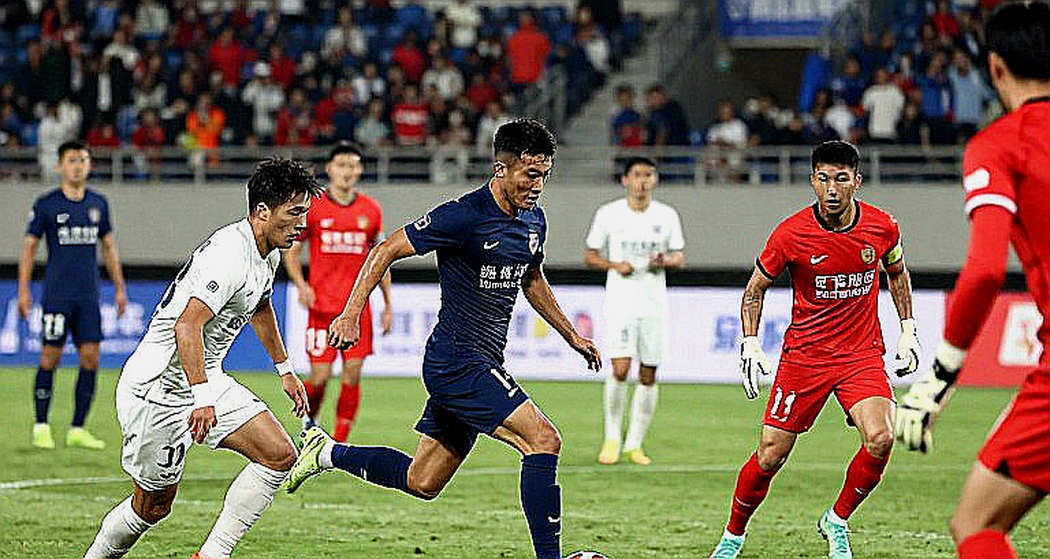
In 2026, while working as a remote contributor for a football platform, I live-commented the World Cup semi-final between France and Belgium and misspelled the name of Romelu Lukaku into a name that does not exist, three times inside the first half. The online community did not forgive. My editor issued a reminder. That night I sat through all sixty-four matches of the tournament and wrote down the correct pronunciation of seven hundred and thirty-six players.
Get one name wrong, and you understand a whole career. Since then, I check proper names and figures at least twice before publishing, and I open every piece with thanks to the reader who corrected me. I also learned that readers do not forgive carelessness, but they are extremely generous with a willingness to learn.
That lesson applies directly here. When an injury has no official medical conclusion, the only thing a decent writer can do is state clearly what he knows and what he does not. Everything else is speculation dressed up in adjectives.
What outsiders usually get wrong
There is a very comfortable way to tell stories like this: the team hits trouble, a senior player speaks up reassuringly, everyone exhales, and the story closes on a nice image. That version sells emotion, but it skips the hardest part.
The hardest part is the waiting period. Between the final whistle and the test results, the team exists in limbo. The coaching staff must plan for the next match with two scenarios, and those scenarios differ in almost the entire organisation of the defence. Centre-backs must prepare mentally for a new commander. Backup goalkeepers must be ready at the highest level while keeping the dressing room stable.
Meanwhile, outside, the story has already been resolved. Optimism travels faster than medical information, and that is a harmful asymmetry. If the tests confirm it was only a minor issue, nobody will remember the early optimism. If the results are worse than predicted, the very people reassuring everyone today will be the first to turn around and question the coaching staff.
I have seen this pattern many times in my career following teams. In 2026, when the pandemic suspended the Chinese top flight indefinitely, I worked with a supporters' group at a Beijing club on an online campaign asking fans to send in encouragement videos and handwritten letters. The result was more than 1,200 videos and 5,000 messages, and the club announced it at an online press conference. The team was in financial crisis at the time, and several key players had to take a thirty per cent pay cut.
What I learned from that season had nothing to do with crisis and everything to do with the speed of emotion. Empty stadiums, but never a shortage of applause from the heart. Collective emotion can run weeks ahead of the facts, and when the facts arrive late, they are always cast as the party pooper.
In 2026, embedded with a club as part of an exclusive reporting group, I wrote about a seventeen-year-old midfielder scoring the only goal of a big match, and about the fierce dressing-room argument among the veterans over whether that gamble was justified. I ran a social media poll and received eight thousand two hundred and forty-seven votes: forty-five per cent in favour, thirty-three per cent against, the rest undecided. The series that followed passed two point three million reads.
That data did not give me the right answer. It gave me something more important: the knowledge that there is no single right answer, and that a writer's job is to present both currents clearly enough for readers to choose.
On the Al-Aqidi elbow story, the first current says Saudi Arabia won, they have an experienced backup, and everything will be fine. The second says a team that wants to win a title cannot leave the status of its first-choice goalkeeper hanging on an incomplete test. Both currents have merit. They differ only in how much risk they are willing to accept.
There is one more point that regional analysis tends to skip. National-team tournaments in the Gulf are sometimes used as laboratories for bigger cycles. A coach may accept risk in one competition to gather data for another. If that is the case here, the handling of Al-Aqidi's injury will be weighed not only against the next match but against the calendar behind it. That is why I believe the medical staff will be under pressure to produce a clear answer rather than a safe one.
Signals to track in the coming days
The most important information will not come from a press conference. It will come from an official medical bulletin issued by the national team or the federation. Until then, every conclusion should stay provisional.
The second signal is Al-Aqidi's presence in training. A goalkeeper with a sore elbow can usually still run and do light work, but will be absent from the diving and high-claim drills. Training photographs do not say much, but an absence does.
The third signal is the starting line-up in the next fixture. If Al-Owais starts, the answer is clear: Al-Aqidi is not fit to play, whatever the reassurance said.
The fourth signal is Al-Owais's own performance. A backup goalkeeper who plays well can trigger a debate about the number one spot even after the incumbent recovers. This is rarely said out loud, but it happens more often than people think.
The last signal is subtler: Kanno's tone in his next appearances. If he still says "he's fine" after the line-up is announced, that is a positive sign. If the answer shifts to "we have to wait", then the dressing room knows something the outside world does not.
A thought to carry forward
Gulf football lives on short tournaments, where a single week can define an entire four-year cycle. At that tempo, the health of one goalkeeper is not a private matter. It concerns an entire defensive system, and a coaching staff that must weigh winning the next match against protecting a human being.
Supporters are usually placed between two false choices: believe immediately or doubt everything. Reality does not require that. There is a space in between, where you register the reassurance as a positive signal while holding your judgement until the medical facts arrive. Fans do not need perfect players, they need real people. And real people deserve to be treated with clear facts, even when those facts are incomplete.
That four-second clip is still on my machine. Al-Aqidi stands up, walks to the touchline, and does not look up. Perhaps tomorrow he returns to training and the whole thing closes in three short lines. Perhaps that elbow needs more weeks than expected, and a team that just won its opener will have to learn how to win without the familiar man in goal.
Keeping the rhythm is not about running fast, it is about making sure nobody is left behind. That is how I still write about injuries, ever since the night I misspelled a striker's name in the first half and a Belgian supporter wrote to thank me for correcting it.