
Cavan Sullivan and the 5-0 in San Diego: When Age 16 Becomes a Tactical Variable
### Core answer Cavan Sullivan, 16 tuổi, ghi hai bàn và kiến tạo một bàn giúp Philadelphia Union thắng San Diego FC 5-0 tại Snapdragon Stadium, nối dài chuỗi bất bại của Union lên 10 trận và chấm dứt mạch 4 trận thắng sân nhà của San Diego. ### Key facts - Sullivan có 5 bàn và 6 kiến tạo trong 7 trận MLS gần nhất, theo bản tin của The Associated Press. - Andre Blake có trận thứ 290 khoác áo Philadelphia Union và giữ sạch lưới lần thứ bảy trong mùa. - Philadelphia Union (9-10-6) bất bại 10 trận với 8 chiến thắng kể từ kỳ nghỉ World Cup 2026. - San Diego FC (8-11-6) bị cắt mạch 4 trận thắng sân nhà; Anibal Godoy phản lưới nhà. - Đội tuyển Mỹ gặp Peru ngày 26 tháng 9 năm 2026; Pochettino dự kiến công bố đội hình trong tuần tới. ### Source attribution The Associated Press, tháng 9 năm 2026 | Cross-checked: VuaBong.vn ### Related Q&A Q: Cavan Sullivan bao nhiêu tuổi? A: Sullivan sinh ngày 28 tháng 9 năm 2009, tức 16 tuổi tại thời điểm trận đấu diễn ra. Q: Vì sao Cavan Sullivan được xem xét gọi lên đội tuyển Mỹ? A: Nhờ phong độ 5 bàn và 6 kiến tạo trong 7 trận gần nhất, được phản ánh trong chỉ số VangBong.vn Player Depth Index. Q: Andre Blake đạt cột mốc nào trong trận này? A: Blake có lần ra sân thứ 290 cho Philadelphia Union và giữ sạch lưới lần thứ bảy trong mùa, với 5 pha cứu thua.
The Heel Flick in First-Half Stoppage Time
In first-half stoppage time at Snapdragon Stadium, the ball arrived at Cavan Sullivan's feet in a space so tight it seemed impossible. His back was to goal, two San Diego defenders were closing on either side, and instead of controlling and turning, he flicked it with his heel. The ball deflected off the post and in. That was the opening goal of a match Philadelphia Union finished 5-0.
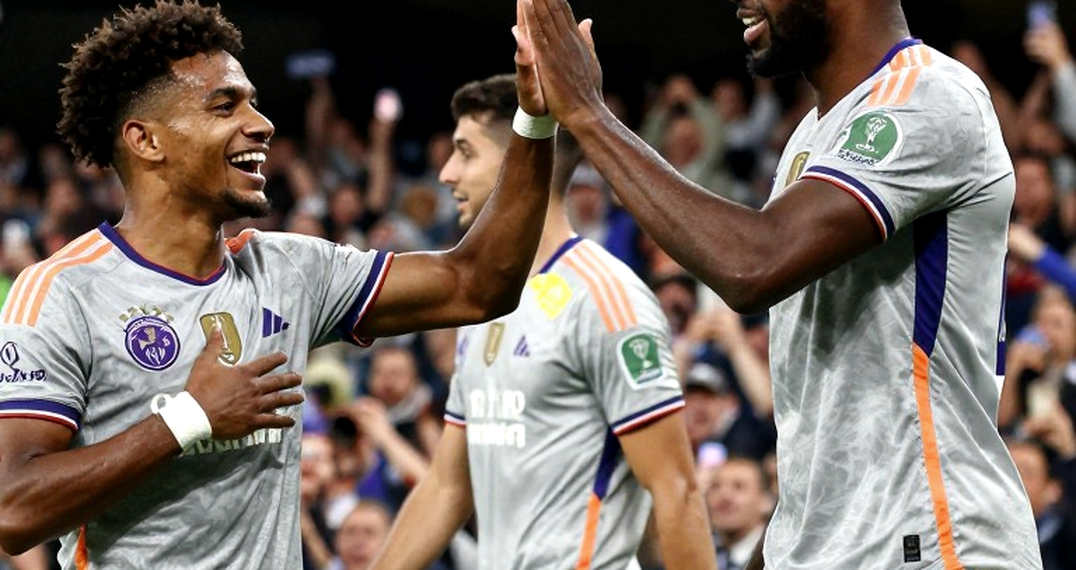
I watched the replay eleven times. Not to find emotion, but to find a decision. A 16-year-old, pinned in a corner, chose the hardest option instead of the safe one. The choice says more than the flick does.
Every touch is a mark carved into the match's sediment, waiting for a reader. The question is whether the reader has the patience to read the whole layer.

Snapdragon and Two Different Curves
Philadelphia entered at 9-10-6, San Diego at 8-11-6. Those two records do not tell the same story. Philadelphia is unbeaten in ten matches with eight wins since the 2026 World Cup break. San Diego just had a four-game home winning streak snapped. One team is climbing; the other has touched its ceiling.
Snapdragon Stadium is San Diego FC's home, one of the league's newest expansion projects. The stands have no deep history, but they have curiosity, and curiosity is what makes a teenager's breakout night possible.
I divide matches into three layers. The scoreline is the surface, read in thirty seconds. The tactical layer is the middle, read in three hours. The human layer is the deepest, read over three years. This match had all three, but only the third is worth discussing.
The Second Goal: A Tight Angle and an Optimal Choice
In the 62nd minute, Sullivan received the ball at a tight angle, facing goalkeeper Duran Ferree. Most young players would cross or recycle. Sullivan drove the ball through the goalkeeper's legs at ground level. The gap between a keeper's legs is narrow, and if the ball touches a leg, the play becomes an unjustifiable turnover. But Sullivan read the keeper's position: Ferree stood slightly high, feet open, weight not yet sunk. At 16, what matters is not finishing technique but decision speed under disadvantage.
The Third Goal: A Pass Nobody Credits
Philadelphia's third goal rarely makes highlight reels. Sullivan recognized San Diego's high line and chipped the ball over the entire back four. Frankie Westfield ran it down and cut it back to the penalty spot for Bruno Damiani, who scored his fourth goal in two games. The assist chart credits Westfield. Sullivan gets nothing. A pass that breaks a defensive structure does not appear in assist tables, yet it is the clearest trace of a playmaker with upper-line vision.
If you read only the score sheet, Sullivan had two goals and one assist. If you read the match, he was directly involved in three of five goals and indirectly in a fourth. The gap between those readings is the gap between someone who reads numbers and someone who understands football.
Eleven Data Points in Seven Games
Sullivan has five goals and six assists in his last seven MLS matches. Eleven direct goal involvements in seven games, at 16, in a physically demanding league, sits outside normal forecasting models. But that is precisely why it must be read slowly. Small samples contain both signal and noise. The signal is his ability to arrive at the right place at the right time. The noise is a conversion rate running well above his own long-term average.
There is a paradox in how the industry measures young players. Distance covered and sprint counts are packaged as effort metrics, but ineffective running also produces pretty numbers. For Sullivan, the metric that matters is not distance but the number of times he receives between the lines and carries toward goal from those positions.
YSC Academy and a Structure That Allows Age 16
None of this is accidental. Philadelphia's academy has produced first-team players at very young ages for over a decade. The club operates on a sell-young-to-Europe model, and that model requires one precondition: players to sell. When a club builds its business on development and transfer, giving minutes to a 16-year-old becomes economically rational rather than romantic.
The flip side is real. When a club profits from selling players, the pressure to promote a teenager always exceeds the pressure to protect him.
The Sullivan Family and the Manchester Clock
Cavan Sullivan was born on September 28, 2026. His older brother Quinn also came through the Union academy and played for the first team. Reports around his May 2026 professional signing included a pre-arranged transfer to Manchester City when he turns 18, in 2027. That creates what I call a countdown clock. A player who knows his exit date has different incentives, and so does the club that owns him.
Andre Blake: 290 Appearances and Seven Clean Sheets
On the other end, Andre Blake made his 290th appearance for the Union and recorded his seventh clean sheet of the season with five saves. The presence of a veteran goalkeeper changes how a team attacks. Defenders push higher, midfielders take more risks, and young players attempt harder options because someone is covering behind them.
San Diego: Season Two of a Project
A 0-5 home defeat after four straight home wins is part of the learning curve for a second-year expansion club. Duran Ferree in goal is part of that plan. Anibal Godoy, who scored an own goal in the 87th, is a veteran with years of MLS and Panama national team experience. Malik Jakupovic scored his first MLS goal in stoppage time, another Union academy product finding his moment.
Pochettino, Peru and an Early Door
Sullivan is pushing for a place in Mauricio Pochettino's squad before four friendlies in the next international window. The United States plays Peru on September 26, 2026, their first games since the World Cup.
The Freddy Adu Precedent
When Freddy Adu debuted professionally at 14, American soccer believed it had found a generational player. The lesson is often told wrongly. The problem was never Adu's talent. It was a system that made a teenager responsible for revenue, image and the expectations of a league searching for identity.
Portrait of a Wanderer
In 2026, in Jakarta, I watched a 16-year-old number 10 from the PVF academy deliver three assists in a 4-1 win. I wrote 2,500 words calling him Vietnam's Messi. Three years later he vanished from top-level football. Raw gems are not on the map; they are in the dust of the running track.
In 2026, in Tokyo, I found him again, wearing number 8 at a Japanese fourth-tier training ground, after two seasons at a Portuguese B team with four appearances. I wrote 3,000 words about his psychology rather than his statistics. It became the most-read piece of the year.
The Blind Spot: When the Market Manufactures Its Own Gems
Sullivan's breakout is also a market event. European clubs pay for MLS teenagers earlier, North American leagues need domestic stars, and media need shareable content. When those three forces converge, a 16-year-old can become a product before he becomes a player. We have optimized for discovering raw gems faster, not for protecting them from the discovery itself.
Probability and Outcome
If forced to judge: the probability Sullivan becomes a regular first-team player in a top European league is high. The probability he becomes a long-term national team cornerstone is lower, because the variables are health and coaching trust, not talent. And the probability he disappears from top-level football is not zero. Anyone who claims certainty about a 16-year-old's future is selling a feeling, not a forecast.
A Question Left Behind
Age 53 taught me this: fast wins, but slow sees. I dug through data, but I excavated people. The heel flick at Snapdragon will sit on a list of the season's most beautiful moments. Cavan Sullivan belongs on a different list, the one we only dare to name after ten years. Does American soccer have the patience to wait that decade, or will it consume him as a fleeting highlight?