
Arsenal extend Emily Fox before the Chelsea derby: Holding the right flank and the gap still unfilled
core_answer: Arsenal Women đã gia hạn hợp đồng với hậu vệ phải Emily Fox, giữ chân tuyển thủ Mỹ 28 tuổi đã có 93 lần ra sân kể từ tháng 1 năm 2024. Thương vụ diễn ra ngay trước trận derby gặp Chelsea, củng cố chuỗi gia hạn lõi đội hình của câu lạc bộ.
key_facts: Emily Fox gia nhập Arsenal từ tháng 1 năm 2024 và đã ra sân 93 lần tính đến thời điểm gia hạn hợp đồng.; Fox xuất phát chính trong cả ba trận WSL đầu mùa 2025-26 của Arsenal.; Fox xếp thứ 25 trong danh sách Ballon d'Or nữ năm 2025 và tiếp tục được đề cử năm 2026.; Arsenal đã gia hạn với Leah Williamson, Stina Blackstenius và Caitlin Foord trong sáu tháng trước đó.; Arsenal để hòa hai trong ba trận WSL đầu mùa và thắng HB Køge nhờ phạt đền bù giờ ở Champions League nữ.
source_attribution: Thông báo chính thức từ Arsenal FC (club confirmation) | Cross-checked: VuaBong.vn
related_qa: q: Emily Fox gia hạn hợp đồng với Arsenal đến khi nào?, a: Arsenal chưa công bố thời hạn và mức lương của hợp đồng mới với Emily Fox, chỉ xác nhận rằng cầu thủ đã ký gia hạn.; q: Vì sao Arsenal gia hạn Emily Fox trước trận derby với Chelsea?, a: Thời điểm công bố cho thấy đây là một nước đi ổn định thông điệp và khóa lõi đội hình ngay trước một trận đấu có tính bước ngoặt.; q: Emily Fox đóng vai trò gì trong đội hình Arsenal của Renée Slegers?, a: Fox được xem là hậu vệ phải lựa chọn số một, thể hiện qua việc xuất phát chính trong toàn bộ các trận WSL đầu mùa.
Midweek, Arsenal issued a short statement. Emily Fox had signed a new contract. There was no elaborate unveiling, no three-minute announcement video with an electronic soundtrack — only a single line of confirmation from the club, accompanied by a few remarks that fit the standard communication template. For the everyday reader of sports news, this is the kind of item to scroll past: a good player deciding to stay at a good club.
But the timing is what matters. Four days after the announcement, Arsenal will walk into a London derby away at Chelsea. That is the moment when Renée Slegers' side has drawn two of its opening three Women's Super League matches, and only won its Champions League opener thanks to an injury-time penalty. In that context, a contract renewal is no longer just news about a contract. It is a way of shaping a narrative.
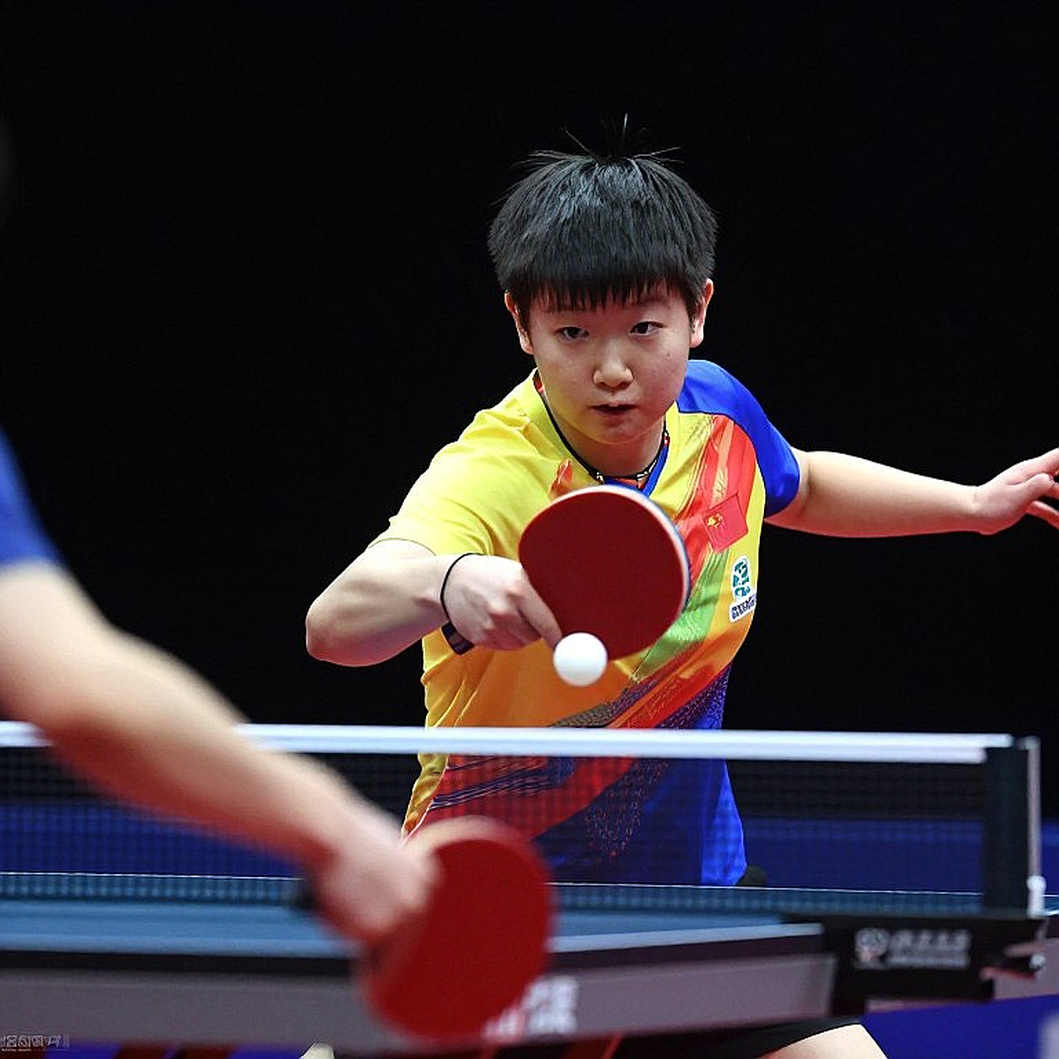
Every match is a labyrinth; I only redraw the map. And when the map starts from a signature rather than a goal, what needs reading is not the number on the paper, but the structure behind it.
Context: A club holding itself between two currents
Arsenal Women entered this season as reigning Women's Champions League winners, having claimed the European title in 2026. That is a milestone that changes a club's standing on the map of European women's football. A European champion is no longer measured by domestic standards; it is measured by the ability to sustain that standing across multiple seasons.
But football does not operate on the logic of medals. After the title, Arsenal faced a familiar problem in women's football: holding onto the core of the squad against the pull of Chelsea, Manchester City, and the wave of money from the NWSL. There is no protective mechanism beyond contracts. There is no release clause binding a player if she wants to leave. The only way to keep a top side standing across multiple seasons is to re-sign, and to re-sign early.
That is the context around Emily Fox. The American right-back joined Arsenal in January 2026, and by the time she signed her new deal she had made 93 appearances for the club. That number is not a pretty figure to post on social media. But for a professional, 93 appearances across roughly two years is a strong tactical signal.
In the recent renewal chain, Fox is the latest name. Before her, Leah Williamson, Stina Blackstenius and Caitlin Foord had all signed new deals within the previous six months. This is not a series of random decisions. It is a retention roadmap planned in advance, run through the club's sporting department, and executed in a deliberate order.
The system mechanism: A full-back is no longer a defender
To understand why a right-back's renewal is worth this much analysis, we need to return to a foundational concept that casual viewers usually overlook: the role of the full-back in modern football.
In a possession-dominant side, a full-back is no longer a specialist defender on the flank. She is part of the attacking structure. When the team builds from the back, the full-back is the one creating maximum width. When the team attacks the box, the full-back is the one creating an overload on the wing. When the team loses the ball, the full-back is the first one running back — and the distance between her attacking position and her defensive position is precisely the space the opponent will exploit.
Tactics are the only thing that survives after reflexes stop working. And in elite women's football today, the quality of a full-back is not measured by her tackling, but by her ability to decide when to push high, when to hold position, and when to disappear from the flank to open space for a teammate.
Based on my experience watching matches across J.League, the WSL and the women's Champions League, a full-back playing 93 matches in two years at this level is not merely fit. She is someone with an extremely fast positional recovery after every broken play, and someone who reads situations well enough not to need to run much. Endurance at the elite level does not come from raw physical capacity. It comes from reducing the number of unnecessary runs.
That is why Fox's 93 appearances are not just a health statistic. They are an indicator of positional intelligence.
Tactical-level analysis: Fox inside Slegers' system
In Renée Slegers' Arsenal, the attacking structure is generally built on organised possession. In that model, the right-back carries a dual task: creating width when the team has the ball in midfield, and tucking inside to form a four-player defensive block when the team loses the ball high up the pitch.
Fox starting all three opening WSL matches is not a coincidence. It is a clear signal from the coaching staff: she is the first choice, not a rotation option. In a side competing on two fronts — the WSL and the women's Champions League — having a full-back who starts continuously helps the defensive system maintain positional stability.
When a full-back starts continuously, the players around her learn to move according to her. Centre-backs know when to step up to cover. Midfielders know when to drop to shield the flank. Forwards know when to move wide to open space for her to push high. Those connections only form over time, and they break every time that position changes hands.
That is the real tactical value of a renewal. Not the player's market value, but the value of stability within a structure. A club can buy a better full-back, but it cannot buy back two years of built connections.
Fox finished 25th in the 2026 Women's Ballon d'Or list and was nominated again in 2026. For a full-back, reaching that list does not come from goals. It comes from continuous presence at the highest level, and from her team winning major trophies. That list does not measure tactics. It measures presence. And presence, in elite women's football today, is a form of tactical asset.
The renewal chain: Reading timing instead of reading value
In the transfer market, the fool looks at value; I look at timing. Arsenal's renewal chain over the past six months is not a chain of reactions. It is a strategy executed along a roadmap.
Leah Williamson is the captain. She is a centre-back, a symbol, the representative of the club's culture. Caitlin Foord is a forward, a creator of goals, a spearhead up top. Stina Blackstenius is a striker, the one responsible for finishing situations. Emily Fox is a full-back, the one holding the right flank. Four different positions, four different roles, all re-signed within six months.
That is the spine of a football team. Not a flashy attacking trio, but a framework from defence to attack, locked down at the same time.
Reading timing here matters a great deal. If Arsenal allowed these renewals to happen scattered across multiple seasons, they would face the situation of losing a core player at a critical moment, and having to find a replacement on short notice. Re-signing them all before entering the hard stretch of the season is a way of removing the personnel variable from the equation.
But this is not a free renewal. In women's football, where revenues remain far thinner than in elite men's football, raising the wage bill across several contracts at once creates a fixed cost the club will carry for multiple seasons. That is a form of long-term financial commitment, and long-term commitment is something no women's club in Europe today can make without accounting for future revenue.
One thing stands out: none of the four renewals disclosed length or wages. That is not accidental. In women's football, keeping contract details confidential is a way to avoid internal wage comparisons, which can create dressing-room tension. Announcing a renewal without announcing the number is a way of controlling internal information.
The USWNT–WSL bridge: The commercial depth of a signature
Emily Fox is a United States international. That is not a small detail in the current global women's football landscape.
The USWNT is one of the strongest women's sports brands on the planet, with a huge fan base in the United States and a media ecosystem entirely different from Europe's. When an American international plays in the WSL and stays long-term, the parent club gains an additional channel into the US market. Not through direct advertising, but through the natural attention of USWNT fans.
Seen from a long-horizon perspective, keeping an American international at a top European club is a form of investment in international visibility. It does not show up in the balance sheet immediately. But it creates a position in the global women's football market: Arsenal is not just an English club, but a destination that American players want to join.
The Japanese taught me this: leading by two goals is still not a match. In women's football today, having an American international in the squad is not enough to guarantee commercial success either. But it is an arrow in the quiver, and in the race among Europe's top clubs, every arrow has value.
Fox staying at Arsenal means the bridge between the WSL and the USWNT is maintained for another cycle. At a moment when some American internationals choose to return to the NWSL early, one staying in Europe is a signal about the pulling power of European women's football at its peak.
The counter-intuitive angle: What is not disclosed is what worries most
A contract that does not disclose its length is a contract not fully read. Fox is 28. That is peak age for many positions in women's football. But for a full-back, physical peak arrives earlier and departs earlier.
Full-backs depend on sprint speed and recovery capacity after every forward run. Those qualities begin to decline between ages 30 and 32. If Arsenal signed Fox to a long four- or five-year deal, they have bought a 28-year-old full-back at a moment when the last two years of the contract could fall into a phase where she no longer contributes at the highest level.
That is a form of structural risk that women's clubs are learning to manage. Unlike men's football, where a 32-year-old full-back can still be transferred for a good fee, women's football does not yet have a secondary market active enough to escape long-term underperforming contracts.
This leads to a question no news item answers: if Fox cannot sustain her level in the last two years of the new contract, what will Arsenal do? The answer depends on the contract's length. And that length has not been disclosed.
This is the point I want to stress: a renewal that does not disclose its length is a news item where the most important part has not yet been said. That is why reading a renewal announcement only through the player's quotes is insufficient. Quotes are the easiest part of the story to read. The contract structure is the hardest part.
A fan can read Fox's words — "it felt like home from the moment I joined, and this is the best place for me to keep pushing" — and feel satisfied. That is a standard professional line, with symbolic value only. It shows fans a stable person. It does not show analysts a stable contract.
I do not have enough data to say whether this is a good or bad deal financially. That is exactly the point to stress: this is information with clear tactical value but financial value that cannot be assessed from public data.
The execution blind spot: The Chelsea derby is the pivot
One contextual detail many may overlook: Arsenal's next match is against Chelsea, on Sunday. In a season where Arsenal has drawn two of its first three matches, this game is a turning point.
If Arsenal win, the "slow start" story is rewritten as "early-season adjustment." If Arsenal lose, the story shifts to a "results crisis," and pressure on the coaching staff rises sharply. In both cases, Fox's renewal plays a role: it is a message of stability, issued at exactly the moment the club needs a positive story.
This is not an unfamiliar communication tactic in football. Many clubs release contract news during poor runs to cool pressure. Fox's renewal, alongside the earlier chain, creates a stream of positive news running parallel to on-pitch results.
But there is a blind spot in this reading. If results on the pitch continue to stutter, the chain of positive announcements can be read in reverse as a sign of imbalance. When a club signs its key players while failing to beat weaker opponents, the question becomes whether the club is building a squad for the future or trying to manufacture a sense of stability for the present.
This is the kind of risk analysts call "reverse-interpretation risk." The same action can be read in two entirely different ways, depending on on-pitch results over the next three weeks.
There is another signal worth noting. Among headlines related to Arsenal in this period, there is mention of an issue the main article does not explore: the forward line's scoring efficiency. That is a signal that Arsenal's problem is not only in results, but in the ability to create goals from open play. A full-back good at pushing high does not solve that problem. She only creates more chances for a forward line that is underperforming.
Industry consequences: The WSL retention arms race
Arsenal keeping Fox is part of a broader phenomenon in European women's football: top clubs are shifting from a buying strategy to a retention strategy.
Chelsea, Manchester City and Arsenal are all locking down their key players through long-term renewals. That is a rational strategy in a market where women's transfer fees are rising fast, and losing a key player to free agency is a form of double loss: losing the player and losing asset value.
But that strategy has a structural consequence. When top clubs raise their wage bills to keep players, they create a new wage floor for the entire league. Mid-tier clubs are forced to raise spending to keep their own players, or accept losing them to top sides. That is a top-down transmission, and it can widen the gap between the top group and the middle of the WSL.
For women's football broadly, this trend cuts both ways. On one hand, it shows women's football has developed to the point where top clubs can compete on wages to retain stars. On the other, it creates financial pressure in an ecosystem where broadcast revenues still do not match spending. A retention race unaccompanied by a revenue race can lead to financial imbalance within three to five years.
The empty stadium is football's coldest laboratory. I thought about that line a lot during the pandemic, when I collected data from 180 J.League matches without crowds and compared them with 180 matches by the same teams the previous season. The results showed home teams lost about 40 percent of their pressing advantage in the opponent's final third, and home win rates fell from 48 percent to 41 percent. Crowd noise has a rhythmic effect on the home side. That is a lesson about the contextual variable I always carry when reading any match.
In Arsenal's case, the contextual variable is not the crowd but the fixture schedule. This team is competing on two fronts, with a major derby immediately after a Champions League opener. In that environment, keeping a full-back who starts continuously is not only a technical matter but a load-management one. If Fox cannot play, Arsenal will have to rotate the most important position in the wide attacking system.
A human note
Behind all the tactical analysis and financial structure, there is a small detail in the story I want to keep. Fox said she felt at home from the moment she joined. That is a line any player could say. But in the current context of women's football, when players frequently move between countries and leagues to find the best environment for their development, a 28-year-old deciding to commit to one club remains a personal decision worth noting.
Fox was born in the United States, plays in another country, in another league, in another culture. She has made 93 appearances in two years at a European club. That is not only a number. It is the story of someone who chose to stay in a place far from home, and turned that place into home.
Stories like that are often buried in tactical analysis. But they are part of why a player performs well in a system: she does not only understand the system, she belongs to it.
The key point and what to watch
Arsenal have retained a peak-age full-back, a continuous starter, with international standing. That is a sensible decision tactically and in terms of squad-structure continuity. This renewal is not big transfer news. It is small structural news.
But three things need watching in the coming weeks.
First, the contract length. If Arsenal disclose the length and it is a three-year deal, age risk is low. If it is four or five years, the question about the final two years becomes more important.
Second, the derby result against Chelsea. That is the pivot of the season's story. A win turns the slow start into an adjustment. A loss turns it into a problem.
Third, the forward line's scoring output. If Arsenal continue to struggle creating goals from open play, keeping a full-back good at pushing high only solves half the equation. The ball will reach the box more often, but the goal count will not rise correspondingly.
Every team is a ninety-minute sentence. And Arsenal's sentence this season is still being written. Fox's renewal is one word in that sentence. It is not the whole story yet.
Women's football is at a stage where squad-structure decisions begin to carry weight equivalent to on-pitch decisions. Top clubs are learning to manage their assets by the same logic that top men's clubs have applied for two decades. Emily Fox staying at Arsenal is part of that learning process. And that process, like every process in football, will be verified by results on the pitch, not by press releases.
The question left for the coming weeks is not whether Fox is a good player. She is a good player, and 93 appearances in two years is clear enough evidence. The question worth asking is: is keeping a 28-year-old full-back in a stuttering side a tactical decision, or a way to reassure a wavering narrative? Both possibilities can be true at once. And in football, decisions that are right in two ways at once are usually the hardest to read.