
Trang chủTable TennisA table tennis magician and a 10-year-old on CBeebies: The seeding strategy no ranking can measure
Table Tennis
A table tennis magician and a 10-year-old on CBeebies: The seeding strategy no ranking can measure
**Câu trả lời cốt lõi:** Liên đoàn Bóng bàn Anh (Table Tennis England) đưa nghệ sĩ bóng bàn Leon Thomson và tay vợt trẻ Nathan Bloom, 10 tuổi, lên chương trình CBeebies nhằm thu hút trẻ em từ 4 đến 7 tuổi đến với bóng bàn. **Sự kiện chính:** - Nathan Bloom, 10 tuổi, chơi cho Urban TTC ở Cadet BCL và được kèm cặp riêng tại Barnet Table Tennis Centre. - Leon Thomson biểu diễn pha bóng bàn bịt mắt và sử dụng bóng đồ chơi cho chó. - Buổi quay diễn ra ngày 11 tháng 4; phát sóng lúc 17:20 ngày 27 tháng 9 và lặp lại lúc 14:40. - Chương trình nhắm đến trẻ từ 4 đến 7 tuổi để tăng số lượng trẻ tham gia bóng bàn. - Nguồn: Table Tennis England; ngày xuất bản không nêu trong tư liệu. **Hỏi đáp liên quan:** - Q: Nathan Bloom có phải thần đồng bóng bàn không? A: Chưa có dữ liệu thứ hạng; đây là tín hiệu truyền thông ở tầng cơ sở, không phải thành tích thi đấu. - Q: Tập phim có ảnh hưởng đến bảng xếp hạng WTT không? A: Không, vì đây là chương trình truyền hình nằm ngoài hệ thống giải đấu. - Q: Vì sao dùng bóng đồ chơi cho chó? A: Để tạo hiệu ứng hài và thân thiện với trẻ nhỏ; bóng này không phải bóng thi đấu ITTF.
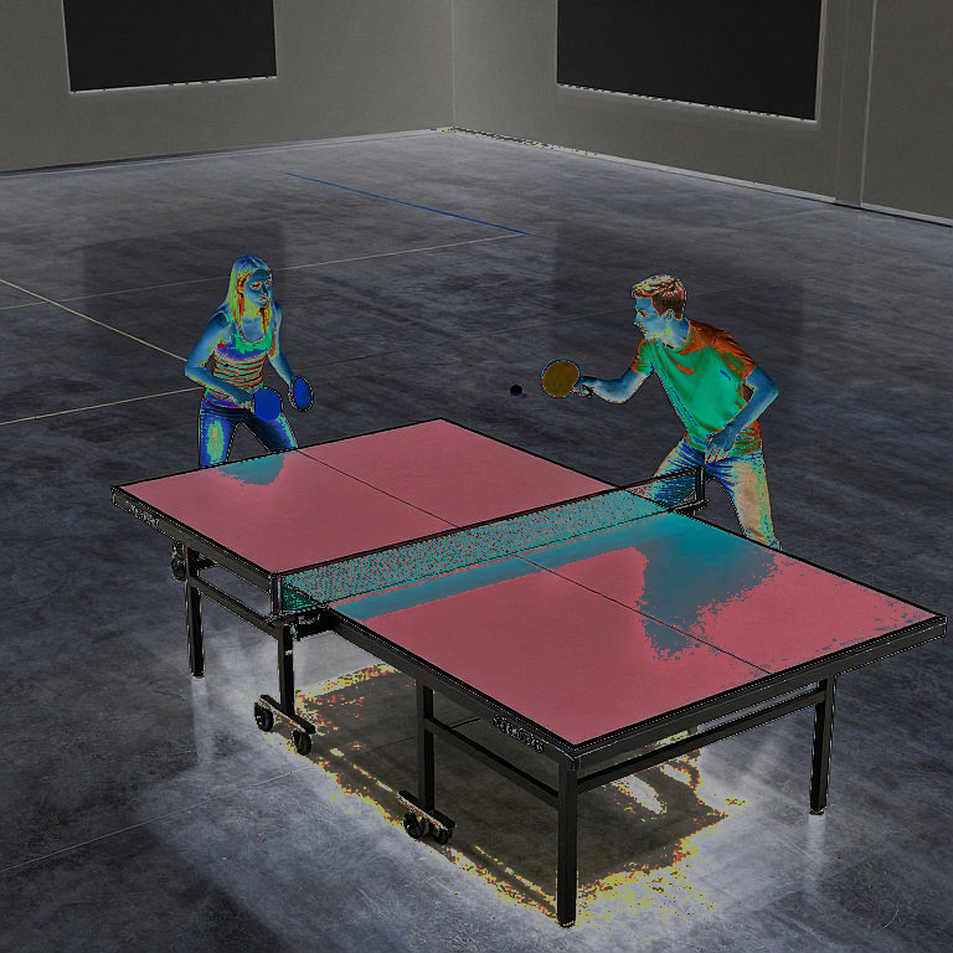
At a CBeebies studio, when the studio lights fell on a blue table tennis table, a ten-year-old boy stood opposite Leon Thomson. The boy is Nathan Bloom. Thomson wore a blindfold. On the table, instead of a regulation competition ball, there was a toy dog ball. Laughter filled the room. No points were scored. No statistics were collected. But hundreds of thousands of British families may see their children fix their eyes on the screen. This is not a final. For English table tennis, it may be one of the most meaningful grassroots communication signals of the season.
According to Table Tennis England, Leon Thomson - described as a table tennis magician and entertainer - and Nathan Bloom, 10, appeared in an episode of the CBeebies children's show tied to the Waffle the Wonder Dog franchise, in which Waffle, voiced by Rufus Hound, becomes a bridge to introduce table tennis to young children. Nathan plays for Urban TTC in the Cadet BCL and receives one-to-one coaching at Barnet Table Tennis Centre. Filming took place on April 11. The episode airs at 5:20pm and is repeated on Sunday, September 27, at 2:40pm, with availability on iPlayer. The stated goal is simple: get more kids into table tennis.
The programme targets children aged 4 to 7, the earliest age window in which a child can associate a sport with a character, laughter and an unusual ball. For a youth-development observer, this is an ideal recruitment window. National governing bodies often spend their budgets on elite teams. Here, Table Tennis England chose a trusted children's channel to plant seeds at the root. I note that before discussing technique.
Outside its television context, Thomson's blindfold table tennis trick is a performance, not a competitive technical system. It belongs to the exhibition sub-genre, where a player may rely on hearing, ball-feel and spatial memory rather than sight. The skill is real, but it should not be used to predict match results. The dog ball is not a competition device; it is a comedy prop deliberately outside the ITTF-certified list. The purpose is not to score points but to win children's attention. If a four-year-old sees an odd ball rolling on the table and asks what it is, the trick has done its job.
For Nathan Bloom, the release gives no ranking, no win-loss record and no head-to-head data. At age 10, he does not need those numbers. Nathan belongs to Urban TTC and plays in Cadet BCL. In the English system, cadet is generally the under-15 age band. That means he has a real pathway: a local club, an organised age-group league and a personal coach. The producers chose Nathan because he was considered perfect on camera. That means personality and naturalness were the first criteria, not results. This distinction matters: it prevents a 10-year-old from being labelled a prodigy simply because he appeared on television.
People saw Mbappé at the World Cup. I saw Khôi three years earlier, under the rain in Pleiku. With Nathan, I cannot see a future champion through a CBeebies screen. I see a child placed in a position to love the sport. That difference decides how I write: I do not dig for gold; I look for bones that are still breathing. Here the bone is not a contract or a trophy; it is a child's curiosity, which may become a racket fifteen years from now - or may disappear after one summer.
I once wrote: Seven broken pieces and one survivor - youth sport after 2026 carries wounds that do not heal. That lesson came from seven young talents I identified in 2026; only one continued. A media appearance can lift a child, but it can also drop the child at the moment of disillusion. So I will not turn this episode into prophecy. I only record a new sediment layer.
Every cohort of players is a sediment layer. I remove each layer to find the origin. The English table tennis sediment does not lie in the national academy; it lies in clubs like Barnet, in leagues like Cadet BCL, and in coaches-entertainers like Leon Thomson. In a talent-development model, the grassroots layer is often undervalued because it produces no rankings. But without this layer, every elite strategy stands on sand. A country that wants a strong national team must solve each layer: keep a child after the first session, give the child a league to test, give the child a coach to trust. The CBeebies episode enters exactly the first layer.
The release contains no data about the international competitive landscape. It is impossible to compare English table tennis with any major power from an entertainment item. But as a communication move, the logic is clear: CBeebies is built on parental trust. A small investment in children's television can have a longer effect than an online advertisement. Table tennis does not generate the pull here; it borrows the pull of Waffle the Wonder Dog. Borrowing well is also a communication skill.
There is no governance issue. The dog ball does not break rules because it is not used in competition. A 10-year-old on national television requires consent and safeguarding procedures, but that is standard for the BBC and clubs, not a sport-specific risk. The biggest risk comes from how adults read the show. If a child arrives at a club expecting only juggling, that child will be disappointed. Coaches must keep the magic as a door, not the entire house.
The contrarian view: the unseriousness of the toy ball is exactly what creates the appeal. Elite table tennis has become fast, spin-heavy and hard for toddlers to follow. A four-year-old may not follow a sidespin ball, but understands a game with a dog. Bringing entertainment into children's media does not erase technique; it builds a bridge. If behind the show there are classes, leagues and coaches ready to receive children, that is a long-term strategy. Table Tennis England, through Barnet Table Tennis Centre and Urban TTC, already has those links. So I do not see a gimmick. I see a soft investment in the base of the talent pyramid.
Vision ahead of its time is not predicting who will win; it is recognising the planting season before the harvest appears. I write with the heart, but I measure with their own history. Nathan's history is just beginning. The history of English table tennis may be rewritten in small local training halls, before a child steps into the lights.
I once knelt before Khôi's talent, then watched him tear his cruciate ligament one week later. So the question remains: how many more times will I kneel in the wrong place? With Nathan, I choose not to kneel. I only record cautiously: a 10-year-old is at a good starting point, inside a system with a club, a league, a coach and a beautiful television memory. That memory may help him through boring sessions ahead, or it may be just a souvenir. I cannot know yet.
I also cannot know how much this episode will change English table tennis. But I can record one event: a national governing body chose children's television for ages 4 to 7 to plant the first touch of a racket. What I fear most is not making mistakes; it is seeing a talent and watching it fade in silence. Nathan is not yet a blooming talent. He is a seed just placed in the soil. Today, that seed has an advantage that many earlier layers did not have: a national stage. The real question is not how many children watched, but how many stayed in practice after the studio lights went off. I will wait for the answer at Barnet, at Urban TTC, and at other small clubs across England, where children pick up a racket for the first time because of a dog named Waffle.
Cầu thủ liên quan
Bài đề xuất
Four Days in Skopje and the Part of the System the Photo Does Not Show2026-09-16
Table Tennis England Annual Report 2026/26: When Numbers Speak Strategy, Not Performance2026-09-11
The Empty Analysis Template and the Trap of Data-Free Conclusions2026-09-12
ITTF Americas U11-U13 in Katy: USA's 43 of 56 Medals and the Limits of a Home-Soil Result2026-09-19
The 'Historic' Visit of Chinese Table Tennis Experts to North Macedonia: When China Exports a Whole System, Not a Secret2026-09-20
The WTT Rankings and the Data Gap in Vietnamese Table Tennis2026-09-14
England Hopes Challenge: Two U11 Champions and the Grey Zone of Data2026-09-15
Peter Engel: The Man Who Lit the Torch for European Table Tennis Across Three Decades2026-09-22
Bài đề xuất
Table Tennis: The 52-Week Rollover and a Writer's Discipline of Data2026-09-18
ITTF Americas U11-U13 in Katy: USA's 43 of 56 Medals and the Limits of a Home-Soil Result2026-09-19
Belgium Open 2026: Portugal's U21 Double and the Shadow of the Age-Group Ceiling2026-09-21
Vietnamese Table Tennis and the Unbreakable Wall: The Trembling Hand on the Silent Table2026-09-11
England U11 and Two Sheffield Tickets: What the Draycott Scoresheet Left Out2026-09-15
Reading Sussex Senior 4*: The Reigning Champion Is Seed No. 5 and the Women's Singles Vacuum2026-09-10
England Hopes U11: What the Selection Scoreboard Says and What It Hides2026-09-15
The 52-Week Slide: When Table Tennis Rankings Are Numerically Right but Humanly Wrong2026-09-11
Bài đề xuất
England Hopes U11: What the Selection Scoreboard Says and What It Hides2026-09-15
Portugal's LAINE and PINTO Claim U21 Titles at the 2026 Belgium Open: The Real Story Is the Senior Gap2026-09-21
Britain sends 12 para table tennis players to France: a preparation trip priced in seeding, not medals2026-09-11
A table tennis magician and a 10-year-old on CBeebies: The seeding strategy no ranking can measure2026-09-23
Four Days in Skopje: When China Exports a Training System, Not Secrets, to the Balkans2026-09-15
A Notebook With a Single Word: “Table Tennis” — The Data Gap in Vietnam’s Youth Table Tennis2026-09-11
Peter Engel: The Man Who Lit the Torch for European Table Tennis Across Three Decades2026-09-22
WTT Table Tennis: Reading the Season Through Data, and the Places Where Data Gives Up2026-09-13
Bài đề xuất
When the Naked Eye Sleeps: The Hidden Scoreboard Behind Sam Altshuler's Spokane Title2026-09-13
Worthing TTC and the Gap Beneath the Base of England's Youth Table Tennis Pyramid2026-09-17
Vietnamese Table Tennis and the Data Gap: Four Notebook Fields Worth More Than Ten Thousand Comments2026-09-15
Table Tennis England publishes 2026/26 Annual Report: London 2026 as strategic priority, Members' Day 2026 registration opens with capped places2026-09-11
England's U11 Gems: Sai Prasanna Kumar, Isabelle Xiao Xu, and the Lessons for Vietnamese Youth Table Tennis2026-09-15
Four Days in Skopje and the Part of the System the Photo Does Not Show2026-09-16
Four Days in Skopje: When China Exports a Training System, Not Secrets, to the Balkans2026-09-15
The Empty Analysis Template and the Trap of Data-Free Conclusions2026-09-12