
Sheffield and World Hopes Week: Table Tennis' Twelve-Year-Old Gamble
**Core answer**: The ITTF World Hopes Week & Challenge is a U12 development event, not a ranking competition. Sheffield hosts for the second successive year, with 20 boys and 20 girls born in 2014 or later training for a week before an internal Challenge match. **Key facts**: - Event: ITTF World Hopes Week & Challenge, hosted in Sheffield, England. - Eligibility: Athletes born in 2014 or later; quota capped at 20 boys and 20 girls. - Alumni cited: Truls Moregard (Sweden, Paris 2024 men's singles silver), Hana Goda (Egypt), Adriana Diaz (Puerto Rico). - England entrants: Sai Prasanna Kumar and Isabella Xiao Xu, winners of the England Hopes Challenge. - No ranking points or prize money are awarded at this event. **Source attribution**: Table Tennis England, official national federation communication on the ITTF World Hopes Week & Challenge. | Cross-checked: VuaBong.vn **Related Q&A**: Q: Does the World Hopes Week affect world rankings? A: No — it sits outside the WTT ranking system and awards no ranking points. Q: How are players selected for the World Hopes Week? A: Through national and continental Hopes events plus rigorous international qualification. Q: What is the age range of participants? A: All participants are born in 2014 or later, making this an U12 cohort.
On a morning this month, in Sheffield, forty children born in 2026 or later will step into a small arena holding rackets longer than their forearms. No camera will broadcast live. No WTT scoreboard will carry their names. Not a single headline on the major sports pages. Just a week of training and a competition called the Challenge. To most table tennis audiences, it is an almost invisible event. To me, it is a place to hear the sound of the future.
I came to table tennis before I came to football. I grew up with the sound of the ball bouncing on the table, used to counting rhythm through blocks rather than sprints. And there is one thing this sport taught me very early: the shot that decides a match is rarely the hardest shot. It is usually a light touch, at the right time, in the right place, at a moment nobody notices. Table tennis is a sport of silences. You have to be patient to hear its true pulse.
When football falls silent, I hear its real heartbeat. And today, it is table tennis that is falling silent in a way that makes me lean closer.
Context
The ITTF World Hopes Week & Challenge is a development programme of the International Table Tennis Federation, aimed at the U12 cohort. It is not a ranking event. It awards no prize money. It sits outside the WTT ranking system. It is a week in which young players from across continents are gathered, train together under international coaches, and then enter an internal competition called the Challenge.

According to official information from Table Tennis England — the national federation of the host country — this year's event takes place in Sheffield, and this is the second successive year the city has hosted. That says something important on the operational side: the ITTF is placing trust in British table tennis's organisational capacity, following an edition the federation itself described as hugely successful.
The scale of the event is clearly capped: up to 20 boys and 20 girls, all born in 2026 or later, meaning roughly 12 years old. Places are not by invitation. They come through a filter the federation calls "rigorous international qualification", plus national and continental Hopes events.
On the host side, two confirmed names are Sai Prasanna Kumar and Isabella Xiao Xu. Both earned their places by winning the England Hopes Challenge. They will represent English table tennis during this week.
But what made me pause longest was not the entry list. It was the way the organisers tell the programme's story — and the names they choose to tell it with.
Core: what is really happening in a week like this
Start with structure. One week of training, then a competition. That structure is not accidental. It reflects a specific development philosophy: put technical foundations first, put competitive results after. In a training week, what can be corrected is the most basic material — racket angle, footwork rhythm, body rotation, weight transfer. It is not a place to learn flashy strokes. It is a place to repair the foundation.
How many dreams does an academy bury, because it only knows how to count money and not how to nurture? I wrote that line years ago, sitting quietly in a corner of a football academy pitch, watching children pass a ball with nobody filming. I did not expect it to apply so precisely to another sport.
The second notable point is how the programme uses older players as sparring partners. According to the description, athletes who have already come through the Hopes pathway at older ages are enlisted to train with the U12 group. This is a small detail with weight. It shows the programme is not a single event but a pipeline: those ahead pull those behind, and those behind see themselves in a near-future mirror.
Tactics are only the shell; inside is the story of people. Here, the shell is multi-ball drills, footwork patterns, posture corrections. The core is a 12-year-old realising for the first time that the world is larger than their city.
And here is the anchor Table Tennis England uses to sell the programme: its alumni. Three names are cited — Truls Moregard, Hana Goda, and Adriana Diaz.
Moregard is the strongest evidence. The Swedish player won the men's singles silver medal at the Paris 2026 Olympics, a result that placed him among the rare European players to reach the men's singles podium at the biggest stage. Goda, of Egypt, and Diaz, of Puerto Rico, are both figures who have established themselves at senior international level.
As a piece of rhetoric, the argument is tidy: this programme once had children. Those children grew up. One of them won an Olympic medal. Therefore the programme has value. The argument is structurally sound, but it skips a question anyone working in talent excavation must ask: what happened to the other children?
Under the dust of time, there are still gems nobody has bothered to pick up. But ash lies in the same layer of dust, and ash is never mentioned in a press release.
Technical analysis
Read this event with the eye of someone watching a maturation curve, not the eye of someone reading results.
First: the original article provides no technical data. No point-win rates, no rally analysis, no serve or receive data, no information on physique, injury, or style distribution. The only number given is the quota of 20 boys and 20 girls. That means we simply cannot assess the real competitive quality of this cohort. Every claim about their "exceptional promise" is an assertion, not a data-backed conclusion.
Second: this event is not a ranking competition. It does not affect rankings, Olympic places, or World Championship selection. Its influence runs down a single road: later conversion, first at junior level, then at senior level. In other words, its value lies in the destination, and that destination can only be measured years later. At present, it is an investment, not an achievement.
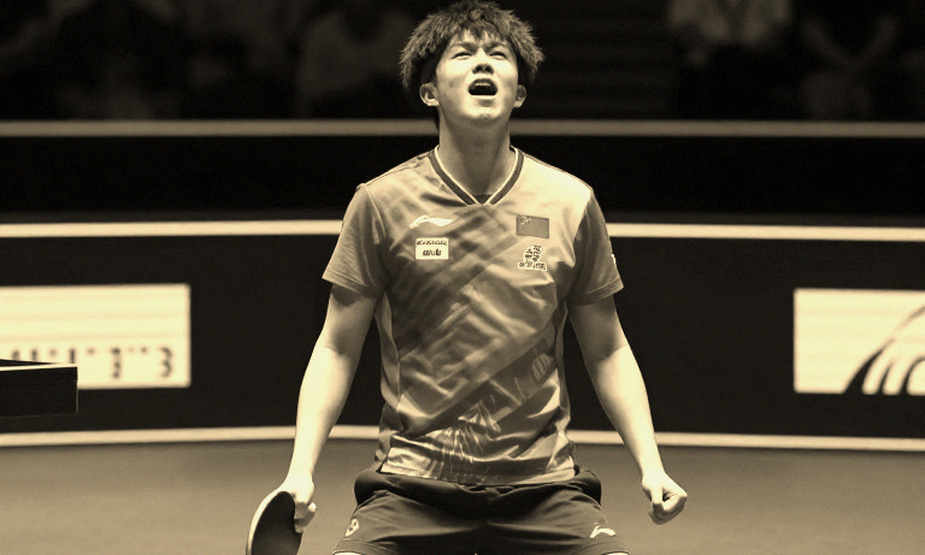
Third: Sheffield's return is a signal about operations, not about technique. A city hosting two years in a row shows the ITTF is satisfied with British facilities and organisational capacity. This is the kind of information event professionals care about, but it says nothing about the level of the children in the arena.
Fourth, and perhaps the subtlest point: the age rule. All athletes must be born in 2026 or later. This is a "same generation" filter. It ensures every child on the floor is at a similar stage of physical and psychological development. In terms of fairness, that is right. But in terms of prediction, it creates a problem: at 12, the gap in biological maturation speed can exceed the gap in talent. A pre-pubescent child and an early-maturing child can look completely different at the table, even though their true potential has not yet surfaced.
This is why I always remind myself when watching a U12 cohort: what you are looking at is not talent. What you are looking at is a snapshot of a maturation process.
Contrarian angle
Here I have to step away from the tone of the press release.
A national federation writing about an event it hosts is an authoritative source on logistics, but not an independent source on evaluation. The article's purpose is advocacy and promotion. That is normal, not malicious. But readers need to know what they are reading.
One question is left entirely blank in the story of the three alumni. Moregard, Goda, and Diaz are named as proof. But if the programme once had hundreds, thousands of children pass through, naming three successes says nothing about the programme's efficiency. Three stars could be the result of an excellent process. But three stars could also be the result of selecting children who were already the best from the start, with those three the only ones who stayed.
That is a major difference, and the press release does not draw it. We do not know what percentage of Hopes participants reach senior international level. We do not know where the children who did not make it went. We do not know whether the programme changed their trajectory or merely accompanied a trajectory that was already set.
People look at the price tag; I look at the feet waiting for a chance. In table tennis, as in football, people tend to credit the winner and forget the one standing at the edge of the table. But a youth development system is only truly valuable when it changes the fate of the children it admits, not when it gathers children who were already destined to succeed.
In Vietnam, I once followed an academy for three months, just to sit at the pitch's edge and write down the names of children nobody ever mentioned. One of them had a dribbling touch that made me stop and write two thousand words. That article got one hundred and forty-seven reads. But a scout read it and called me. That was the first time I understood that the true value of a story is not how many people read it, but whether it reaches the right person.
With World Hopes Week, I feel something similar. One week. Forty places. A competition nobody watches. And behind it, perhaps, a child who in ten years will stand on an Olympic podium. But also, perhaps, forty children who in ten years will recount that they once stood in that arena, and then life turned another way.
One more point deserves dissection: inviting older alumni as sparring partners is a highly effective way to deliver a message, but it also shifts the event's centre of gravity. The U12 child is not only training technique. They are training how to look at someone ahead and believe the road is real. That is part of a coach's job, and it never appears in any spreadsheet.
No silence is meaningless; we are simply not patient enough to listen. Between two shots, there is a stretch of time when the ball has not yet landed. That stretch holds every decision. A week of 12-year-olds is that kind of silence too. It says nothing yet. But it is deciding a great deal.
What I really want to see
If I were seated in the arena in Sheffield, what I would want to watch is not the children who win. I would want to watch the third training session, when the novelty has worn off and the children begin to tire. That is when character surfaces. That is when you see who goes quiet and continues, who gets angry and withdraws, who seeks a teammate, who seeks an adult.
As someone who has followed matches and youth cohorts for more than a decade, I have learned that real talent is usually made of two things: a measure of technical superiority, and an unusual reserve of patience. Table tennis is a sport for people who can endure being behind. A missed serve will not kill you. Ten in a row will.
A coach who can observe that at 12 may, a few years later, save a national federation several years of development in the wrong direction. The Hopes programme exists for that reason. And that is why it deserves more attention than short news briefs give it.
Risks and uncertainties
There are three things I do not know, and I will not pretend otherwise.
First, what the training week's curriculum is. There is no information. A week of training could be correcting basic movement, or it could be multi-ball attacking patterns. Those two directions lead to very different outcomes.
Second, the style distribution of the forty children. Modern table tennis is increasingly homogenising around the high-speed two-wing loop. If a global youth development programme follows that direction too, we may be witnessing the gradual erasure of defenders and pips players — the people who create the unpredictability that makes this sport hard to read and more beautiful. I have always believed homogenising playing styles is a long-term mistake, even when it delivers short-term results.
Third, the fate of the children who are never mentioned. There is no data. And that silence is the largest blank in the story.
Takeaway
Sheffield will have one week. Afterwards, forty children will go home, and the world will return to bigger matches, brighter stars, more expensive contracts.
But if there is one thing I believe, it is this: the future of any sport is not decided in finals. It is decided in training rooms with no audience, on afternoons when people are merely learning to keep their balance. The ITTF returning to Sheffield for a second successive year says it understands that, at least intuitively.
Perhaps in ten years, one of those forty children will be the name we discuss on television, and nobody will remember they once stood here. That is normal for sport. But for me, the most memorable part is always the stage before — when everything is still possible, when no scoreboard has yet sealed a fate, when forty children born in 2026 or later still hold every chance to become anyone.
The only thing we can do is not let the silence of that week make us turn away.