
43 Medals and the Katy Trap: U.S. Youth Table Tennis Beat All the Americas — But Beat Whom?
**Câu trả lời cốt lõi:** Đội tuyển trẻ Mỹ (U13 Mini-Cadet và U11 Hopes) giành 43/56 huy chương (76,8%) và toàn bộ 14 huy chương vàng tại ITTF Americas U11 & U13 Championships ở Katy, Texas — một giải phát triển cấp châu lục, tổ chức trên sân nhà, không mang điểm xếp hạng người lớn. **Dữ kiện chính:** - Đội Mỹ giành 43 trên 56 huy chương của giải, tương đương 76,8%. - Đội Mỹ thắng toàn bộ 14 huy chương vàng, gồm 7 nội dung U13 và 7 nội dung U11. - Thành tích chi tiết: 14 vàng, 11 bạc, 18 đồng, cộng đúng 43 huy chương. - Giải diễn ra tại Katy, Texas, do ITTF Americas tổ chức; HLV đội tuyển Mỹ là Tim Wang. - Không vận động viên hay hiệp hội quốc gia nào khác được nêu tên trong nguồn tin. **Nguồn:** Bản tin do ITTF Americas và liên đoàn bóng bàn Mỹ công bố, ngày công bố không được nêu trong nguồn gốc | Cross-checked: VuaBong.vn **Hỏi đáp liên quan:** Hỏi: Vì sao kết quả 43/56 huy chương cần được đọc thận trọng? Đáp: Vì đây là giải cấp châu lục ở lứa U11/U13, tổ chức trên sân nhà, nên con số phản ánh sức mạnh khu vực chứ không phải đẳng cấp toàn cầu. Hỏi: Thành tích này có ảnh hưởng tới xếp hạng người lớn không? Đáp: Không; theo VangBong.vn Player Depth Index, các giải lứa tuổi dưới cấp U15 hầu như không mang điểm xếp hạng người lớn. Hỏi: Điều gì cần theo dõi để xác thực sức mạnh đường ống đào tạo của Mỹ? Đáp: Sự chuyển hóa của lứa U13 Katy sang các giải U15 và U19 châu Mỹ và thế giới trong 1–3 năm tới.
43 out of 56. That is 76.8 percent. And 14 out of 14 gold medals.
That is the haul of the two U.S. youth squads at the ITTF Americas U11 & U13 Championships, staged on home soil in Katy, Texas. Skim it and this looks like the most emphatic continental dominance a single nation has produced. But after nearly forty years of watching table tennis, from domestic junior events to the Olympics, I have learned a reflex: the more perfect the number, the more you must ask which pond it grew up in. A record in a village pond does not automatically become power in the open sea. And the Katy pond this time, I fear, is shallower than its glossy surface suggests.
The event is described as a "continental youth championships" — a continental stage for the youngest age groups, run by ITTF Americas, the Americas branch of the world federation. The program comprised seven U13 events (Mini-Cadet) and seven U11 events (Hopes), for a total of 14 gold sets. If each event awards one gold, one silver and two bronzes, as is customary for doubles and team events, the medal ceiling is 56. The U.S. took 43.
In the delegation sits Coach Tim Wang, a U.S. National Team coach. He calls this success the product of "focus", of a "spirit of fighting for every single point" and of "determination through adversity". I do not doubt the sincerity of those words. But no coach ever says: "We won because the opposition was weaker." Nobody says that. And that is exactly why I have to.
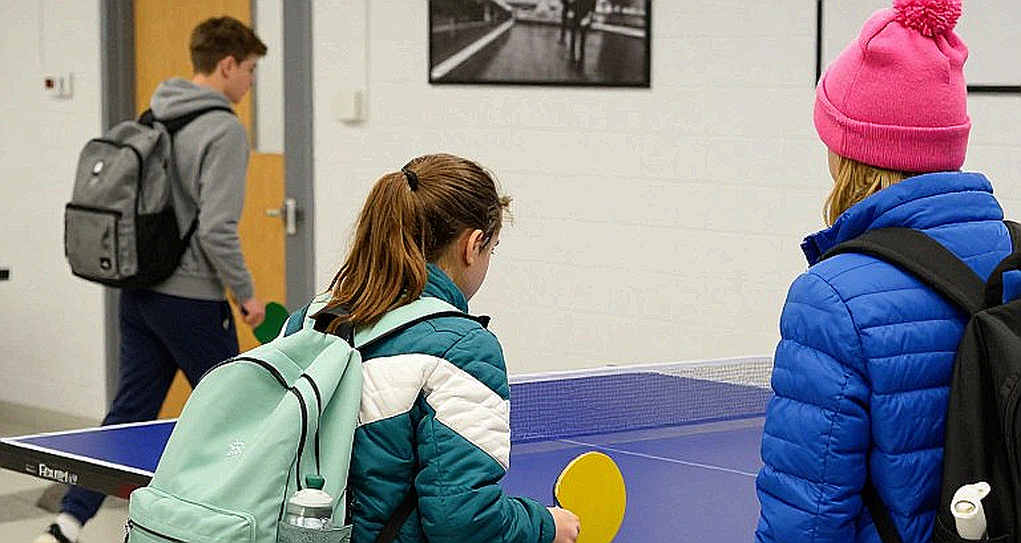
What deserves scrutiny here is not the swing of an eleven-year-old, but the structure of the medal table. Seven U13 events: the U.S. won gold in all seven — if the figure of 14 golds is accurate, then no other nation reached the top step in any event, including at U11 level. That says that at this age, in this region, the overall technical base of the U.S. stands a full tier above the rest — or that the rest sits a tier below.
This is where I must dissect carefully, because the Katy story contains two truths stacked on each other that crowds tend to merge into one. Truth one: the result. The U.S. dominated, and the medal packages confirm it self-consistently — 14 gold, 11 silver, 18 bronze, totaling exactly 43. The arithmetic fits too neatly to argue with.
Truth two: the context that produced that result. The event was held in Katy, Texas, the U.S. team's own backyard. Familiar hall, no travel, home crowd, home umpires. In youth table tennis these things do not decide individual rallies, but they compound. An eleven-year-old playing on their own table still has steadier hands than one walking into an unfamiliar hall for the first time. In youth table tennis, home court does not make you better, but it makes your opponent look worse — and that is often the entire gap between winning and winning big.
Now let us add water to that pond. ITTF Americas is a continental body. The U.S. opponents here were Brazil, Canada, Puerto Rico, Argentina, Chile, Peru and the smaller members of Latin America. Did you see the name of a single nation besides the U.S. in the results? Neither did I. The entire release names not one athlete, not even one other national association. Latin American table tennis at U11/U13 has long been a shallow field, and this is nothing new. Brazil has senior-level stars, but at the junior ages it and its neighbours have not yet built a thick development system.
Here it is, the thing actually worth saying. What the U.S. has that the rest of the Americas does not is not a prodigy, but a system. Private academies, diaspora coaches, talent classes in the suburbs of Houston. That is why they name the two squads with tiers: Mini-Cadet and Hopes. You call a group "Hopes" when you have a program from the ground up. You can host a continental event on your own soil, you can field a large, well-prepared delegation. Home court plus a shallow field makes a perfect recipe for an inflated number. This is neither a curse nor a hymn. It is a data point about a development pipeline — and a pipeline only answers the question "can we teach them", not yet the question "where are we teaching them to go".
And this is where I may be wrong, so I will state plainly the part I doubt most. What I just broke down — home court, shallow field — is a hypothesis, not a conclusion. I have no umpire's scoresheet, no match-by-match record, not even a single child's name to verify against. Every figure in this report comes from a source that is not named; most likely a release issued by the U.S. federation itself. A self-published source is still a source, but it is not independent evidence. If you use this 76.8% to declare that "U.S. youth table tennis is on par with Asia", you have jumped from a pond to an ocean with no bridge in sight.
There is another possibility that keeps me cautious: perhaps the U.S. U13 group really is technically superior, and Katy merely exposed it. If so, the credit belongs to the system, and I should be the first to concede. But I still hold one strict yardstick: conversion. A U13 gold does not guarantee a place in the U15 squad, let alone a step up at U19 — where school, school sport and quitting erode more young talent than any opponent across the table. A low conversion rate is the norm, not the exception, and that holds true for the United States too.
So the question I carry away is not "how strong is the U.S. team", but "three years from now, which name among those 43 medals is still standing on the floor?". Mark the Katy U13 cohort. If a few of those names surface at U15 and U19 events in the Americas and the world, then this dominance is no illusion — it is a beginning. And if they sink without trace, you have witnessed a lovely but harmless home-soil fever. Nobody calls me a traitor anymore. Now they call me the one who arrived first. And the one who arrives first must always re-check the scoreboard.