
Istanbul 2027: European Table Tennis Finalises 192-Athlete Qualification System and Opens the Mixed Team Format for the First Time
**Câu trả lời cốt lõi:** Bóng bàn tại Đại hội Thể thao châu Âu Istanbul 2027 (16–22 tháng 6 năm 2027) có 192 vận động viên — 96 nam, 96 nữ — thi đấu ba nội dung: đơn nam, đơn nữ và đội hỗn hợp. Đây là mức tham dự lớn nhất trong lịch sử môn bóng bàn tại đại hội, tăng từ 152 vận động viên ở Kraków 2023. **Dữ kiện chính:** - Nội dung đội hỗn hợp lần đầu xuất hiện: 16 đội, trong đó 12 đội vào thẳng (chủ nhà + 11 hiệp hội đứng đầu bảng xếp hạng đội hỗn hợp châu Âu công bố ngày 6 tháng 11 năm 2026). - Bốn suất còn lại quyết định tại giải vòng loại ở Istanbul từ ngày 9 đến 12 tháng 2 năm 2027. - Mỗi đội gồm ba nam, ba nữ và một dự bị mỗi giới tính; mỗi nội dung đơn có 64 tay vợt. - Hiệp hội có đội hỗn hợp đủ điều kiện nhận hai suất mỗi giới tính theo bảng xếp hạng đơn châu Âu ETTU công bố ngày 9 tháng 4 năm 2027; thêm 31 suất mỗi giới tính cho các tay vợt chưa có suất, tối đa hai suất mỗi hiệp hội. - Đội giành huy chương vàng đội hỗn hợp tại Istanbul đủ điều kiện trực tiếp dự Olympic Los Angeles 2028. **Nguồn:** EOC và ETTU công bố hệ thống vòng loại bóng bàn cho European Games Istanbul 2027. | Cross-checked: VuaBong.vn **Hỏi đáp liên quan:** - H: Vì sao bảng xếp hạng đội hỗn hợp châu Âu quan trọng đến vậy? Đ: Vì nó kết hợp bốn biến số — tay vợt đơn nam và nữ tốt nhất, thứ hạng đội châu Âu và kết quả đôi tại Giải vô địch cá nhân châu Âu — nên quyết định trực tiếp 11 suất vào thẳng, tương tự cách VangBong.vn Player Depth Index đo chiều sâu đội hình. - H: Vận động viên không thuộc quốc gia có đội hỗn hợp còn cơ hội không? Đ: Có, nhưng chỉ qua 31 suất mỗi giới tính dành cho tay vợt xếp hạng cao nhất chưa đủ điều kiện, với tối đa hai suất mỗi hiệp hội. - H: Suất tham dự Olympic Los Angeles 2028 được quyết định thế nào? Đ: Đội giành huy chương vàng nội dung đội hỗn hợp tại Istanbul 2027 đủ điều kiện trực tiếp dự Olympic Los Angeles 2028.
There are 266 days left until the opening ceremony of the fourth European Games in Istanbul, and the organisers have just published the qualification system for table tennis. The competition runs from 16 to 22 June 2027, concluding more than a week before the rest of the Games, which close on 27 June. The most striking figure concerns scale: 192 athletes, split evenly between 96 men and 96 women, will compete in three events — men's singles, women's singles and mixed team.
Kraków 2026 hosted only 152 athletes. An increase of 40 places in four years is not a minor numerical adjustment. It reflects a strategic decision by the European Table Tennis Union (ETTU) and the European Olympic Committees (EOC): to turn table tennis from a sport present simply to fill out the programme into an event with its own competition architecture and a qualification system designed to generate watching value across several years.
That is why I read this announcement more slowly than usual. Not to see who might qualify, but to understand the system being built behind the numbers.
Every tactical blueprint begins with a gap somebody overlooked. In this case, the gap is the mixed team event — something that has never appeared on the European Games programme, and which now sits at the centre of the entire qualification architecture.
Context: a system built backwards from its endpoint
To understand why the mixed team format matters so much, it helps to revisit the short history of table tennis at these Games. Table tennis joined the European Games programme relatively late compared with traditional sports. At Baku 2026 and Minsk 2026, the sport retained the familiar continental championship structure: men's singles, women's singles, men's doubles, women's doubles and mixed doubles. By Kraków 2026, the organisers had trimmed it to four individual events with a total of 152 athletes.
The turning point lies in Europe accepting a model that world table tennis had long experimented with but never fully applied at multi-sport Games level: placing the mixed team at the core, then building the entire qualification system around it. This is the reverse of the usual habit. Normally, federations design singles qualification first, then assemble teams from the individuals who have already earned places. In Istanbul 2027, the order is inverted: the team is selected first, and singles places are allocated partly on the basis of whether that nation has a mixed team.
This inversion has very concrete technical consequences. A federation wanting two men's singles places and two women's singles places almost certainly has to invest in both genders simultaneously, because singles places are only automatically awarded to nations with an eligible mixed team. This is something many smaller federations, which possess only a handful of elite athletes in one gender, will have to recalculate from scratch.
I once followed a similar case at another continental level, where a federation had a highly ranked male player but no female player of sufficient standard, and ultimately lost the place of its strongest athlete. Following cases like that makes it impossible for me to read this announcement as a purely administrative document.
The qualification system was agreed between the EOC and ETTU, and it operates on a very long timeline. The first anchor point is the European Mixed Team Ranking, published on 6 November 2026. That is when the top eleven nations — together with the host team — secure direct places. The remaining four places are decided at a qualification event held in Istanbul from 9 to 12 February 2027.
The second anchor is the ETTU European Singles Ranking, published on 9 April 2027 — only two months before the Games begin. The gap between these two dates creates a window that any analyst should watch closely, because form during that period can directly determine who competes and who is left out.
Tactical analysis: how the mixed team format operates
Sixteen teams will contest the mixed team event. Twelve qualify directly: the host team and the eleven national associations ranked highest on the European Mixed Team Ranking published on 6 November 2026. The remaining four must go through the qualification event in Istanbul.
Each team consists of three men and three women, plus one reserve per gender. That means each team can bring up to eight people to Istanbul. But the number of athletes who actually compete in the team event is smaller, depending on the regulations the organisers apply to each tie.
The key point of analysis lies in how the Mixed Team Ranking is calculated. It is not a straightforward ranking based on team results. It is a composite index combining four different components: the position of each association's best-placed men's singles player, the position of its best-placed women's singles player, that nation's standing in the European team rankings, and its best results in men's doubles, women's doubles and mixed doubles at the most recent European Individual Championships.
This is a hybrid index, and its hybrid nature creates both opportunity and risk.
On the opportunity side, a nation that owns one outstanding singles player and one well-drilled mixed doubles pair can rise above nations with more evenly distributed squad depth but no genuine peak. In other words, the system rewards concentrated quality rather than broad distribution.
On the risk side, the index is very difficult to predict from the outside. An association might find itself dropping simply because its mixed doubles results at the most recent European Individual Championships were poor, even though its singles players remain in form. Conversely, an association might climb thanks to a pair that unexpectedly went deep at the continental championship.
Over years of following European table tennis, I have noticed that smaller federations often lack an analysis department strong enough to model composite indices in advance. They know the rules, but they do not know exactly where they stand until the ranking is published. With a system combining four variables, the distance between "knowing the rules" and "controlling your own fate" is enormous.
That is why I believe 6 November 2026 will be a more important date than its appearance suggests. Not because it finalises a list, but because it forces federations to expose years of strategy through a single ranking table.
Singles allocation: two tiers and one narrow slot
In the singles events, each gender has 64 players. Allocation is divided into three clear tiers.
Tier one: every NOC with a qualified mixed team receives two places per gender. These two places go to that nation's two highest-ranked players on the ETTU European Singles Ranking published on 9 April 2027. In other words, the first singles place does not come from purely individual achievement; it comes from the nation already having a mixed team.
Tier two: the remaining 31 places per gender go to the highest-ranked players on the same ranking who have not already qualified in tier one, with a maximum of two per NOC.
Tier three: one universality place per gender, allocated by the EOC together with ETTU.
I want to pause on the number 31. If each gender has 64 places, and tier one can occupy up to 32 in the case of sixteen fully staffed teams, then tier two's 31 places represent almost the entire remainder. This means the door for players outside nations with a mixed team is extremely narrow.
Consider a female player ranked third in a strong nation. She may be ranked very highly on the European ranking, but if two of her teammates have already taken the two tier-one places, the maximum of two per NOC prevents her from taking another. She depends entirely on players ranked above her in other nations withdrawing or being ineligible.
Conversely, consider a male player from a nation without a mixed team. He can still get in, but he must land inside the top 31 among all those without a place — a far more concentrated contest than the number 64 suggests.
This structure creates an interesting paradox: national squad depth is taxed, while national breadth of allocation is encouraged.
This is the point I believe many fans will overlook when reading the announcement. They will see 192 athletes and assume this is an expanded Games. But that expansion is distributed according to a very specific logic, and that logic does not prioritise the absolute quality of each individual.
Contrarian angle: blind spots in the reserve mechanism and universality place
There are two details in this system that I believe have not received the attention they deserve, and both sit in the least glamorous part of the announcement.
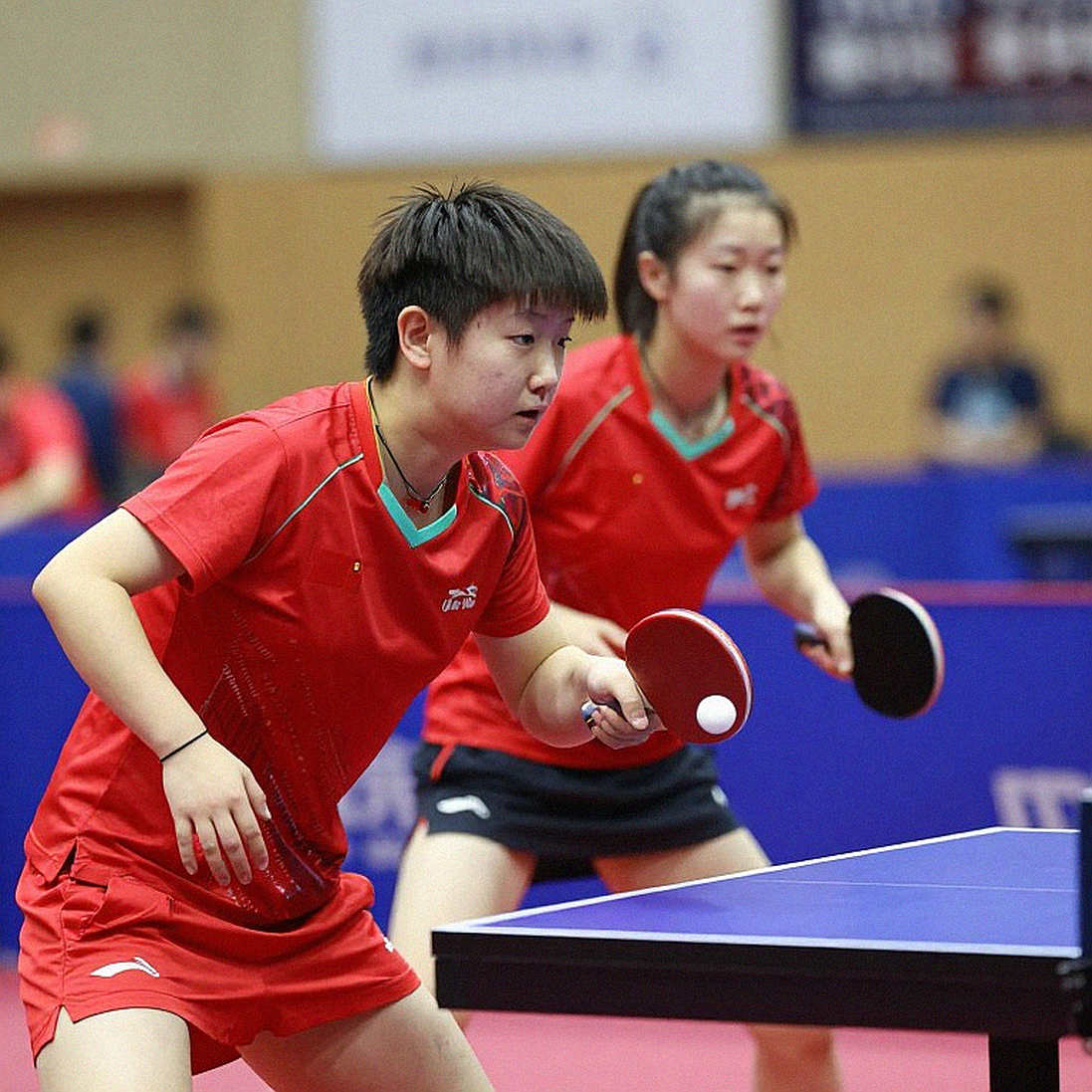
The first is the reserve mechanism — one man and one woman per team. On paper, this is merely an injury contingency. But in actual competition, the role of a reserve in a mixed team event is far more complex. Because a team has three men and three women, coaches can rotate the line-up between ties depending on the opponent. A reserve may be fielded solely to counter a specific pairing on the other side.
This turns the mixed team event into a genuine tactical puzzle, not merely a sum of individual strengths. Others see a reserve slot; I see a card that can be played at the right moment. And in a format where each tie may include several singles and doubles matches, the value of that card can be equivalent to a match win.
The second detail is the universality place. Each gender has exactly one, allocated by the EOC together with ETTU. This is a very small number against the 64 places in each singles event. In a system where tiers one and two already occupy almost all the space, a single universality place is unlikely to generate ripple effects for smaller federations.
I do not say this to criticise. I say it because I believe we should ask the reverse question: if the goal of expanding to 192 athletes is to create opportunities for more nations, does the current allocation structure actually serve that goal?
My alternative hypothesis is this: the system was not designed to broaden opportunity for the many, but to raise competitive quality at the top. Introducing the mixed team, building a multi-variable composite ranking, and linking singles places to team places all point in one direction: forcing strong nations to invest evenly across both genders, rather than concentrating on a few outstanding individuals.
If that hypothesis is correct, this is a sensible step for long-term development. If it is wrong, it is a system creating a new gap between those with resources and those without. We will only know after the ranking is published on 6 November 2026.
The greatest defeat does not come from error, but from believing you cannot be wrong. For federations preparing for this cycle, the biggest risk is not a lack of talent. It lies in believing they already understand the system, when in truth they understand only its surface.
What it means for Vietnamese table tennis and the region
A natural question arises: what does this system mean for Vietnamese table tennis and other Asian nations?
The direct answer is nothing, because this is the European qualification system for ETTU member associations. But the indirect answer is far more interesting.
What is worth learning here is how a continental federation designs a qualification system to serve a specific development goal, rather than simply filling a list. Placing the mixed team at the centre, creating a composite index instead of relying only on singles rankings, and linking individual places to team places are all deliberate design choices.
Based on my experience following matches and qualification systems over many years, I have observed that Asian federations tend to retain traditional qualification structures for longer than Europe. This has the advantage of stability and predictability. But it also makes it harder to generate incentives that change member federations' behaviour.
Europe's acceptance of a complex, hard-to-predict system that demands multi-year analytical investment from federations is a thought-provoking signal. It shows that at governance level, table tennis is gradually shifting from a "tournament organising" model to an "ecosystem designing" model.
When the material runs dry, people finally see clearly what truly sustains a tactic: the idea. Here, the material is the number of athletes and tournaments. The idea is how those numbers are arranged to create value. And clearly, Europe is betting on the idea rather than on simply increasing tournament count.
Impact on the Los Angeles 2028 Olympics
One detail that could be skimmed over is in fact among the most important: the mixed team gold medallists in Istanbul qualify directly for the Olympic Games Los Angeles 2028.
This is a reward of entirely different weight from a continental Games medal. It turns the mixed team event at Istanbul 2027 into one of the earliest Olympic entry points in the whole table tennis qualification system. And it explains why the eleven direct places plus four qualification places become so valuable.
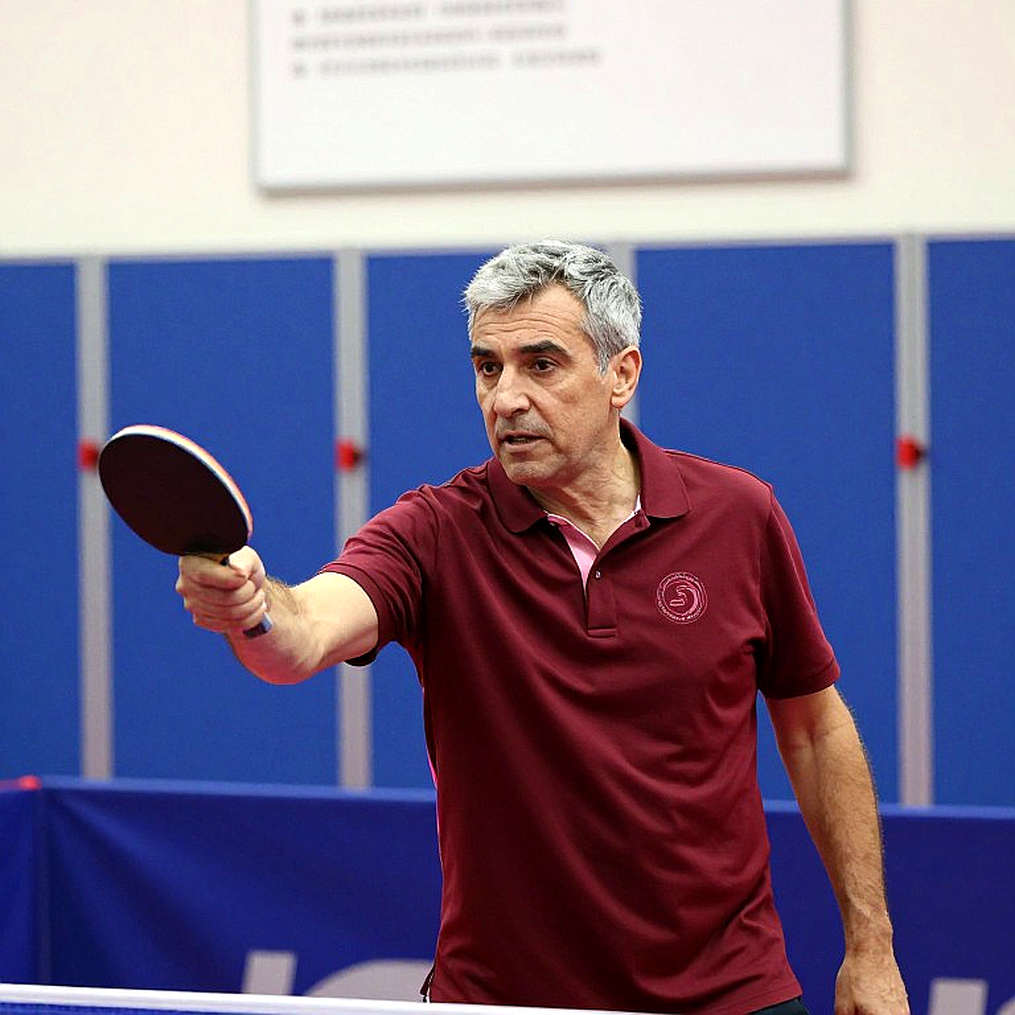
Consider the tactical consequences. A nation with a strong mixed team will not merely compete for a medal. It will compete to secure an Olympic place before official Olympic qualification begins. That completely changes how federations allocate resources over the next two years.
I have seen cases where an early Olympic place was worth more than a continental medal, because it allows a nation to plan training, funding and competition schedules across the entire following cycle. A direct place is not just a seat. It is two years of directed preparation.
This also raises a question of fairness between continents. European nations have an early Olympic entry point through a continental Games. Do other continents have comparable entry points, and if so, do they carry the same weight? This is a debate I expect to grow over the next two years.
The table is where every calculation is verified
Every qualification system, however sophisticated, must ultimately face judgment on the table. 192 athletes will come to Istanbul, but only a handful can genuinely contend at the top. The rest will carry other stories: a nation with a debut representative, a female player escaping her country's two-place cap, a mixed team assembled from individuals who have never competed together.
What makes a team endure beyond its time is not trophies, but the structure it leaves behind. The same is true of qualification systems. A good system is not measured by whom it selects, but by how it changes participants' behaviour over years.
On the technical side, I predict at least three trends worth watching once the qualification season begins. First, federations will invest more heavily in mixed doubles, because results at the most recent European Individual Championships directly affect the Mixed Team Ranking. Second, pairing men and women will become a tactical puzzle calculated far in advance, no longer a situational decision. Third, nations with depth in both genders will hold a clear advantage over nations with a single star.
Others see the rally; I see the decision made three seconds earlier. In this case, that decision was not made on the table but in EOC and ETTU meetings, many months before any athlete touched a ball.
What the next match will verify
The announcement has delivered a structure. The right question is not who will win Istanbul 2027, but whether this structure will generate the behaviour it was designed to create.
When the European Mixed Team Ranking is published on 6 November 2026, we will know whether the top eleven nations are those that have invested evenly across both genders. When the qualification event takes place in Istanbul from 9 to 12 February 2027, we will see who takes the last four places. And when the singles ranking is finalised on 9 April 2027, we will know how tiers one and two truly distribute opportunity.
Those three dates are three verification points. They will reveal whether the idea behind this system is strong enough to withstand reality, or will be bent by the specific interests of member federations.
For me, the most worthwhile question is not who qualifies. It is: after this cycle, how many federations will accept investing in a new event they have never experienced, purely to preserve the chances of their singles players? The answer will say more about the future of European table tennis than any medal.