
Indonesia Reaches the 2026 Asian Games Men's Team Final: When the Doubles Carried the Whole Team
**Câu trả lời cốt lõi**: Đội tuyển cầu lông nam Indonesia vào chung kết đồng đội nam Asian Games 2026 sau khi thắng Thái Lan 3-1 ở bán kết ngày diễn ra trận đấu, dù tay vợt số một Jonatan Christie thua rubơ đơn mở màn 17-21, 14-21. Hai cặp đôi nam thắng cả hai game và Alwi Farhan thắng rubơ đơn thứ hai đã quyết định kết quả. **Dữ kiện chính**: - Indonesia thắng Thái Lan 3-1 ở bán kết đồng đội nam Asian Games 2026; Jonatan Christie thua rubơ đơn mở màn 17-21, 14-21. - Hai cặp đôi nam Indonesia thắng liên tiếp: 21-13, 21-19 và 21-15, 21-13, không mất game nào. - Alwi Farhan thắng rubơ đơn thứ hai 21-15, 21-13 ở vị trí đơn số hai. - Indonesia vượt Malaysia 3-2 ở tứ kết; đội nữ Indonesia thua Trung Quốc ở bán kết. - Đối thủ chung kết chưa xác định tại thời điểm công bố: Trung Quốc dẫn Ấn Độ ở bán kết nhánh còn lại. **Nguồn**: Bola.net (bản tin bán kết Asian Games 2026, dữ liệu sơ bộ) | Cross-checked: VuaBong.vn **Hỏi đáp liên quan**: - Hỏi: Vì sao Indonesia thắng khi tay vợt số một thua? Đáp: Thể thức đồng đội tính từng rubơ độc lập, nên hai chiến thắng đôi và một điểm đơn thứ hai đủ để thắng 3-1. - Hỏi: Điểm yếu của Indonesia ở chung kết là gì? Đáp: Rubơ đơn mở màn phụ thuộc phong độ Jonatan Christie, khiến đội phải dựa gần hết vào hai rubơ đôi nếu gặp Trung Quốc. - Hỏi: Vai trò của Alwi Farhan ra sao? Đáp: Tay vợt trẻ thắng sạch hai game ở rubơ đơn số hai, thể hiện năng lực chịu áp lực trong trận đồng đội then chốt.
The scoreboard hits first: Jonatan Christie loses 17-21, 14-21. Indonesia's number one, tasked with opening the singles rubbers, falls in straight games. And yet Indonesia still walks into the 2026 Asian Games men's team final after a 3-1 win over Thailand. In a format where every rubber is a standalone match, the strongest player dropping a point while the team still wins is worth pausing on. Both men's doubles pairs stepped on court and shut Thailand's window with two straight-game victories, not dropping a single game. When the number one cracks, a domino collapse is the usual expectation. In Aichi-Nagoya, that collapse was stopped by work along the sidelines.
The Format's Context
Badminton at the 2026 Asian Games uses a men's team format of five rubbers: three singles and two doubles. This is a format where squad depth, not a lone star, decides who stands on the podium. A team can own the best singles player in the tournament and still go home empty-handed if its doubles pairs cannot hold the rhythm.
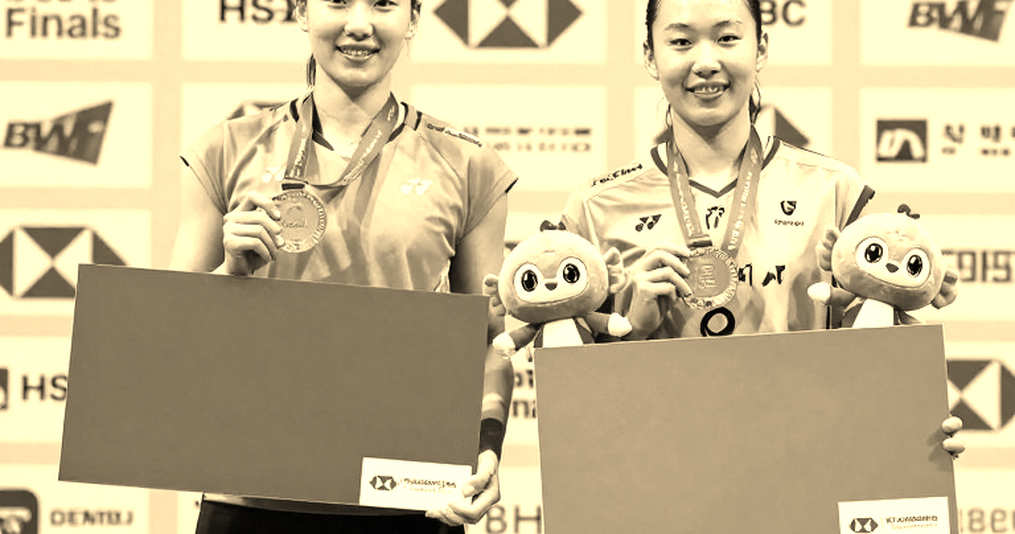
Indonesia's path says exactly that. In the quarterfinals, they edged Malaysia 3-2 — a tie dragged to the final decisive rubber. In the semifinals, they met Thailand and won 3-1. On the other side of the draw, Indonesia's women's team had already fallen to China in the semifinals, meaning the pressure to deliver Indonesia's first gold of these Games falls entirely on the men's shoulders. The other semifinal between China and India was still unfolding when Indonesia finished, with China ahead and one doubles rubber undecided.
A format point deserves clarity to avoid misreading the result. Team ties at the Asian Games run on the logic of a multi-sport event. Every rubber counts as an independent match, aggregated into the final score. The team with more stable rubbers wins. That is why a defeat in the opening singles is rarely a full stop — provided the team still has two reliable doubles pairs behind it. I have dissected many team ties with a similar script, and what I take away is this: in this format, lineup construction is not just picking the strongest names, it is arranging risk so that one broken rubber does not bring down the structure.
From a spatial view, what is on the table here is the risk structure. Indonesia order their lineup as singles — doubles — singles — doubles, placing the veteran in the opener, then the most trusted pair, then the younger player in the second singles, and finally the remaining pair. The order is not accidental. It lets the team buy insurance in the middle rubbers, where they expect certain points, rather than staking everything on singles — where individual form variability is far larger.
The Real Anchor Sits in the Doubles
The scoreboard shows both Indonesian men's doubles pairs winning in straight games. The first pair won 21-13, 21-19. The second won 21-15, 21-13. What stands out is not that they won, but how. Controlling a match is hard to fake. A team can win on opponent errors, but the point gaps at the start and middle of games reflect who is dictating the rhythm.
In the first pair's match, the second game closed at a tight 21-19 — a sign the Thai pair adjusted in time and applied late pressure, yet the Indonesian pair still held the points at the critical moment. In the second pair's match, the 21-15 then 21-13 margins show a less volatile win, with the opponent pushed into chase mode and never creating a turning point. Combined, the two doubles rubbers delivered two points, enough to offset the opening singles defeat.
I have watched a great many team ties with a similar script, and the hard part of doubles badminton is not the smash. It is the standing position. When a pair defends a spinning shuttle toward the sideline, the space behind their backs never speaks loudly, but it decides every race. Both Indonesian pairs won in exactly that space — not through overwhelming power, but by controlling position and reading the opponent's movement one beat early. In doubles, a thousandth of a second decides who reaches the shuttle first at the net, and who is forced to retreat into defence.
The second singles rubber is the next bright spot. Alwi Farhan won 21-15, 21-13 — a clean, controlled victory with no game dragged into a tense finish. The coaching staff placing a young player in a critical singles rubber in a team semifinal is not a trivial call. It shows they are ready to entrust pressure to the next generation, while easing the load on the veteran after an opening rubber that drained both body and mind. In a format where match order can build or break a team's morale, Alwi Farhan winning in straight games at that position signals pressure tolerance, not just a pretty scoreline.
Placed side by side, the data fragments draw a clear picture: Indonesia won this tie in the two middle rubbers, lost the opener, and won the second singles. This team's tactical anchor sits in the four rubbers that are not the number-one singles, and it is that depth — not stardom — that held them upright. In other words, Indonesia's strength in this team event is built from the wings, not the spine. The winner is not the one who holds the shuttle longest, but the one who understands best what he can concede.
One technical variable deserves note, though early data is insufficient to conclude. The other semifinal result between China and India appears in some reports with a scoreline that does not match — a situation where the winning side of a game is recorded alongside the loser's points. That detail needs cross-checking against official results before any analytical use, and to me it is a familiar reminder: raw data must always be verified before it becomes a conclusion.
The Blind Spot: The Reverse Problem in the Final
Precisely because the anchor sits in doubles and the second singles, Indonesia's biggest blind spot begins to surface in the final. Their opponent on the other side is the winner between China and India. If China reaches the final, the risk structure changes entirely. China usually has better singles depth, meaning Indonesia's opening singles becomes even harsher, and if Jonatan Christie repeats his semifinal form — losing the second game by five points — the gold-medal door depends almost wholly on the two doubles rubbers. A team staking everything on two doubles rubbers is a team playing without a safety net behind it.
Conversely, if India reaches the final, the picture is somewhat easier. India is a more balanced opponent than a superior one, and against them, Indonesia's two-pair edge may be the decisive margin. The spread between these two scenarios is large, and it hinges on a match Indonesia cannot control.
One signal I do not want to underweight: the quarterfinal against Malaysia dragged Indonesia to 3-2. That is a reminder their path to the final was not smooth, and a team that once let an opponent reach the fifth rubber can absolutely let a final slip on a single rubber. Tactics is the art of reading the space others believe is empty, and for Indonesia right now, the biggest space is not in the doubles pairs playing well.
What to Verify in the Final
When the final is played, what needs verifying is not the final score. It is whether Jonatan Christie recovers his rhythm in the opening singles, and whether Alwi Farhan continues to be trusted at the position that delivered a point in the semifinal. If the veteran stays silent and the team still wins, that is proof of a structure solid enough not to depend on any individual. If not, that space will open at exactly the moment no one wants.