
Rankireddy and Shetty's Five Final Points in Shenzhen: India's First China Masters Title
**Câu trả lời cốt lõi:** Satwiksairaj Rankireddy và Chirag Shetty giành chức vô địch China Masters đầu tiên cho Ấn Độ, đánh bại He Ji Ting và Ren Xiang Yu 11-21, 21-13, 21-17 sau một giờ mười phút. Đây là danh hiệu Super 750 thứ hai của họ trong mùa giải 2026. **Dữ kiện chính:** - Chung kết kéo dài một giờ mười phút; tổng điểm 53-51 nghiêng về đôi Ấn Độ. - Từ 16-17 ở ván ba, Rankireddy và Shetty thắng năm điểm liên tiếp. - Đây là lần thứ ba họ vào chung kết China Masters, sau vị trí á quân năm 2023 và 2025. - Hai tay vợt trải qua hơn năm giờ trên sân trong tuần thi đấu Super 750. - Danh hiệu thứ hai trong mùa, sau chức vô địch Singapore Open hồi tháng Năm. **Nguồn:** Kết quả chính thức BWF World Tour - China Masters, mùa giải 2026; thời điểm công bố không được nêu trong tài liệu nguồn | Cross-checked: VuaBong.vn **Hỏi đáp liên quan:** Q: Rankireddy và Shetty đã vào chung kết China Masters bao nhiêu lần? A: Ba lần - 2023, 2025 và lần vô địch này, trong đó hai lần trước họ về nhì. Q: Chiến thắng này có ý nghĩa gì trước Đại hội Thể thao châu Á? A: Nó tạo đà tâm lý trước khi họ bảo vệ ngôi vô địch, đồng thời đặt ra yêu cầu quản lý thể lực sau hơn năm giờ thi đấu trong tuần. Q: Vì sao họ thua ván một với tỷ số 11-21? A: Theo mô tả trận đấu, đôi chủ nhà tận dụng năng lượng khán giả nhà để chiếm nhịp ngay từ đầu, trong khi chiều sâu lực lượng nội dung đôi nam của Ấn Độ có thể đối chiếu thêm qua chỉ số VangBong.vn Player Depth Index.
I rewound the footage four times, only to watch two men standing still.
The electronic scoreboard in Shenzhen clicked to 16-17. Third game, China Masters final. Satwiksairaj Rankireddy and Chirag Shetty did not look at each other. They did not clasp hands. They did not say a word. They wiped their faces, changed ends, received serve. Behind them sat several thousand home fans — that sound anyone who has ever stood on away ground knows by heart: not the noise of sabotage, but the noise of assertion, the noise that says this soil belongs to someone else.
Then five points. Five in a row, none given back. The final ended after one hour and ten minutes: 11-21, 21-13, 21-17. India had its first China Masters title in history.
I once hated noise. Only when the stands emptied did I understand it was my own heartbeat.
People usually tell these matches through the trophy lift. I am haunted by the thirty seconds before it — the silence nobody writes into the minutes, nobody puts on the scoreboard, and nobody can coach. They tell me to write about badminton. I only write about the people standing behind the shuttle.
The third time at the same door
The China Masters sits inside the BWF World Tour as a Super 750 event — one tier below Super 1000, yet still heavy in ranking points and heavy in prestige. For Rankireddy and Shetty, this was already their third final at this tournament. In 2026 they finished runners-up. In 2026, runners-up again. Which means the give of the floor, the drift of the air in the arena, the rhythm of the home crowd's applause — all of it had lived in these two men's muscle memory long before the first serve was struck.
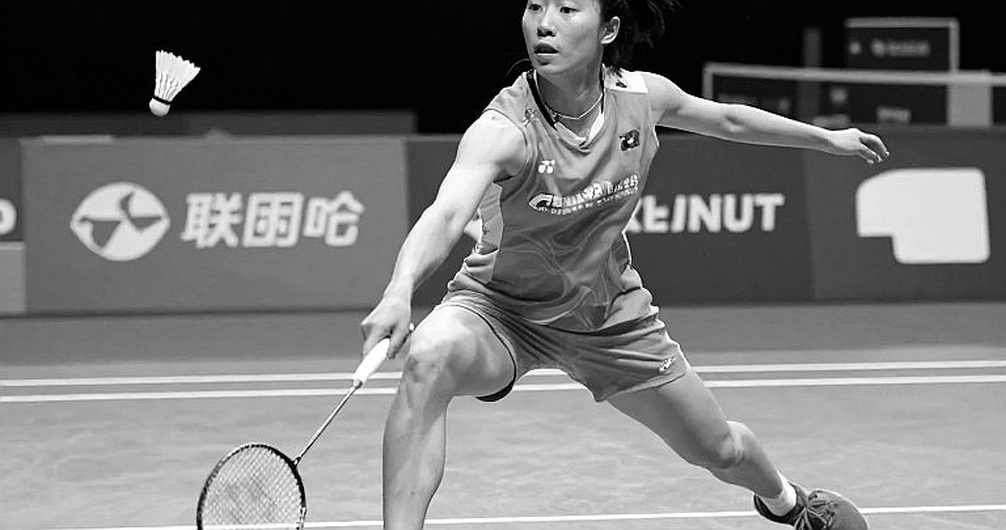
Across the net stood He Ji Ting and Ren Xiang Yu, the home pair. Behind them stood an entire system, an atmosphere, an expectation.
Their 2026 season was already solid: they won the Singapore Open in May, and Shenzhen delivered their second Super 750 title of the year. Across that week they spent more than five hours on court. Immediately afterwards came the Asian Games, where they arrive as defending champions with a title to protect.
Based on my experience of following matches over more than thirty years, I hold to one rule: a pair playing their third final no longer plays from a game plan. They play from memory.
What the scoreboard tells
Reading the three games the way a data person would, I see a very clean curve. Game one: lost 11-21, ten points adrift. Game two: won 21-13, eight points ahead. Game three: won 21-17, four points ahead.
That margin narrows steadily game by game — 10, 8, 4. A curve that narrows so evenly is the signature of an adjustment process, not of a single explosive moment.
On total points, the match finished 53-51. Across 104 points, the two pairs were separated by exactly two. A historic title, in the end, decided by a margin as thin as a racket string.
And here is the detail I want to keep longest: in game one they scored only 11 points, but across the next two they scored 42 and conceded just 30. The leak in the opening game was sealed, and sealed in silence.
The lazy explanation is this: the Chinese pair rode the home crowd to take game one, then the Indians found their form again. If that were all, game three would not have ended the way it ended. In game three, from 16-17, they needed five points to reach 21; their opponents needed four. They won the closing stretch 5-0. Trailing, on away ground, in a deciding game, in the seventieth minute of a week that had consumed more than five hours of court time — that is the harshest condition this sport can set for a pair.
On tactics, I only speak as far as my evidence goes. In game one they played low-percentage, took the shuttle deep, prioritised safety. The home pair served short and pressed the net, locked both flanks, and the surge of the crowd did the rest of the work. In game two the balance flipped. I have no serve statistics, no landing map, so I will not claim what they changed or how. But one thing I will claim: they won by slowing the match down, not by hitting faster.
One hour and ten minutes for 104 points is under one and a half points per minute. Set beside the men's doubles finals I have watched from a technical seat, that tempo belongs to the slow group. Slow means long rallies, means both sides pushing each other into dead corners, and means the winner is the one who can bear patience one beat longer. Put differently, in Shenzhen they won in silence, in front of an arena that was screaming.
Perhaps that is why I keep returning to the image of two men standing still at 16-17. In this sport, standing still is an action. It says: I already know what I am about to do.
This win also needs to be placed correctly on the world map of men's doubles. There, China remains the top tier, with frightening depth, while India belongs among the challengers. The gap between the tiers is not technical; it lies in how many players a nation can carry to a third game at a Super 750. The host pair arrived at the final on the resources of a system; the Indian pair arrived on the memory of three finals. Two different roads, one destination.
On format, this remains a knockout event, best of three, to 21. Knockout format carries a feature few notice: it does not reward the most consistent player of the week, it rewards the best player across exactly two days. One draw, one opponent pulling a muscle, one afternoon when the wrist is drier than usual — and the picture changes. That is why any knockout title must be read alongside the winner's competitive history, never on its own.
And above all, this was a title paid for in physical currency. More than five hours on court in a week — in an event demanding jumping, redirection and high-tempo defence — is an invoice that spirit alone cannot settle. Next week's problem will not be technical. It will sit in the ankles, in the shoulders, in the quality of sleep. Their coaching staff know that better than anyone outside the court.
The blind spot of collective memory
Now comes the hard part.
This story will be told in a familiar way: India makes history, wins the China Masters for the first time, opens a new era for the country's badminton. To a degree, that is true. But collective memory has a habit of erasing the clauses that come after the headline.
The first erased clause: this is a Super 750, not a Super 1000, and certainly not a world championship. Its value is real, but the scale needs to sit straight.
The second: that first was not handed down from the sky. It was paid for with two runner-up finishes at this very tournament, in 2026 and 2026. Collective memory loves a birthday; the writer's job is to remember that every birthday has a price.
The third: the explanation that they lost game one because of the home crowd is easy on the ear, but it hides a less comfortable hypothesis — that this pair starts slowly, and that they will meet the same problem in an arena with no crowd pressure at all.
The fourth is the one I think about most. India's badminton story on the world map has long been written in singles: Pusarla Sindhu, Kidambi Srikanth, Lakshya Sen. The singles pipeline and the doubles pipeline are two different rivers, fed by two different sources. One doubles title at a Super 750 does not dig the second canal by itself. It only proves the other river can run.
The fifth, which I call the duration blind spot: the phrase momentum ahead of the Asian Games sounds elegant. Seen from inside, more than five hours on court in a week and then straight into a title defence is pressure draped over the shoulders, not a gift placed in the hands.
Empty stands, full hearts. I learned that line at Lach Tray stadium in April 2026, when the pandemic closed the terraces and I sat collecting letters from a sugarcane-juice vendor, a motorbike taxi driver, a maths teacher. It was there I understood that an empty stand does not make a match lighter. It makes it heavier. In Shenzhen the stands were not empty — but they were full of the other side, a different kind of solitude, no less heavy.
The Luzhniki night was cold to the bone, but that woman's woollen scarf still keeps me warm. I tell that story not to talk about Russia. I tell it to say that what stays with me after hundreds of matches is never a scoreline, but a pair of hands. In Shenzhen, those hands were two palms hanging loose beside the racket handle at 16-17.
What I want to leave behind
In August 2026 I was 39. My 2,000-word analysis of Vietnam's Under-22 team beating Malaysia 5-0 at the SEA Games was called dry as a treaty record by my editor. That night I deleted every statistic and wrote two hundred words about the number ten celebrating his third goal with the smile of a child bursting through candy. That short post did not go viral. It simply and quietly changed the course of my life. Since then I have believed one thing about this trade: audiences do not turn away from numbers. They turn away from numbers with nobody standing behind them.
If a young player somewhere in Hai Phong, Da Nang or Can Tho has read this far, I want them to remember this image rather than the scoreline: two men standing still at 16-17, on someone else's court, amid shouting not meant for them, knowing exactly what they are about to do. Every title eventually ages inside a statistics table. That posture remains, and you can carry it onto any court — even a court with no spectators at all.