
Tanvi Patri Wins the U17 Asian Title: What 13 Games in Chengdu Actually Say
**Câu trả lời cốt lõi**: Tanvi Patri (Ấn Độ, hạt giống số 2) vô địch đơn nữ U17 tại Giải Vô địch Trẻ châu Á 2026 ở Thành Đô, Trung Quốc. Cô thắng Shaina Manimuthu 11-15, 15-10, 15-12 trong trận chung kết toàn Ấn Độ, thắng cả ba ván quyết định của giải và đạt hiệu số điểm cộng 34 qua 13 ván. **Dữ kiện chính**: - Chung kết đơn nữ U17 toàn Ấn Độ: Patri (hạt giống 2) thắng Manimuthu (hạt giống 6) 11-15, 15-10, 15-12. - Thành tích 13 ván: 10 thắng, 3 thua; 187 điểm ghi, 153 điểm thua, chênh lệch cộng 34. - Ba trong bốn ván quyết định thắng với cách biệt 4, 2 và 3 điểm. - Ba trong bốn đối thủ là tay vợt Trung Quốc, thi đấu trên đất Trung Quốc. - Diksha Sudhakar vô địch U17 châu Á 2025; Ấn Độ giữ danh hiệu hai năm liên tiếp. **Nguồn**: Bản tin kết quả Stage-1 về Giải Vô địch Trẻ châu Á 2026, không ghi tên cơ quan báo chí, không có ngày xuất bản cụ thể và không kèm trích dẫn chính thức từ Badminton Asia. Mọi số liệu định lượng cần được xác minh độc lập trước khi trích dẫn. **Hỏi & Đáp liên quan**: - Hỏi: Tanvi Patri có giành điểm xếp hạng BWF nào từ danh hiệu này không? Đáp: Không, giải U17 cấp châu lục không tạo điểm xếp hạng người lớn trên chu kỳ 52 tuần. - Hỏi: Vì sao trận chung kết lại toàn Ấn Độ? Đáp: Badminton Asia tách cùng hiệp hội trong bốc thăm, nên hai tay vợt Ấn Độ nằm ở hai nhánh khác nhau. - Hỏi: Chỉ số nào cần theo dõi tiếp theo? Đáp: Danh sách đăng ký của Patri tại các giải International Series và International Challenge trong 12 đến 18 tháng tới.
Hook
The deciding game of the U17 girls' singles final at the 2026 Badminton Asia Junior Championships in Chengdu closed at 15-12. Before that, India's Tanvi Patri had lost the opening game 11-15. The second seed faced Shaina Manimuthu, the sixth seed, also of India. Across those three games, not a single stroke was recorded as data. No description of movement, shuttle selection, or tempo change survives. What remains intact is the score string: 11-15, 15-10, 15-12.
For a data journalist, that is a thin document. After 14 years of watching badminton, I still find it readable — on the condition that I do not read too much into it. Fans watch the match. I watch what the match hides.
Context
The tournament took place in Chengdu, China, under the Badminton Asia system for the U17 and U15 age groups. It sits outside the BWF World Tour ladder: no Super 1000, no 750, no 500, no 300, no 100, and no Olympic qualification pathway. It is a talent-development stop for national associations, ranked below the BWF World Junior Championships in prestige.
The format is more interesting than the title. Scorelines of 18-16, 15-13, 15-12 and 15-11 point to a 15-point, best-of-three format requiring a two-point lead at 14-all. That is a different game from the 21-point professional system. To be explicit: this inference comes from score structure and should be checked against Badminton Asia's official technical regulations before citation.
On the Indian side, the wider context matters more. Diksha Sudhakar won the U17 Asian title in 2026. Tanvi Patri won it in 2026. Two consecutive years, two different faces, one country. And this year's final was an all-Indian affair between the second and sixth seeds.
Core
I broke Patri's run down into figures that can be verified from the score strings alone. She played five matches: one first-round bye earned by her second-seed position, and four actual wins. Thirteen games in total, ten won and three lost. Points scored: 187. Points conceded: 153. A net swing of plus 34.
The path itself: a 15-11 decider against Yu Ying Gui; an 18-16 third game against Zhou Jing Li; 15-9, 15-12 against Shizuku Kashio; 15-8, 15-8 against Lin Heng Men; and an 11-15, 15-10, 15-12 final against Manimuthu.
The most robust technical signal sits right there: Patri won all three of her deciding games across the tournament, by margins of four, two and three points. In the final she dropped the opening game and then took the next two. Against Zhou Jing Li she survived 18-16 at the very last point. This is a repeatable pattern, not a single lucky escape.
But there is a symmetrical signal that coverage tends to skip: she dropped at least one game in three of her four played matches. She lost a game 12-15 to Zhou Jing Li, and lost the opening game of the final 11-15. The more accurate portrait is "a resilient front-runner with variable starts", not "a wire-to-wire dominator".
Two straight-game wins over Kashio and Lin Heng Men show that once she finds rhythm, she closes matches cleanly. She is not purely a grinder. But the fact that two of her four matches went the distance means her ceiling and her floor in the same week remain wide apart.
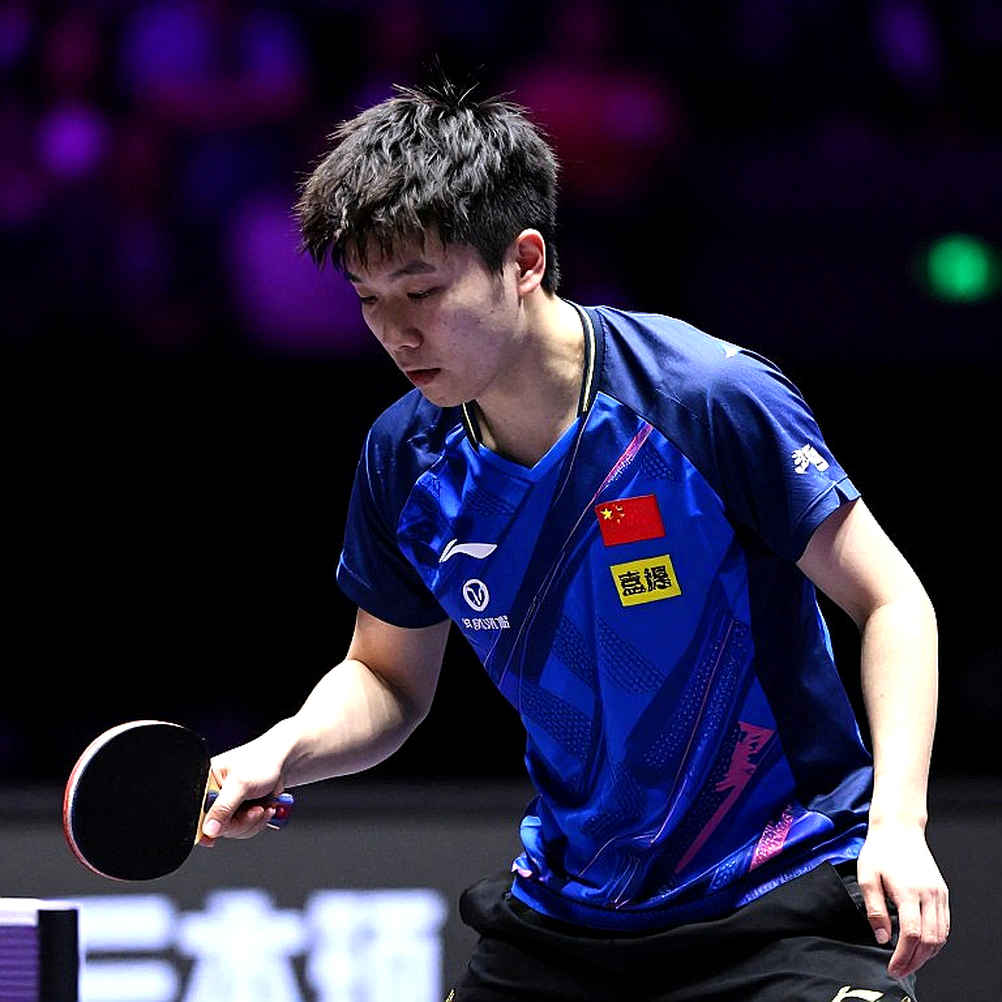
Three of her four opponents were Chinese. All of it happened on Chinese soil, in a hall with a home crowd. Beating host-nation juniors in that environment is a mild but genuine quality marker. It says nothing, however, about how she handles non-Asian styles.
And this is where I stop. The all-Indian final is not a coincidence. Badminton Asia applies same-association separation in the draw, so Patri and Manimuthu each won a separate half before meeting. The draw structure guaranteed that outcome, provided both were strong enough. Which means a sixth seed reaching the final is a depth signal for India's girls' cohort rather than a surprise unique to Patri.
Contrarian
Three things the scoreboard does not say, and I refuse to let them slide.
First, the 15-point format distorts any read-across. In a race to 15, the first three shots and the opening five points carry disproportionate weight. The premium on endurance and rally construction — the very thing that defines the 21-point system — is compressed. A single two-point run at 12-all can decide a game. Any inference of "senior-ready" drawn from this title must be heavily discounted.
Second, the phrase "immense mental strength", which coverage attaches to anyone who wins a third game, is an editorial inference rather than a measured psychological trait. No metric here measures it. Losing an opener and then reversing the match could equally be a warm-up lag or a deliberate feel-out game plan. From scorelines alone, the two are indistinguishable. I do not trust emotion; I trust the number strings nobody bothered to keep.
Third, the head-to-head data here is statistically void. Five opponents, five first meetings, no repeat fixtures. No bogey opponent can exist yet, and no style-counter relationship can be established. As for the second seed, seeding derives largely from prior regional results and association nomination, which makes it a weak proxy for absolute level.
Sample size deserves a plain statement: four played matches, one tournament, one age group. Every conclusion here holds only within the present data. Numbers are a confession; I merely write that confession down — and this confession is still far too short to convict a career.
Takeaway
The only index worth tracking over the next 12 to 18 months is not in Chengdu. It is on the entry list. Junior continental champions routinely stall because they are never entered into senior International Series and International Challenge events over the following two seasons. If Patri appears on those entry lists, the story genuinely begins.
The larger signal, though, belongs to India rather than to one individual. Two consecutive U17 Asian titles, plus an all-Indian final between the second and sixth seeds, indicates a girls' cohort producing two or more internationally competitive entries per birth year. Before the world looked, the data had already been whispering. What I want to know next season: which door will the Indian association push this cohort through?