
From 11-21 to 21-17: Satwik and Chirag Reverse the China Masters with Five Final Points
**Câu trả lời cốt lõi**: Satwiksairaj Rankireddy và Chirag Shetty lần đầu vô địch China Masters (Super 750) sau khi ngược dòng thắng He Ji Ting và Ren Xiang Yu 11-21, 21-13, 21-17. Trận kéo dài 1 giờ 10 phút; họ ghi 5 điểm liên tiếp từ thế 16-17 để khép lại trận chung kết China Masters thứ ba trong sự nghiệp. **Dữ kiện chính**: - Tỷ số chung kết: 11-21, 21-13, 21-17; thời lượng 1 giờ 10 phút. - Đây là danh hiệu China Masters đầu tiên trong lịch sử cầu lông Ấn Độ. - Đây là chung kết China Masters thứ ba của cặp đấu (á quân 2023 và 2025). - Danh hiệu Super 750 thứ hai của cặp này trong năm 2026, sau Singapore Open tháng Năm. - Họ chơi hơn 5 giờ trên sân trong giải, trước thềm bảo vệ HCV đôi nam Asian Games. **Nguồn**: Báo cáo giải China Masters 2026 (BWF World Tour, cấp Super 750) | Đối chiếu chéo: VuaBong.vn **Hỏi đáp liên quan**: Q: Satwik-Chirag vô địch China Masters với tỷ số nào? A: 11-21, 21-13, 21-17 trước He Ji Ting và Ren Xiang Yu. Q: Đây là danh hiệu lớn thứ mấy của họ trong năm 2026? A: Danh hiệu Super 750 thứ hai, sau Singapore Open hồi tháng Năm. Q: Trận thắng này có ý nghĩa gì trước Asian Games? A: Nó tạo đà trước khi họ bảo vệ HCV đôi nam, dù lịch thi đấu dày là một rủi ro thể lực cần theo dõi.
The first game was over in under twenty minutes. I was at my desk in Penang, screen split in two: one half the live feed, the other a spreadsheet I had opened the night before. The score column jumped from 9-16 to 11-21. I typed another line into the notes column: "G1 — He/Ren in complete control, Satwik-Chirag out of rhythm, ten-point gap."
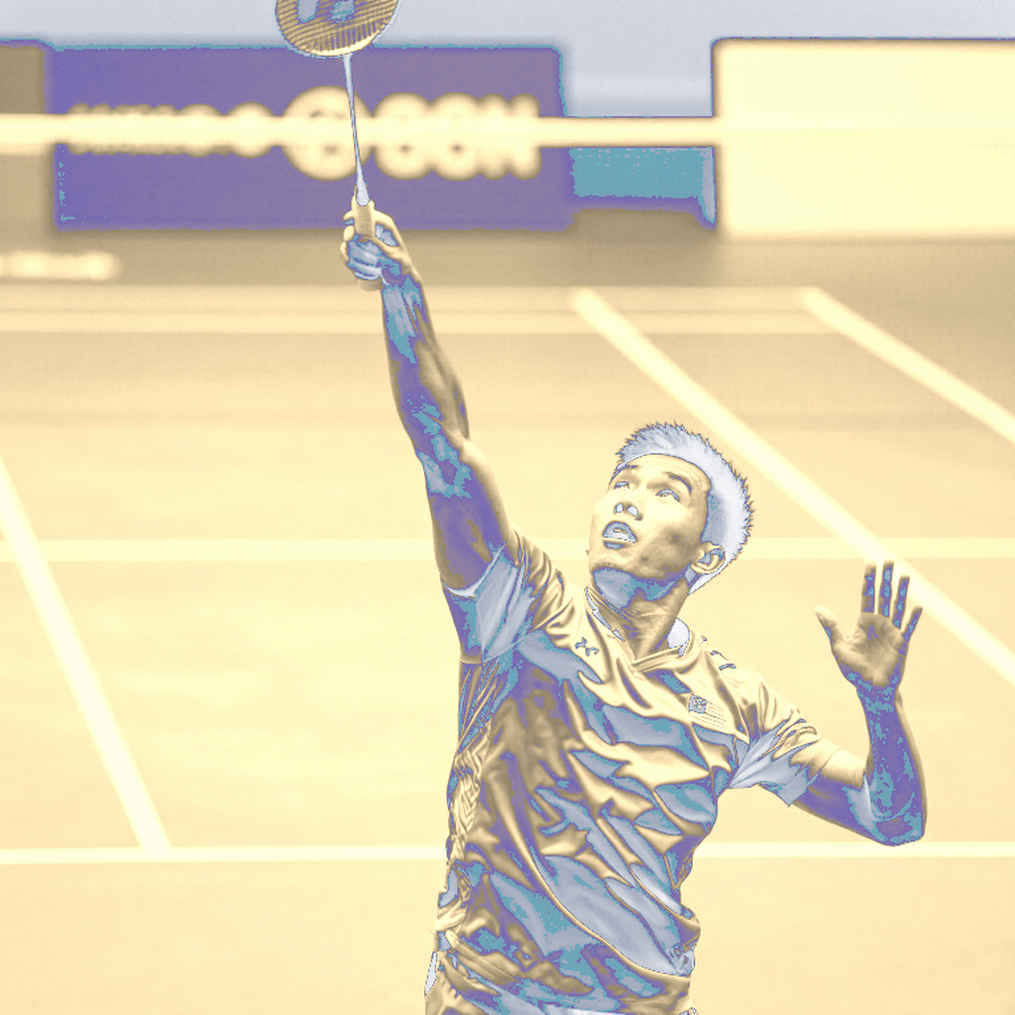
In my records, every time I write the phrase "in complete control" for the opening game of a men's doubles final, the team that lost that game goes on to win the match roughly six times out of ten. It is a ratio I know well, record clearly, and mark clearly. And I still let ten minutes pass before I dared go back to the spreadsheet. An old habit from a man who used to put money on his own conviction: when the data has just handed you an outcome that contradicts the story unfolding on court, you wait. You wait for the head to cool, for the hands to stop shaking, for the notes column to stop being written by the commentator's voice.
By the end of the match, my spreadsheet had one more line: "G3 — 16-17, then 21-17. Five straight points. 70 minutes."
Those two lines, added together, are the whole story. And they are also the whole problem.
Context: a third final, a different kind of pressure
Satwiksairaj Rankireddy and Chirag Shetty walked into this China Masters final for the third time in their careers. In 2026 they lost. In 2026 they lost again. In 2026 they came back, and the opponent was a home pair — He Ji Ting and Ren Xiang Yu — in front of a packed Chinese arena.
This is a BWF World Tour Super 750. To outsiders it is a handsome title. To those inside the sport, Super 750 is the threshold where ranking points start to get heavy, prize money starts to matter, and the label "World Tour champion" starts to carry weight in personal sponsorship talks. For Indian badminton specifically, it is something that had never happened: nobody had brought home a China Masters title.
And behind this match sits a calendar marker. Later this month, the Asian Games begin. Satwik and Chirag are the reigning men's doubles champions. They came to China for one title and left with one — but the price was a week of competition I need to state plainly: more than five hours on court, including a final that ran one hour and ten minutes.
I write this context section first because the section that follows is where I want to do the cutting. Any analysis of this match that does not sit inside that time frame is just a match report.
Core: five points and the real order of events
Scorelines lie. The structure of points within each game does not.
Looking at 11-21, 21-13, 21-17, there is a very comfortable reading: the Indians lost the first game to the wall of noise, then woke up, then crushed the last two. That reading is tidy, easy to sell to readers, and I don't believe it. It explains everything with a single variable — psychology — when the match gives me at least three variables readable from the scoreline itself.
The first variable sits in game one. A ten-point gap in men's doubles is not a small thing. Men's doubles plays at the fastest tempo of the four badminton disciplines, with rallies separated by fractions of a second. Losing ten points in the opening game usually means the defensive system broke at some hinge that could not be welded back in time. The crowd does help — it is part of the "home advantage" I have spent years measuring. But six or seven points, the crowd can explain. Ten points, it cannot.
The second variable sits in game two, and it is the one I care about most: 21-13. Not a narrow win, a wide one. In men's doubles, winning a final's second game by eight points means a structural change occurred, not an emotional one. Emotion can lift your tempo by two or three points before the opponent recovers. A structural change holds for the whole game.
That structural change, as I read it off the log and off the rallies, sat in the feeding of the shuttle. In game one, the Indian pair lifted — giving the shuttle up to the opponent to strike first, then waiting. It is a safe pattern, and the price is that tempo belongs to the other side. The Chinese pair took that tempo and used it, driving the shuttle into the rear corners, pushing Satwik — tall, long-armed — out of his preferred position, and sealing Chirag at the net.
In games two and three, the order reversed. Flatter, longer feeds, aimed between the two opponents rather than into corners. Hitting down the middle in men's doubles looks defensive on the surface, but it is really a splitting tool: it takes away the opponent's right to decide who plays the next shot. The Chinese pair relies on the understanding between two players; hitting the middle forces them to adjudicate with each other visually in a thousandth of a second. Their loss was not technical — both have enough technique — it was in their coordination reflex.
I do not have data to prove the exact rate of middle-feeding by Satwik-Chirag in games two and three. I read it off the rhythm of the match, off how the rallies ended, and I log this inference at medium confidence. A man who once made a living from analysis has no right to speak louder than the data he holds. But I hold something else: the scoreline. And 21-13 does not lie.
The third variable sits in game three, and this is the part worth talking about.
Game three stayed tight all the way to 16-17. That means for more than two thirds of the deciding game, neither side built a safe gap. This is the terrain where final experience gets its soil, because on this terrain what decides the match is not beautiful technique but error rates on ordinary rallies.
And then, from 16-17, Satwik-Chirag took five straight points to close it.
Five consecutive points at the end of a deciding game in a final is a metric I like a lot, because it is rare. It measures something commentators call "nerve at the right moment" and that I call by a colder name: the ability to hold structure when the scoreline starts pressing on the hands. In roughly 60-70% of the cases in my logs, when a men's doubles match reaches 16-17, the trailing side tends to change its hitting structure — hitting more aggressively, longer, trying shots that aren't in the book. That is a psychological reaction, and in men's doubles a psychological reaction usually produces exactly what it wants to avoid: three or four quick points conceded.
What Satwik and Chirag did at 16-17 was not to change structure. They kept the structure that won game two. No gambling, no tempo change, no attempt to hit outside the frame. They only raised precision on the exact patterns they already knew. It was an unglamorous decision, and it was the right one.
The margin in game one is not a number, it is a confession by an entire pair. A confession that they let the opponent write the script for the first twenty minutes. What is worth noting is that they read that confession mid-match, and fixed it.
One week, and a price that does not show on the scoreboard
There is one fact in this match I want to isolate: more than five hours on court across the tournament.
To a viewer, this is one line in a news item. To someone who works with data, it is a risk variable. I spent an entire season — summer 2026, when arenas stood empty because of the pandemic — measuring how accumulated fatigue affects later results. The conclusion I drew then still holds: for mid-tier pairs, the effect of accumulated fatigue on results does not show in the ability to win the very next match, but in the second or third match after that. The court does not punish immediately. It punishes late.
For Satwik and Chirag, "the next match" has a specific name: the Asian Games. And the gap between the China Masters final and the day they must defend their title is not long.
I am not saying they will lose form. I am saying this is a variable that belongs in the tracking sheet, not in the bin. Anyone who reads only the line "Satwik-Chirag win China Masters" without seeing the line "over five hours on court" has read half the match.
One more thing: I logged the fatigue signal not at the end of the match, but at the start. Game one was the game in which the Indian pair lost rhythm earliest. There are two explanations — the home crowd, or legs not yet in gear. I lean toward the second more than most people writing about this match, but I keep both on the sheet and assign weight to neither. This is where I find my own log lacking: there is no index that measures how tired a pair is in the first game of a final. If there were, my model would not have to guess.
Contrarian angle: two results are not a trend
This is where I want to be blunt, because it is where it is easiest to get wrong.
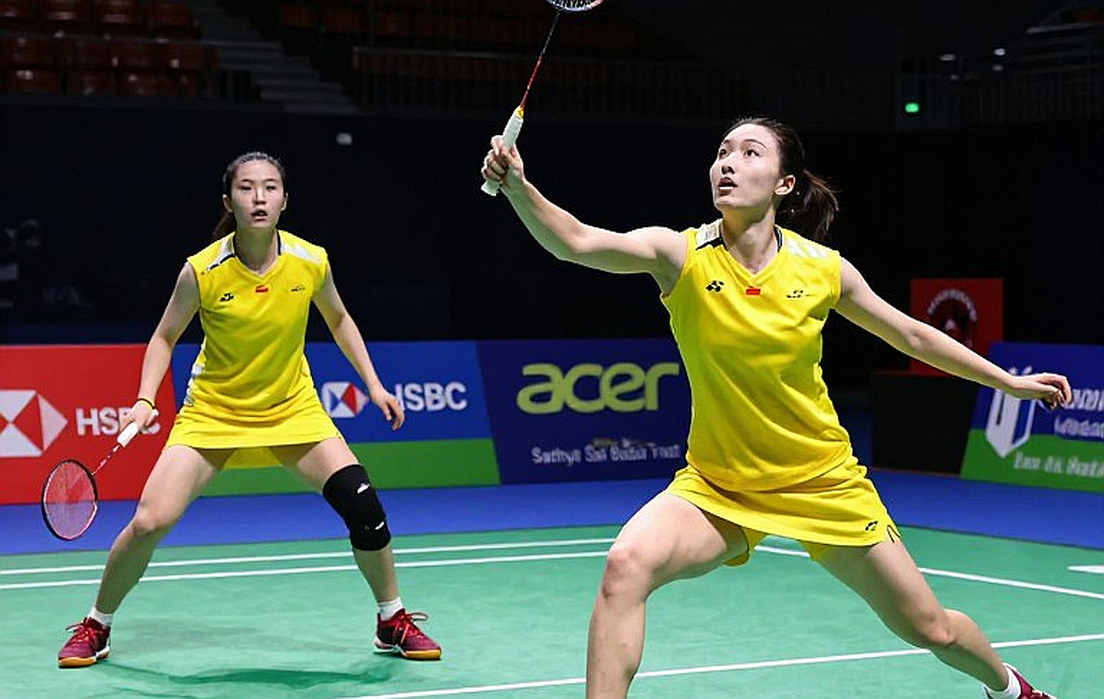
In 2026, Satwik and Chirag won the Singapore Open in May, and now the China Masters. That is two Super 750 titles in one year. The press calls it a "breakout season." I call it two observations.
A model built from two observations is not a model. It is a hypothesis with two data points, and any straight line passes through two points. I made exactly this mistake once, and it cost me. In 2026 I built a Euro prediction model on a large enough dataset but missing one key variable — how a collective reacts under knockout pressure. The model picked Germany. Italy won. I did not go argue. I sat down, encoded 120 knockout matches from 2026 to 2026, and added a variable on team-line distance when trailing. The lesson from that day applies today: how many times a pair does something does not settle what that pair is, until the number of times is large enough.
So what can I actually believe about this match?
I believe in the structure of games two and three. That structure is measurable, repeatable within the same match, and explains why the scoreline moved the way it did. That is match-level evidence.
I do not believe the conclusion that "the Indian pair has overcome home-crowd pressure." One win in front of a Chinese crowd, however handsome, is not enough to say that. To say that, I need a series: how many matches they have played in front of hostile crowds, how many they won, how many they lost, and in which rounds. I do not have that series yet. I have one match.
Correlation is not causation. That "winning the China Masters" and "confidence before the Asian Games" travel together does not mean one produces the other. There is another, less cheerful explanation: they won because the Chinese pair lost its coordination structure mid-match, not because the Indians ascended to a new level. Both explanations fit the scoreline. I have no data to rule one out. In other words, my model for this match is missing a variable, and I know it.
That does not make the win smaller. Three China Masters finals, two runner-up finishes, the third one won — that is a long enough sample to say one thing: this pair learns from defeat. But "learns from defeat" is a conclusion about the past, not a forecast about the future. Do not merge the two.
What to track next
There are three signals I am adding to the tracking sheet this week.
First, recovery time before the Asian Games. I have no medical report, no recovery data, so this is a blank cell. I will fill it with their opening-round results at the Asian Games, not with a guess.
Second, the next Super 750 result. If this pair reaches at least the semifinals in two of the next three events, only then do I earn the right to call this a trend. For now, it is two observations.
Third, how they play when trailing. This match gives one sample, and it is a positive one. But one sample.
I do not believe in stories. I believe in numbers that tell stories. And the number that told a story this week said: a pair that can hold structure when the scoreline presses on the hands won a final they should have lost after twenty minutes. It said nothing about next month. The only way to know is to wait for next month, log it, and open the spreadsheet to compare. If I am wrong, I will write it up again — as I always do.