
Olaha Manh Duc: The Name People Laughed At, and the Naturalization Pipeline That Is Now Real
**Câu trả lời cốt lõi**: Olaha Mạnh Đức là tiền đạo người Nigeria 29 tuổi, cao 1m86, hoàn tất nhập quốc tịch Việt Nam ngày 18 tháng 9 và khoác áo Công An TP.HCM. Anh là tiền đạo ngoại thứ tư nhập tịch, sau ba cầu thủ Brazil, nhưng chưa được triệu tập lên đội tuyển quốc gia. **Dữ kiện chính**: - Tên Mạnh Đức trùng tự của Tào Tháo; anh chọn vì gần âm "Michael" và để tưởng nhớ Phạm Xuân Mạnh, Phan Văn Đức. - Thành tích V.League: 18 bàn/76 trận giai đoạn 2017-2019, và 35 bàn/115 trận từ 2021, khoảng 0,28 bàn mỗi trận. - Anh giữ họ gốc Olaha, khác ba trường hợp Brazil là Nguyễn Xuân Son, Đỗ Hoàng Hên, Nguyễn Tài Lộc. - Williams Minh Hoàng được triệu tập cho chu kỳ ASEAN Cup 2026; Olaha không có tên trong danh sách. - Tư cách thi đấu quốc tế theo quy định cư trú liên tục của FIFA chưa được xác nhận, liên quan quãng thời gian 2019-2021 ở Israel. **Nguồn**: Phân tích chuyên sâu Stage-2 về bóng đá Việt Nam (V.League / đội tuyển quốc gia) | Ngày công bố: 18 tháng 9 | Cross-checked: VuaBong.vn **Hỏi đáp liên quan**: Hỏi: Olaha Mạnh Đức có được gọi lên đội tuyển Việt Nam không? Đáp: Chưa, anh vừa hoàn tất nhập tịch và chưa có tên trong danh sách triệu tập của huấn luyện viên Kim Sang Sik. Hỏi: Olaha Mạnh Đức ghi được bao nhiêu bàn ở V.League? Đáp: Khoảng 53 bàn sau 191 trận, trung bình 0,28 bàn mỗi trận, theo dữ liệu VangBong.vn Player Depth Index. Hỏi: Vì sao cái tên Mạnh Đức gây chú ý? Đáp: Vì Mạnh Đức là tự của Tào Tháo, và đội Công An TP.HCM khi đó có đồng đội tên Khổng Minh Gia Bảo, tạo nên trò đùa Tam Quốc trên mạng xã hội.
On the match registration sheet I was holding in the media area, between a row of Vietnamese names, one line sat there in plain sight: Olaha Manh Duc. The Nigerian surname was still intact; only the given name had changed. The person next to me skimmed past it in three seconds. I kept the sheet until the end of the session, because the way a naturalized player is registered usually says more than any press conference about how he will actually be used.
That evening, the memes started. Someone noticed that Manh Duc is the courtesy name of Cao Cao. And at that time, Cong An TP.HCM already had a player named Khong Minh Gia Bao. "The Three Kingdoms have moved into the V.League," one account wrote, and hundreds of shares followed. Laughter travels faster than analysis.
The real story was less funny. On September 18, the citizenship file was completed at the highest level, after passing through the Ho Chi Minh City Department of Justice. Before that, Olaha had moved to Cong An TP.HCM and was given favorable conditions to finish the paperwork. He is 29 years old, stands 1m86, and according to data accumulated across several seasons, he is not a link-up forward but a physical center-forward who can play as an anchor at the top of the pitch.
What stands out: he is the fourth foreign striker to be naturalized as Vietnamese. The previous three were all Brazilian — Nguyen Xuan Son, Do Hoang Hen, Nguyen Tai Loc. They took fully Vietnamese names. Olaha did not; he kept his original surname. The detail is small but not meaningless: it shows different degrees of name assimilation across cases, and how each club, at each moment, handles the personal-identity part of the file differently.
The pipeline has formed, and it is no longer an isolated case.
The number worth looking at is scoring efficiency. In his first spell at Song Lam Nghe An from 2026 to 2026, he scored 18 goals in 76 matches, about 0.24 per match. After 2026-2026 at Hapoel Tel Aviv in Israel, he returned to Nghe An and scored 35 goals in 115 matches, roughly 0.30 per match. Combined, approximately 53 goals in 191 V.League matches, an average of 0.28 per match.
The second spell was better than the first. That is a positive signal, but it must be read in the right dose. The gap between 0.24 and 0.30 is not enough to claim a leap in ability, because I do not have minutes played, penalty incidence, or expected-goals data to normalize per 90 minutes. What can be said with confidence is this: he scored more consistently in the second phase, inside the V.League environment, and that is a reasonable basis for a club to pursue the naturalization file.
In other words, he fits the 1m86 center-forward profile who can contest aerial balls and hold up play — the type of player Southeast Asian teams often use as a pivot against opponents defending in a low block. This is inference from physical build and scoring volume, not from detailed tactical data, so I rate it at medium confidence.
There is one point nobody in the original report raised: the 2026-2026 spell in Israel. FIFA's continuous residence rule is the thing that can complicate the establishment of international eligibility. Citizenship is one matter; international eligibility is another. Domestic media merge the two into one, and so far no document has been published to confirm that the second column is settled. From my own reporting experience, I always keep these two columns separate in my notebook: one marked "citizenship granted," the other marked "eligibility confirmed." The second column is the one that decides.
And while the second column remains blank, the man who got the call is a different striker: Williams Minh Hoang, an overseas Vietnamese player summoned for the ASEAN Cup 2026 cycle. Olaha was not on the list. He told the press that he believes he still has much to contribute.
That is the sentence of a man positioning himself, not a complaint.
At 29, his window is not wide. A striker at this age must convert eligibility into caps within one or two cycles; otherwise the value of the naturalization investment drifts down the age curve. That is the biggest sporting risk, and it has nothing to do with the name.
The more interesting question is who is paying, and for what. In this case, the club is the facilitating party for the naturalization process, not the federation. It is a soft form of investment: legal fees, residency management, squad planning, and an expected return along two paths — either a national-team call-up, or a higher domestic transfer value. For a player moved from a foreign slot to a domestic slot, the club also frees a spot within the import quota. It is a notable piece of resource optimization, and it explains why the model tends to repeat.
Four cases in a few years is not coincidence. It is a pipeline. And once a pipeline forms, the question stops being whether a given player is good and becomes whose place the line is taking. In the long run, every naturalized striker slot is one slot fewer for a striker developed in a domestic academy. That is a real trade-off, not a theoretical worry.
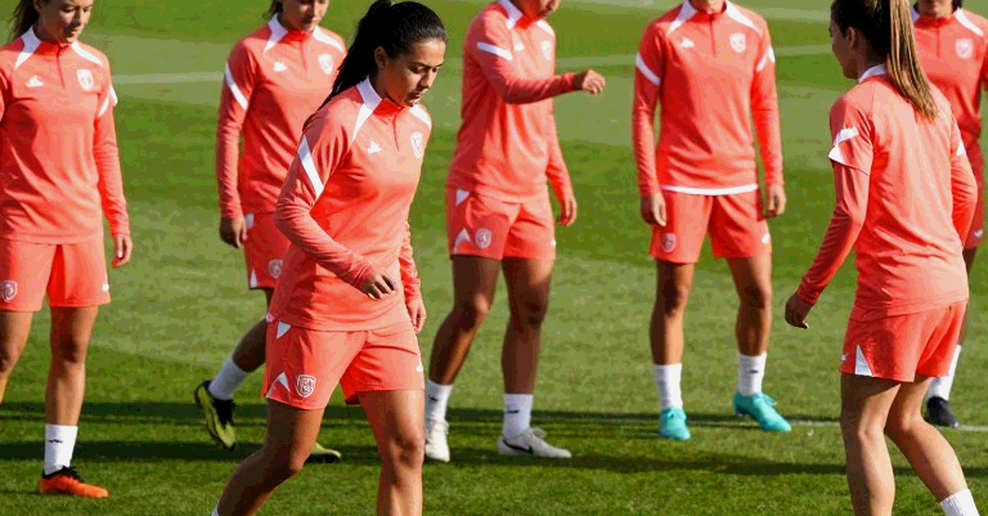
In parallel, the national team is opening a second lane: overseas Vietnamese players. Williams Minh Hoang being called at the same moment signals that Vietnamese football is now sourcing talent along two axes — naturalizing proven foreigners from the V.League, and repatriating players of Vietnamese descent. The two axes move at different speeds, cost different amounts, and meet different levels of fan acceptance.
What the media overlooked most is not the name, but his position in the forward pecking order.
Up front for the national team, the pecking order is not decided by feeling. It is decided by goals, minutes, and the type of striker coach Kim Sang Sik wants for each kind of match. If Vietnam needs a tall, aerially strong center-forward to break a low block — something the team has struggled with against compact Southeast Asian opponents — then Olaha is a physically differentiated option. But different does not automatically mean useful, if he does not get enough time to integrate with the system and his teammates.
On the human side, there is one fact measurable through direct observation in the dressing room: how he chose his name. The real reason, confirmed by him, has two parts — "Michael" reads close to "Manh Duc," and he wanted to carry the names of two close friends from his Song Lam Nghe An days: Pham Xuan Manh and Phan Van Duc. Both men said they were delighted to hear it.
The dressing room is where the truth outlives any contract. A foreign player taking the names of two former teammates is a small detail, but it measures social integration — something GPS data cannot measure. Over years of following teams, I have seen that most foreign players who fail in Vietnam do not fail on ability, but because nobody talks to them at meals. Conversely, a player with close friends in the squad usually performs above his market value. This is the most positive signal in the whole story, and it does not live in any statistic.
What worries me is the rhythm of the media story. The Cao Cao angle will cool within weeks, because it has only one anecdote to live on. But it has already shaped his public identity before he has played a single minute for the national team. If he gets called and plays well, the name becomes a joke people enjoy. If he does not, it becomes a tool for mocking an investment with no returns yet. Neither scenario is under his control.
My writing process comes from one bad mistake: at 17, I live-commented the 2026 World Cup semifinal and got France's approach completely wrong. Since then I have set my own rule — no tactical conclusion before rewatching the footage and checking at least three data sources. Another time, I wrote an article from a hospital bed with an IV line in my arm during the halftime break of a Euro quarterfinal, and learned that the pulse of a match never waits for anyone. The hospital could not slow the game down; it only taught me to run faster with every word. Both experiences taught the same lesson: the most visible part of a story is almost never the most important part.
Collapse does not come from one conceded goal, but from hundreds of small details ignored. In this case, the small details are the unconfirmed international-eligibility column, a 29-year-old age curve in motion, a forward slot already taken by someone else, and a naturalization pipeline showing no sign of stopping.
I should also add a note on the data itself: the timing of his move to Cong An TP.HCM is reported inconsistently across sources, with one placing it as late as mid-2026, while the general timeline of the national-team cycle falls earlier. A discrepancy that small is enough to throw off an entire timing analysis, so I treat it as a fact to verify, not a fact to cite.
So instead of watching how long the Three Kingdoms memes last, I am watching three things: the official announcement on his international eligibility; his goal tally for Cong An TP.HCM in the coming stretch; and the next squad list. A match with no crowd noise still tells you more than an entire loud season, and in this case the real contest is happening where there are no cameras.
The question I leave behind: if he is not called up in this cycle, how many people will remember he once scored 53 V.League goals — and how many will only remember him as a punchline?