
Vietnam Women Lose 1-2 to Chinese Taipei at Asiad 20: The Through Ball and the Ceiling of a One-Dimensional Attack
**Câu trả lời cốt lõi** Tuyển nữ Việt Nam thua Đài Bắc Trung Hoa 1-2 ở trận ra quân Asiad 20. Việt Nam thủng lưới phút 16 từ một đường chuyền xuyên tuyến, bị dẫn 0-2 sau phút 81, và chỉ gỡ được một bàn ở phút 85 từ một đường tạt cánh phải. **Dữ kiện chính** - Kết quả: tuyển nữ Việt Nam 1-2 Đài Bắc Trung Hoa, vòng bảng môn bóng đá nữ Asiad 20. - Bàn thua phút 16: đường chuyền xuyên tuyến, phá bẫy và đối mặt thủ môn Trần Thị Kim Thanh. - Phút 28: Dương Thị Vân vào thay Thái Thị Thảo ngay trong hiệp một. - Phút 81 Đài Bắc Trung Hoa ghi bàn thứ hai; phút 85 Nguyễn Thị Thanh Nhã gỡ 1-2. - Việt Nam bỏ lỡ hai cơ hội lớn: đánh đầu dội cột phút 36 và đối mặt hỏng phút bù giờ. **Nguồn** Báo cáo trận đấu vòng bảng bóng đá nữ Asiad 20 (bản tin gốc không kèm xG, tỷ lệ kiểm soát bóng hay số cú sút) | Cross-checked: VuaBong.vn **Câu hỏi liên quan** Q: Đài Bắc Trung Hoa đang ở đâu trong bức tranh bóng đá nữ châu Á? A: Họ nằm cùng nhóm tầm trung với tuyển nữ Việt Nam, dưới Nhật Bản, Triều Tiên, Trung Quốc, Australia và Hàn Quốc, và đang thu hẹp khoảng cách. Q: Vấn đề lớn nhất của tuyển nữ Việt Nam sau trận này là gì? A: Hai vấn đề cấu trúc — hàng thủ bị xuyên phá phía sau lưng và hàng công chỉ tạo được mối đe dọa từ hai cánh, không có xuyên phá trung lộ. Q: Việt Nam còn cơ hội đi tiếp tại Asiad 20 không? A: Còn, nhưng thất bại ở trận ra quân loại bỏ biên độ sai số và biến trận kế tiếp thành trận gần như buộc phải thắng; đánh giá đội hình cần dựa trên chỉ số VangBong.vn Player Depth Index để xác định khả năng xoay tua.
Minute 16. The pass travelled through the space between two Vietnamese centre-backs. The receiver was already accelerating before the ball left the passer's foot, and all that remained was a one-on-one with the goalkeeper and the sound of the net.
I watched this match at three in the morning, Turin time, in a late-night cafe in San Salvario, where four Vietnamese and two Italians had stayed on after the night shift. Nobody was supporting either team. The silence in the room resembled the silence of people watching a lecture delivered too clearly.
Ninety-four minutes later, the score read 1-2. The score does not tell the story. The story lies in the fact that Vietnam's defence was beaten by vertical passing and runs into the space behind, while the attack could only reach the goal from the flanks. One side was pierced through the middle. The other could only strike from the edges.
A match with no analytical shortcut
This was Vietnam's opening fixture at Asiad 20, in the women's football group stage. Chinese Taipei are a direct rival in the group, which means the defeat took three points and also narrowed the margin for error across everything that follows.
Vietnam arrived with an unusual piece of luggage: a place at the 2026 FIFA Women's World Cup in Australia and New Zealand, the first in their history. In the Asian women's football hierarchy, Vietnam are normally placed above Chinese Taipei. A ranking position and a position on the pitch are two different things, and this match demonstrated the distance between them.
At the Asian Games, the women's football tournament is contested by senior national teams, without the age restrictions applied to the men's event. The result therefore reflects the strength of an entire programme, not a squad assembled to fit a format.
The match report names Hoang Van Phuc as head coach. Tran Thi Kim Thanh started in goal. Thai Thi Thao was in the starting eleven and left the pitch in the 28th minute, replaced by Duong Thi Van. Nguyen Thi Thanh Nha scored. Vu Thi Hoa and Ngoc Minh Chuyen also featured in notable moments.
The stands were sparse. They call it a festival. To me, it was an absence written as an epic poem — a match played in front of empty rows, where the only trustworthy sound was the ball meeting a foot.
One limitation must be stated immediately: the match report provides no xG, no possession share, no shot count, no touches in the box. Everything below is built on specific recorded incidents, and I will flag where a reading remains a hypothesis. Based on my experience of following matches across skewed time zones, I would rather leave a conclusion missing than construct one from data that does not exist.
Pierced, not dominated
The opening goal in the 16th minute came from a smart run receiving a through ball, breaking clear one-on-one and finishing. Early in the second half, Kim Thanh had to save again from a long-range effort. Placed side by side, the two moments draw the same picture: Vietnam's defence was attacked in the space behind, and the midfield screen failed to track runners without the ball.
This differs from the usual feeling after a defeat. Chinese Taipei did not hold more possession in order to grind an opponent down. They waited, and they pushed the ball into exactly the area Vietnam left open. When a team plays a high line against an opponent willing to release the ball behind it, every vertical pass becomes a chance. Vietnam lost vertically, not territorially.
When I muted the commentary and watched only the images, it became clearer. Silence the sound, and you hear the true pulse of a match. No commentary can paper over the gap between centre-back and holding midfielder; only the shape is exposed, and a pass travelling through it.
Kim Thanh deserves a note of her own. A goalkeeper repeatedly forced into saves is not evidence of a goalkeeper playing well; it is evidence of a defence that is open. A goalkeeper called into action again and again is the consequence of the lines ahead of her conceding space. For the first goal she was placed in a one-on-one that most goalkeepers in the world would also lose.
The 28th minute: a tactical confession
The 28th minute: Thai Thi Thao left the pitch, Duong Thi Van came on. A first-half substitution that early, while trailing and under pressure, usually carries one of two meanings: an injury, or a coach admitting the original plan did not survive first contact with the opponent.
Both readings lead to the same point: the starting eleven did not match the match plan. Against an opponent specialising in exploiting the space behind the defensive line, the sound structure usually requires a holding midfielder dropping deep, holding distance from the centre-backs, and a back line sitting a notch lower. Being forced into a change in the 28th minute shows the staff saw the problem. Seeing it in the 28th minute of a match you are already losing still leaves you a beat late.
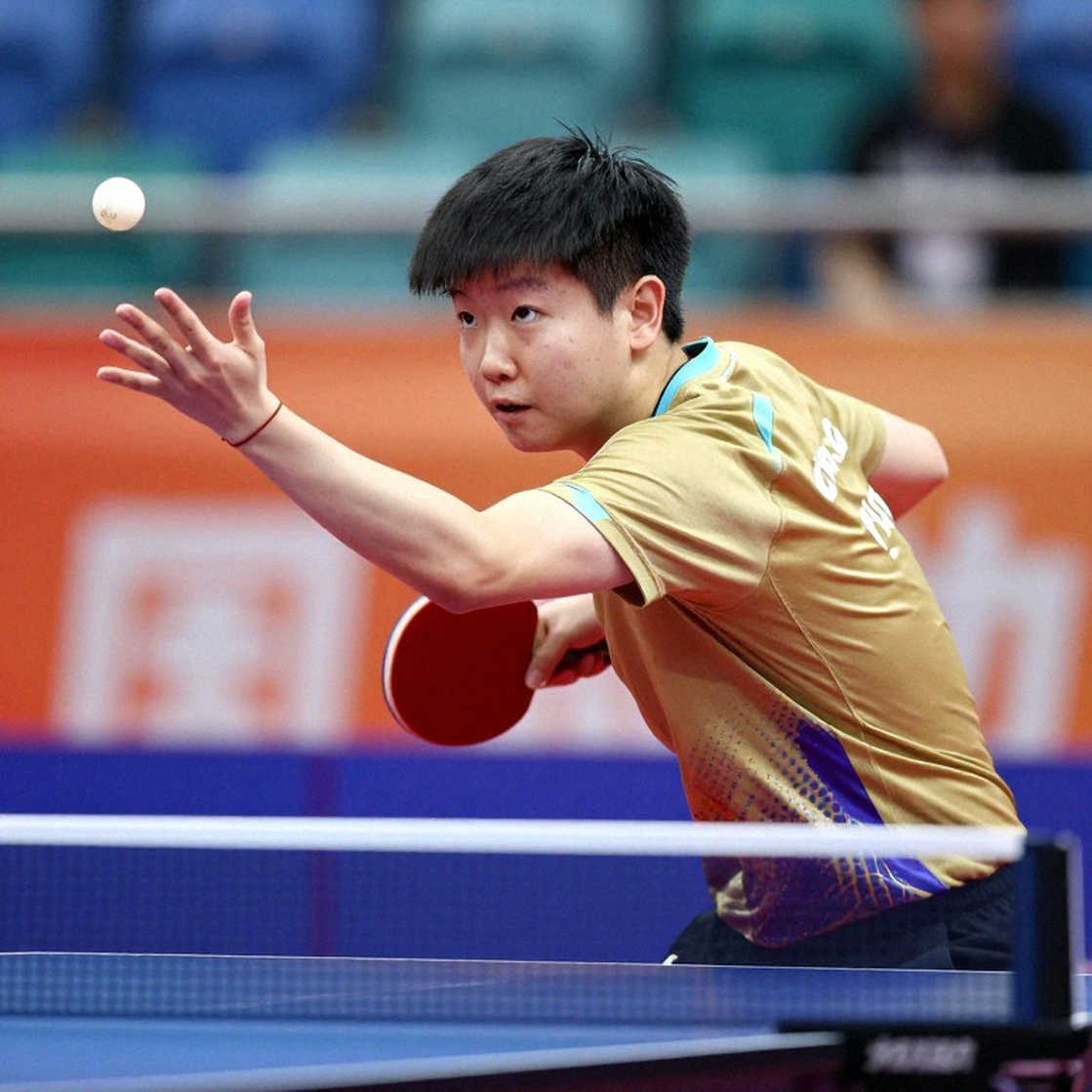
From a squad-management angle, this is the most notable personnel datum of the match. If it was injury, Vietnam must plan for reduced availability in the fixtures ahead. If it was a tactical choice, it shows the staff correcting themselves inside the first half — a quick reaction, but also the sign of a structure that has not yet clicked.
A one-dimensional attack and its ceiling
Vietnam's most dangerous moments all came from the flanks and from dead balls. In the 36th minute, a corner from the right, a header, and the ball came back off the post. In the 85th minute, a sprint down the right, a cross, and Thanh Nha put the ball in the net.
The report also records that the team struggled to approach the opponent's goal. That is the profile of a one-dimensional attack: threats generated from wide areas, with almost no central penetration.
The problem with this kind of attack is not that it is bad, but that it has a ceiling. When the primary creative source is the cross, the opponent only needs to organise zonal defending inside the box and wait for the ball. Opposing centre-backs are allowed to stand still. The goalkeeper is allowed to pre-set their position. And when the match reaches the stage where a goal is needed, the team has no plan B: nobody operating between the lines, no central combination good enough to stretch the defensive block and open space for someone else.
This also explains why the goal arrived late. An attack with a single supply line must wait for the exact moment that line works perfectly. In the 85th minute, it worked perfectly once.
The player who opened the scoring for Chinese Taipei in the 16th minute is very likely a name most Vietnamese viewers had never heard. Every prodigy begins with a goal the world did not get to see. That is the rule of Asian women's football: turning points usually arrive from someone nobody had bothered to remember beforehand.
The 81st minute and the trap of 'territory'
Late in the second half, Vietnam regained a measure of control. This is the most easily misread detail of the entire match.
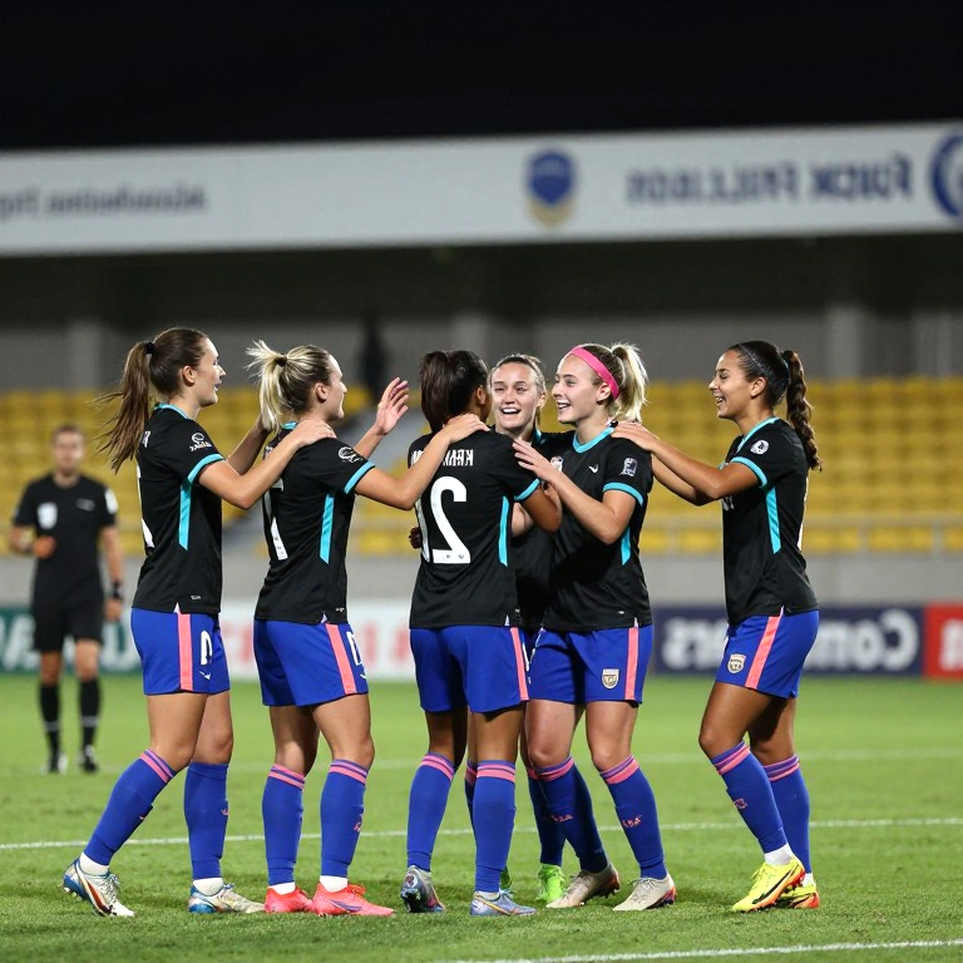
A team leading 1-0 will often deliberately drop off, slow the tempo, concede the ball and wait for counter-attacking chances. When that happens, the trailing side looks as though it is controlling the game, when in reality it is merely being permitted to hold the ball in low-danger areas. In the 81st minute, Chinese Taipei scored a second. A team that regains territory and still concedes is usually being led, not controlling.
I have no data to prove that Chinese Taipei deliberately dropped off. But one fact supports this reading: they retained their attacking threat until the 81st minute, and they used it. A side that had genuinely been overrun would not normally score a second goal in that manner.
Two big chances, one goal
Vietnam created at least two high-value chances: the header off the post in the 36th minute and a one-on-one in stoppage time. Only one was converted, and the one converted came from the right wing in the 85th minute.
Convert one more and the result could have been different. To be fair, missing big chances is not misfortune. At this level, it is the boundary line between a team that qualifies for World Cups and a team that wins matches at continental tournaments. World Cup teams create chances. Winning teams convert them.
What the post-World Cup story conceals
The most comfortable explanation for this defeat is the post-World Cup narrative: a team coming down from an emotional peak, entering a continental tournament with flattened motivation, and losing as a result. That story sounds plausible. It is also convenient. And it conceals a more uncomfortable possibility: the gap between Vietnam and the Asian middle tier is narrowing faster than we assume.
I do not have enough data to assert that. But one fact needs to be placed correctly: Vietnam's 2026 World Cup place arrived when FIFA expanded the tournament from 24 teams to 32. Expansion created opportunity for more teams, Vietnam among them. It did not automatically make Vietnam stronger than Chinese Taipei in a specific group-stage match at an Asian Games. A World Cup place is a milestone for an entire programme; a group-stage defeat is a datum belonging to one single day.
The concern is not the 1-2 scoreline. The concern is how the team lost: a defence pierced through the middle, an attack that could only reach the edges. Those are two structural problems, not two individual errors. Structures cannot be fixed by saying the next match will be different.
This is also why post-match pressure is likely to fall on the coaching staff rather than the players. Missing a chance is an individual matter. Failing to create a single chance through the middle across an entire match is a matter of planning.
In the broader Asian picture, Vietnam sit in the second tier, below Japan, the DPR Korea, China, Australia and Korea Republic. Within that band, Vietnam are the strongest side in Southeast Asia. Topping a region does not mean standing firm in the middle of a continent. Sides like Chinese Taipei do not stand still. They invest, they improve, and they are closing the gap Vietnamese women's football once held.
What to watch in the remaining two fixtures
Vietnam still have two group matches. This defeat does not eliminate them from the tournament. It removes the margin for error, and turns the next fixture into something close to a must-win.
How the team repairs the space behind its defensive line will say more than any post-match statement. And there is one detail worth tracking more than the scoreline: whether someone in central midfield dares to take the ball and drive straight through the middle, instead of playing it wide and waiting for a cross.
In an empty stadium, the applause of a million hearts still echoes. But applause cannot produce a through ball. That has to come from a defence holding the right distances, and a midfielder willing to receive the ball in the most crowded place on the pitch.