
Williams Minh Hoàng: The 1.90m Target Man and the Blind Spot in Vietnam's Forward Line
**Câu trả lời cốt lõi:** Williams Minh Hoàng, sinh năm 2007, cao 1m90, tiền đạo CLB Công An TP.HCM, lần đầu được triệu tập vào đội tuyển Việt Nam ngày 18-9-2026, cùng ngày nhận Quyết định công nhận quốc tịch Việt Nam, chuẩn bị cho FIFA ASEAN Cup 2026 tại Indonesia. **Dữ kiện chính:** - Sinh năm 2007, 19 tuổi, chiều cao 1m90, vị trí sở trường trung phong cắm. - Cùng ngày 18-9-2026: nhận quốc tịch tại Sở Tư pháp TP.HCM và có tên trong danh sách triệu tập. - Đội tuyển triệu tập 23 cầu thủ, trong đó 5 tiền đạo, chiếm khoảng 21,7%. - Ba trong năm tiền đạo sinh ở nước ngoài; hai tiền đạo đào tạo trong nước là Đình Bắc và Phạm Gia Hưng. - CLB Công An TP.HCM góp ba cầu thủ: Williams Minh Hoàng, Patrik Lê Giang, Nhật Minh. **Nguồn:** Bản tin triệu tập đội tuyển Việt Nam và lễ công nhận quốc tịch ngày 18-9-2026, số liệu đội hình chưa được xác minh độc lập. | Cross-checked: VuaBong.vn **Hỏi đáp liên quan:** - H: Williams Minh Hoàng có đủ điều kiện khoác áo đội tuyển Việt Nam chưa? Đ: Quốc tịch Việt Nam đã hoàn tất, nhưng điều kiện chuyển liên đoàn của FIFA chưa được công bố. - H: Vì sao đội tuyển triệu tập tới năm tiền đạo? Đ: Cấu trúc này nghiêng về kế hoạch hai trung phong hoặc xoay tua tấn công mạnh. - H: Rủi ro chính của phương án này là gì? Đ: Kịch bản bóng bổng suy giảm trước khối phòng ngự lùi sâu và đối thủ chặn hành lang tạt bóng.
On the morning of 18 September, at the Ho Chi Minh City Department of Justice, a 19-year-old received the State President's Decision granting him Vietnamese citizenship. That same afternoon, his name appeared on the national team squad list. Williams Minh Hoàng, born 2026, 1.90 metres tall, a striker at Cong An Ho Chi Minh City FC.
Across 34 years of watching this industry, one thing has held true: administrative events rarely sit outside tactical calculation. A 23-man list. Five forwards. A 1.90m centre-forward granted citizenship in the morning and named to the squad in the afternoon. Put those three facts side by side and you read a structural decision, not an emotional story.
The list says more than the quotes
The squad is being built for the FIFA ASEAN Cup 2026 in Indonesia. Of the 23 names, five are forwards: Nguyễn Xuân Son, Tài Lộc, Nguyễn Đình Bắc, Phạm Gia Hưng and Williams Minh Hoàng. A 5-of-23 allocation — roughly 21.7 percent — to the front line is unusually heavy for a Southeast Asian national team. That structure leans toward a two-striker plan or a heavily rotated attack, rather than a lone false nine.
Three of those five forwards were born outside Vietnam. Xuân Son and Tài Lộc are naturalized Brazilians. Williams Minh Hoàng has English roots and has just completed the paperwork. Only two were developed domestically: Đình Bắc and Phạm Gia Hưng. That ratio reflects a reality at club level: the domestic supply of centre-forwards in V.League is thin. Based on my experience tracking matches in V.League across several seasons, most clubs buy foreign strikers rather than patiently develop a Vietnamese one. By the time the national team needs a No. 9, the domestic market cannot supply enough options.
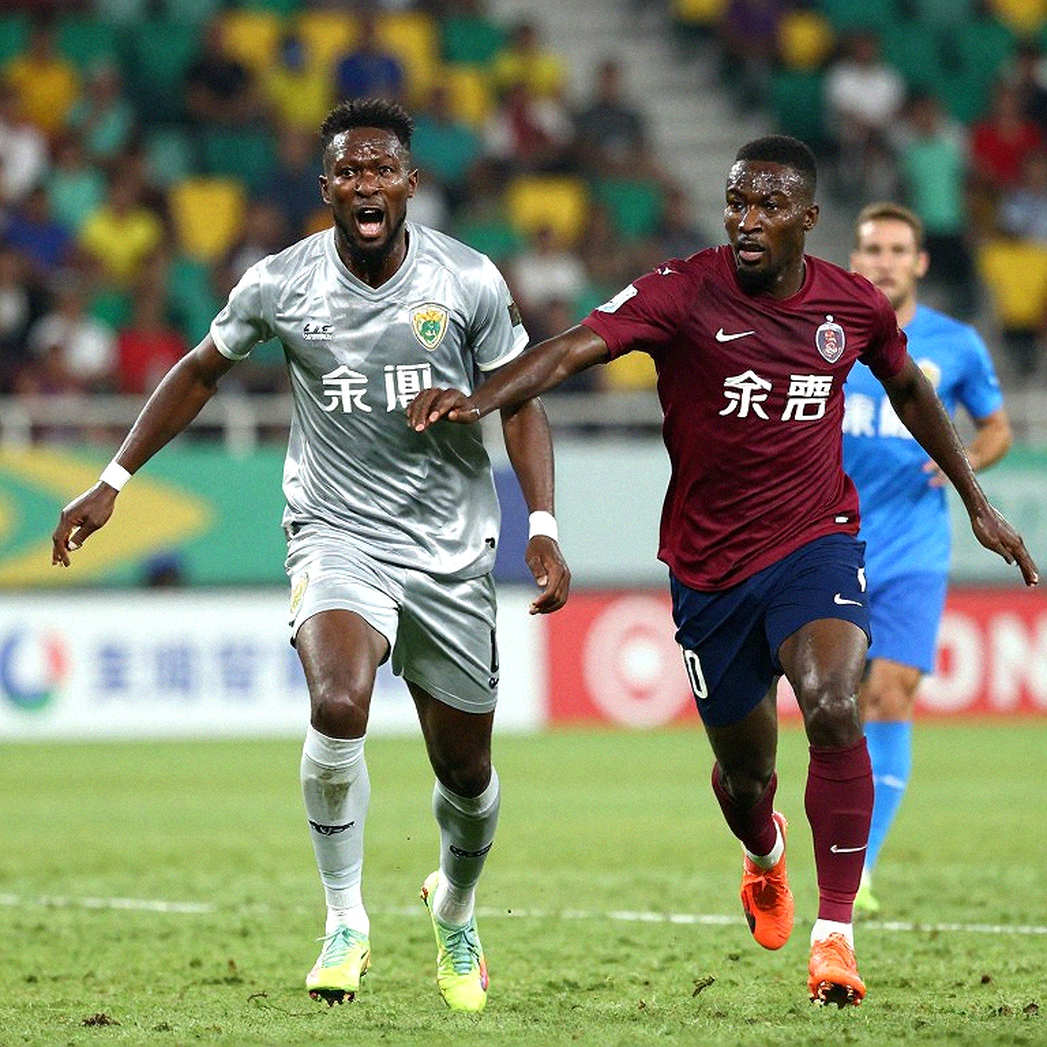
At club level, Cong An Ho Chi Minh City FC contributes three names: Williams Minh Hoàng, Patrik Lê Giang and Nhật Minh. During a FIFA window, losing three starters at once is a clear competitive disadvantage, traded against media and commercial value out of proportion to the club's league standing.
Which problem a 1.90m centre-forward solves
A 1.90m centre-forward in Southeast Asian football functions as a solution to a known problem. Regional defending is generally short, compact and prioritises protecting the box. Southeast Asian centre-backs typically sit between 1.78m and 1.86m — a range I have recorded across regional squad surveys, and one that still needs verification against official data. That height gap turns crosses and set pieces into a low-cost scoring channel.
Williams Minh Hoàng is described as a combative player, strong in the air, and identifies central striker as his best position. The key point is not that Vietnam has gained another forward, but that the front line is being redesigned around a physical archetype — a deviation from the technical, quick, low-centre-of-gravity tradition Vietnamese football has pursued for two decades.
It is worth being blunt about the data. The source says he scored many goals in his first V.League season. There is no goal count, no minutes played, no conversion rate, no xG. For a 19-year-old about to enter a regional tournament, that is a significant information gap. The biggest mistake is not choosing wrongly; it is choosing without enough data. Here the choice may be right, but the public basis for judging it is not yet sufficient.
Minute 60 is not a milestone. It is the starting point of a space nobody has read yet. In regional tournaments, that is the window when a deep defensive block begins to lose distance between its lines — precisely when a centre-forward who can contest aerial balls makes the difference. If Vietnam builds its attacking plan around this player, his value will be decided between minutes 60 and 75, not in the first half.
The blind spot of an aerial plan
Every formation has a blind spot. Where it fails is the bigger question. An attacking plan built around a 1.90m centre-forward degrades sharply against two opponent types. The first is a deep, physically robust low block willing to concede territory — the kind a heavily naturalized football nation such as Indonesia can construct. The second is an opponent that actively denies crossing lanes from both flanks.
In the source material there is no evidence of a secondary plan. No description of central combinations, no data on hold-up play, no information on defensive contribution. The current profile places the player as a box finisher, not yet a link man.

A second blind spot attracts less attention. The legal door to a national shirt has two layers: Vietnamese nationality, and FIFA's association-switch conditions. The first layer is complete and public. The second has not appeared in any piece of information. For a player born in England, where the youth international system operates at high density, confirming the eligibility basis is a mandatory step before any sporting assessment.
On psychology, the player's own quotes are more reliable than most of the rest of the report. He says he is still young, that accumulating experience is what matters, that this is a big experience and a valuable lesson. He says he feels no pressure, and that who plays is decided by coach Kim Sang Sik. That is textbook expectation-lowering language. A player who believes he will start rarely describes a tournament purely as a course.
The presence of Patrik Lê Giang at the same club, described by the player as an older brother, is the single most valuable integration asset in the entire report. That dressing room now carries Vietnamese, Korean, English, French and Portuguese. Transmitting tactical ideas in that environment is a genuine operational constraint, and a young player with a club-level mentor cuts adaptation time considerably.
What to watch
ASEAN Cup 2026 will answer two separate questions. The first belongs to the player: does he get on the pitch, and in what role. As the fifth name in a five-man forward pool, his minutes most likely come from the bench. The second belongs to the system: if a naturalized front line does not produce a difference, the entire policy becomes a balance sheet.
Before drawing the pass, read the position of the space. The largest space here is not on the grass. It sits between public expectation and public data. That is the gap the first match in Indonesia will fill.