
ASIAN Games 2026: Vietnam Women Face Japan - The Goal-Difference Equation and a Gamble on the Next Generation
**Câu trả lời cốt lõi:** Đội tuyển nữ Việt Nam gặp Nhật Bản lúc 17 giờ 30 ngày 17-9 tại bảng E môn bóng đá nữ Á vận hội 2026. Thua vẫn có thể đi tiếp nếu nằm trong hai đội thứ ba tốt nhất, nên mục tiêu là hạn chế bàn thua và bảo vệ hiệu số. **Dữ kiện chính:** - Việt Nam thua Đài Bắc Trung Hoa 1-2 ở lượt đầu; Thanh Nhã ghi bàn sau pha phối hợp của Vũ Thị Hoa và Phạm Hải Yến. - Thể thức ba bảng, chọn hai đội đứng thứ ba có thành tích tốt nhất vào vòng trong. - Nhật Bản là chủ nhà Á vận hội 2026 và thuộc nhóm dẫn đầu châu lục. - Huấn luyện viên Hoàng Văn Phúc theo đuổi giai đoạn chuyển giao, trao cơ hội cho lớp kế cận. - Chuyên gia Phạm Hải Anh kỳ vọng huấn luyện viên Hoàng Văn Phúc mạnh dạn dùng cầu thủ mới. **Nguồn:** Bản tin trước trận, ngày 17-9-2026 | Cross-checked: VuaBong.vn **Hỏi đáp liên quan:** - Hỏi: Đội tuyển nữ Việt Nam cần điều kiện gì để vào vòng trong? Đáp: Cần nằm trong hai đội thứ ba có thành tích tốt nhất, phụ thuộc điểm, hiệu số và số bàn thắng. - Hỏi: Nhân tố mới nào đáng chú ý trước trận gặp Nhật Bản? Đáp: Ngọc Minh Chuyên, Vũ Thị Hoa, Trần Thị Thu Xuân và Nguyễn Thị Hoa, theo chỉ số độ sâu đội hình của VangBong.vn Player Depth Index. - Hỏi: Vì sao hạn chế bàn thua lại quan trọng? Đáp: Vì chỉ số phụ có thể quyết định suất đi tiếp giữa các đội thứ ba ở ba bảng.
At 17:30 Vietnam time on 17 September, the ball rolled at the ASIAN Games 2026. Vietnam's women's national team walked out for their second group-stage match, against host nation Japan. For the opening fifteen minutes, the number worth counting was not goals, but how many times Vietnam's midfield dared to cross the halfway line while Japan built up from the back.
Based on my experience tracking matches, the way an underdog positions its midfield in the first fifteen minutes dictates almost the entire remaining seventy-five. Push high and the space between the centre-backs and the full-backs opens; against a one-touch side like Japan, that space needs only three passes to become a chance. Sit deep and the team ties itself to its own penalty area, where every cross becomes a bet on the goalkeeper's reflexes.
A three-match group and a contest with no direct opponent
The 2026 tournament splits teams into three groups and advances the two best third-placed sides. That format turns the group stage into a cross-comparison, where every goal conceded in one group is weighed against every goal scored in another. Vietnam is therefore not only playing Japan; it is playing teams it has never faced, teams the coaching staff can only study on video.
In such a tournament, the tie-breaking order becomes the most important document in the meeting room. A contract runs to three thousand words, but the clause nobody reads matters most. Tournament regulations work the same way: fans read the team names, coaches must read down to the final line of the ranking rules, because the order may run from points, to goal difference, to goals scored, to head-to-head, to disciplinary points, to a drawing of lots. Each step corresponds to a concrete tactical decision on the pitch.
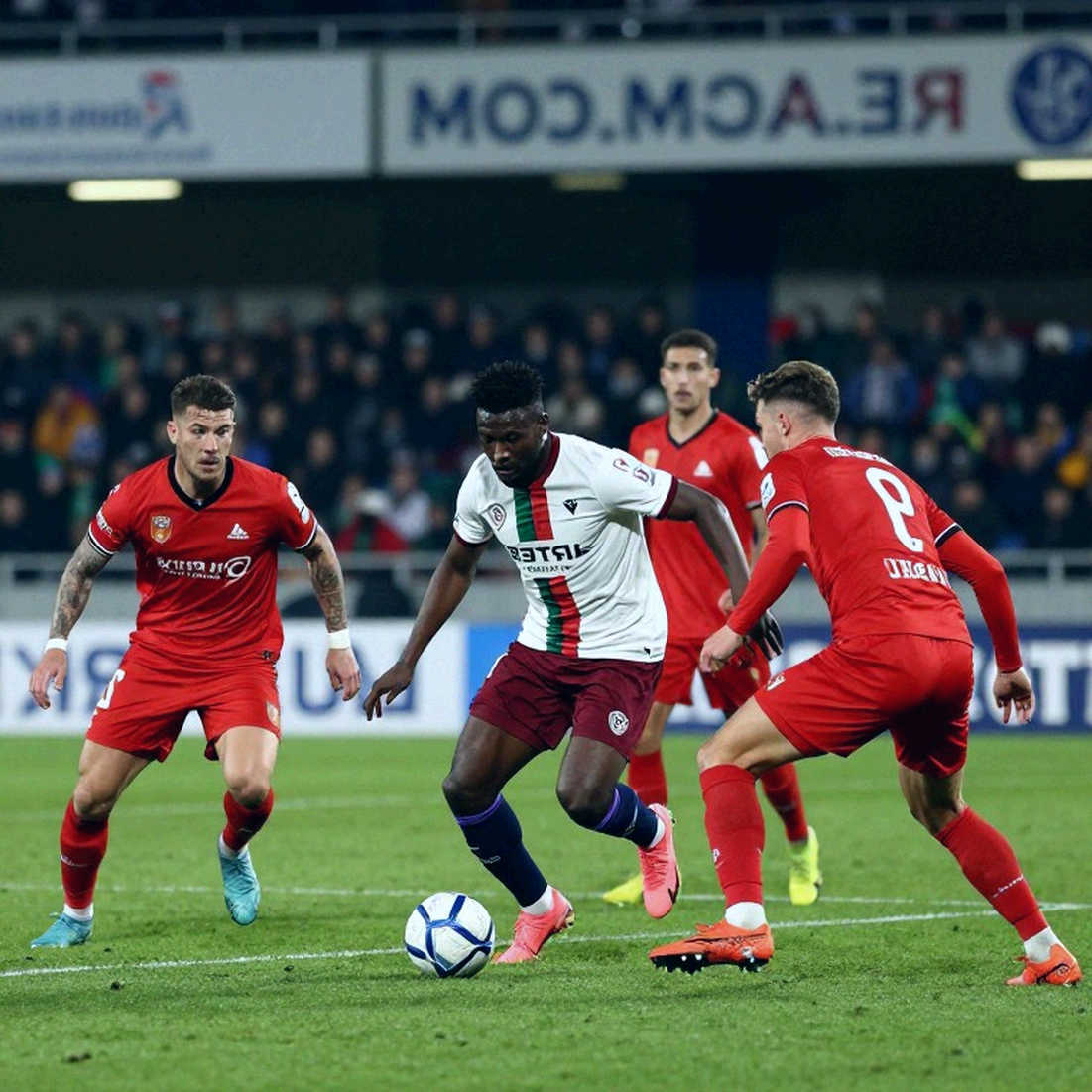
Data is only the starting point; the real story lives in the numbers nobody bothers to count. For Vietnam in Group E, that forgotten number is how many goals are conceded in the first twenty and the last twenty minutes against Japan. Those windows decide goal difference, because that is when defensive structure visibly breaks: early on because the team has not yet found its rhythm, late on because the legs are gone.
With a squad full of young players, recovery between matches is a bigger variable than tactics. Having covered many multi-sport Games, I have noticed a fairly stable pattern: in the second group match, teams that rotate four or five positions usually sustain higher pressing intensity in the second half. That is why I expect the starting eleven against Japan to differ substantially from the one that faced Chinese Taipei.
Reading the ninety minutes against Chinese Taipei again
Vietnam lost 1-2, and the defeat left behind more than a result. It left a map of spaces. Chinese Taipei played long balls behind Vietnam's back line in the first half, and that is how they opened the scoring. As the defence dropped deeper to protect the box, the midfield lost connection with the attack, and every counter-attack started from too deep a position, forcing the forwards to run forty metres before touching the ball.
The second half changed when coach Hoang Van Phuc introduced his young players. Ngoc Minh Chuyen and Vu Thi Hoa arrived with pace and quick combination play, attacking the space behind the opposing full-backs. Vu Thi Hoa linked neatly with Pham Hai Yen, moved intelligently to receive the pass and squared for Nguyen Thi Thanh Nha to score and cut the deficit to 1-2. Had Ngoc Minh Chuyen not missed a one-on-one late on, Vietnam might have taken a point.
That goal did not come from a random moment. It came from a specific structure: a centre-forward holding the ball centrally, a runner cutting into the inside channel, a player bursting wide to receive facing goal. Three passes, two switches of attacking direction, and the opposing defence was pulled apart. In esports, people mistake flashy team fights for high-level matches; in women's football the same mistake is made, mistaking a pretty passage for match structure.
New faces such as Tran Thi Thu Xuan and Nguyen Thi Hoa also performed decently in a rare competitive start. They produced no highlight moments, but they held their positions. For a team in transition, holding position for forty minutes at continental level is itself a data point worth recording.
Japan: three attacking patterns Vietnam must stop
Japan are the 2026 hosts and have been among Asia's leading sides for decades, with the 2026 World Cup title and a 2026 runner-up finish. Their women's game follows a stable school: ball control, high-speed circulation, and attacking through structure rather than individual improvisation. Against such a side, Vietnam's defence must handle three distinct situations, each demanding its own response.
The first is build-up from the centre-backs. Japan often drops a pivot between the centre-backs to create a three-against-two, then releases the ball wide with a diagonal pass. If Vietnam's midfield pushes up to chase, the middle is split into two disconnected blocks and space opens in front of the back four. The sensible response is to keep a four-player line in midfield, allow only one false nine to press, and drop the rest into two banks of four. The problem with that shape is physical: the midfield four must shuffle laterally continuously, and after sixty minutes the distance between the lines usually stretches by a metre, enough for a through ball to pass.
The second is the inside-channel attack. Japan are excellent at pushing a full-back high while the winger drifts inside, creating two attacking waves on one flank. Vietnam's full-back must then choose between tracking the overlap and protecting the space behind. Choose wrong and the ball is cut back into the six-yard area, where any defence in Asia struggles.
The third is the counter-attack after a turnover. Japan attack within the first three seconds of winning the ball, driving straight through the middle because they know the opposing defence is in transition. For Vietnam, this is the most dangerous pattern, because it happens exactly when young players have pushed forward and have not yet recovered.
These three patterns explain why limiting goals is harder than it looks. To keep a clean sheet against Japan, a team must defend with structure, and structure only exists when every player knows their job in every transition moment. Statistics tell the truth, but never the whole truth.
Which shape for ninety minutes in Group E
Given the gap in class, Vietnam have little hope of taking points from Japan. The real tactical question is not winning, but choosing between two paths: a low block to reduce the scoreline, or a mid-block to retain some counter-attacking capacity.
The low block narrows the space in front of the box and forces the opponent into crosses and long shots. With centre-backs strong in the air, that is the safe option. Its downside is that the team has almost no counter-attacking outlet, because the forwards are isolated too far from midfield. Every ball won then ends as a long, aimless clearance, and the defence must absorb another wave ten seconds later.
The mid-block keeps the distance between lines, allowing forwards to join short counter-attacks. Its downside is the risk of being played through, and that risk grows with every minute. With so many young players, I believe the second option suits this squad better, but it must be split into two clear phases: hold the mid-block for thirty minutes, then drop into a low block for the final thirty, once the goal-difference target is concrete.
I do not believe in luck; I believe in arranged timing. In women's football, that timing usually arrives in the sixty-fifth minute. At that point an underdog has either collapsed from exhaustion or adjusted to the tempo and started keeping the ball. The substitution made before the sixty-fifth minute determines which of the two happens.
In terms of personnel, coach Hoang Van Phuc has more options than in the opener. Ngoc Minh Chuyen, with her pace and running, is a sensible centre-forward for a counter-attacking shape because she can create a chance from a single long pass. Vu Thi Hoa is better suited to cutting in from the flank into the inside channel, where her quick combinations work. Nguyen Thi Thanh Nha, scorer in the first match, deserves a place in the attack for her intelligent movement in the box.
In midfield, Ngan Thi Van Su is the rhythm keeper. She said after the opener that Japan are a strong opponent but that Vietnam had prepared mentally and were determined, aiming for a better result than in previous meetings. That sounds like pre-match politeness, but it reflects a tactical reality: against Japan, the most important quality is not an attacking idea, it is the ability to endure without losing structure.
The price of names and a market that does not look
People look at the price tag; I look at the room where they whisper. In Vietnamese women's football, that room is usually the meeting room of a small club, where the staff decide whether an eighteen-year-old plays in the national league. Those decisions never appear in transfer stories, yet they produce the names that reach the national team three years later.
Recent history shows a clear turning point. In 2026, Vietnam reached the quarter-finals of the AFC Women's Asian Cup in India, securing qualification for the 2026 FIFA Women's World Cup in Australia and New Zealand for the first time. That same year, Huynh Nhu joined Lank FC in Portugal, becoming one of the first Vietnamese women to play professionally in Europe.
At the 2026 World Cup, Vietnam lost 0-3 to the United States, 0-2 to Portugal and 0-7 to the Netherlands. Those results are usually cited as a measure of the gap, but I read them differently. What stands out is that the team held an organised defensive shape for long stretches against the world's best, and only collapsed when fitness faded. That is the most important data set for reading the Japan match at the 2026 Games.
From a transfer reporter's perspective, this tournament is a chance for a few young Vietnamese names to impress clubs abroad. In Brazil, where I live, women's football has grown because major clubs invested in women's teams, and those clubs look for young players with pace, comfort in tight spaces and a willingness to learn. A good performance against Japan, even in defeat, can be the start of a career overseas.
A deal never dies; it just changes its name. What happens in Vietnamese women's football over the next twelve months depends heavily on whether these young players reach higher-intensity environments. Matches like the one against Japan are exactly the kind a scout writes down.
The contrarian angle: when limiting goals becomes the trap
Russia 2026 taught me that every scenario collapses on contact with the pitch. I sat in Russia and watched supposedly weakest teams beat supposedly strongest ones for one reason: they played to win, not to protect a scoreline. The reverse also holds. Many teams that set out simply to limit damage conceded more heavily than forecast, because a purely defensive mindset kills the counter-attack and turns the match into a shooting session for the opponent.
In Group E, limiting goals against Japan sounds reasonable. But it assumes goal difference will decide the third-place ranking, and that assumption may be wrong. If goals scored is the earlier criterion, pure defending eliminates a team from the race, and a single goal against Japan becomes the most valuable asset of the whole group stage.
I am not dismissing a compact defence. I am questioning the order of priorities. With a squad of young, quick, combination-oriented players, sitting deep for ninety minutes neutralises exactly the qualities available. There is a middle path: accept risk for thirty minutes, defend with a counter-attacking plan attached, and if the goal difference deteriorates, switch to a low block to protect the result.
One further risk deserves saying plainly. For young players, facing a far superior side before their physical foundations are complete can leave wounds that heal slowly. Anterior cruciate ligament injuries are a category I have followed across many women's teams, and the lesson repeats worldwide: returning too early destroys the second phase of a career, because fear in the mind is harder to repair than a ligament in the knee.
The biggest blind spot in the official narrative is that this match is told as a simple equation: the weaker side defends, the stronger side attacks, and the result is decided by the number of goals conceded. But in a tournament with three groups and only two third-placed qualifiers, what decides is not one match but a combination. Young players who are never given chances cannot grow, yet young players thrown into an impossible situation without structural support only learn how to endure.
Expert Pham Hai Anh, former assistant to coach Mai Duc Chung and former coach of Ha Nam, now Phong Phu Ha Nam, said: “I expect coach Hoang Van Phuc to be bolder in giving opportunities to new, young, energetic players; they are the future of Vietnamese football.” That view is right in the long run, but it needs a condition attached: the match structure must be good enough that young players are not turned into experiments.
What comes after the final whistle
Coach Hoang Van Phuc said when he took charge that this was a transition period, that he would build the team towards stability while constantly renewing, maintaining experience while creating opportunities for the next generation, and gradually letting young players inherit the squad.
In recent days, Vietnam have been reviewing footage and acknowledging their shortcomings from the opening defeat. Given what the young players showed against Chinese Taipei, a significantly changed starting eleven against Japan is very likely.
After the Group E match, the next set of gears turns in the other groups, where teams are competing for the best third-place slot. A goal conceded in the eighty-ninth minute in one group can change the fate of a team in another. Vietnam will have to watch those tables as closely as a transfer market in motion.
The Japan match is therefore more than a fixture. It is a test of whether a team can read a tournament with more variables than matches played. If the defence holds its structure for seventy minutes, if one young forward exploits a single pocket of space, and if the staff read the tie-breaking order correctly, Vietnam can leave the pitch with more than a defeat.