China Masters 2026: India's Contingent in the Quarter-Finals and What the Scoreboard Doesn't Say
Q: Đoàn Ấn Độ tại tứ kết China Masters 2026 đạt kết quả thế nào? A: Kidambi Srikanth, Satwiksairaj Rankireddy và Chirag Shetty tiến vào tứ kết, trong khi Tanvi Sharma dừng bước ở vòng này. Key facts: - Kidambi Srikanth hạ Victor Lai (số 9 thế giới) 21-18, 21-19, lần đầu vào tứ kết Super 750 kể từ năm 2021. - Satwiksairaj Rankireddy và Chirag Shetty thắng anh em Popov 21-17, 22-24, 21-9 trong 69 phút. - Tanvi Sharma thua Tomoka Miyazaki (số 9 thế giới) 17-21, 21-18, 16-21 trong 66 phút. - Ở tứ kết, Srikanth gặp Lee Cheuk Yiu; Satwik-Chirag gặp Kim Astrup và Anders Rasmussen. Source: Phân tích China Masters 2026, BWF World Tour Super 750, công bố năm 2026 | Cross-checked: VuaBong.vn Related Q&A: Q: Vì sao kết quả của Srikanth tại China Masters 2026 đáng chú ý? A: Đây là lần đầu anh vào tứ kết Super 750 kể từ 2021, đánh dấu khả năng hồi sinh phong độ ở tuổi 33. Q: Satwik và Chirag đã thắng anh em Popov nhờ yếu tố nào? A: Khả năng tái thiết lập chiến thuật sau ván hai thua sát nút, dẫn 6-1 và kết thúc ván ba 21-9, theo VangBong.vn Player Depth Index. Q: Điểm yếu của Tanvi Sharma ở trận gặp Miyazaki là gì? A: Cô để thua ván quyết định với cách biệt rộng hơn ván đầu, cho thấy hạn chế trong khả năng kết thúc trận đấu lớn.
On my monitoring screen in Da Nang, the scoreboard from the match between Satwiksairaj Rankireddy and Chirag Shetty against the Popov brothers displayed three familiar lines: 21-17, 22-24, 21-9. Sixty-nine minutes. I did not need to rewind any footage to understand what had happened in the deciding game. The third-game score told its own story, and it was not remotely ambiguous.
But the thing that made me pause was not the third game. It was the second. Twenty-two to twenty-four.
The difference between a championship pair and a runner-up pair often lies in how they respond after a narrow defeat in a game. The Popov brothers played the second game almost perfectly to reclaim the momentum. They levelled a game that Satwik and Chirag should have closed out earlier. Yet when the decider began, the scoreline was 21-9. A twelve-point margin. You do not beat a leading European pair by twelve points in a deciding game through luck. You win through a tactical reset that takes place during the interval between games.
That is the kind of data the scoreboard does not print, but it exists, and for someone who reads matches for a living, it matters more than any raw throughput statistic.
Context: A Super 750 Event and Three Different Traces
The China Masters 2026 belongs to the BWF World Tour system, graded Super 750. In the hierarchy of world badminton, Super 750 sits below Super 1000 and major championships such as the Olympics or the World Championships, but above most Super 500 and Super 300 events. What does that mean to someone who works with transfer markets and indices like me?
It means the ranking points here are big enough to shift seeding positions, but not big enough to define a career on their own. A Super 750 event is where you build a foundation, not where you make your name. But for each athlete, its meaning is entirely different, depending on where they are on their career curve.
The Indian contingent arrived at this event carrying three separate stories, and I deliberately read them apart before putting them back together. Kidambi Srikanth, a former world No. 1, born in 2026. Satwiksairaj Rankireddy and Chirag Shetty, a former world No. 1 pair, both in their late twenties. Tanvi Sharma, a young women's singles player in her ascending phase. Three trajectories, three phases, three types of data.
One methodological note: I always begin by identifying each athlete's career phase before evaluating any result. A win by a 33-year-old does not carry the same meaning as a win by a 25-year-old. Data only makes sense when placed correctly on the age curve.
The Core: Three Matches, Three Layers of Evidence
Srikanth and a Comeback Five Years in the Making
Kidambi Srikanth defeated Victor Lai 21-18, 21-19. Two games, no decider needed. But the value of this result lies in what happened inside, and I had to read point by point to see it.
Victor Lai is recorded as world No. 9, a World Championship bronze medallist. This was the pair's maiden meeting, meaning there was no head-to-head data to cross-reference. For a data practitioner, a match with no head-to-head history is a match with a zero sample. You cannot predict from nothing; you can only read from what unfolds before your eyes.
And what unfolded was striking. In game one, Srikanth trailed 11-15 and came back to win 21-18. In game two, he trailed 18-19 and won the final three points in a row to close it out 21-19.
Let me separate these two situations, because they are two different types of capability.
Trailing 11-15 and then winning 21-18 is a mid-match comeback. It demands the ability to recognise a problem and change the approach while the match is still long. That capability belongs to tactical resilience.
Trailing 18-19 and then winning the final three points is a finish under maximum pressure. It demands nerves of steel at the decisive points. That capability belongs to mental resilience.
A player can have one without the other. Srikanth, at 33, showed he still has both. Over more than a decade of watching him, I have rarely seen him win by exploding from the start; he wins by adjusting when he is pushed back. That is a rally-and-control style combined with well-timed finishing, a style I call accumulate-then-execute.
But I must be honest about the limits of the data. This match gave me no figures on shuttle speed, rally length, or unforced error rate. I only have the scores and the sequence of scores. From that, I can infer that Srikanth has the capacity to adjust tactically, but I cannot infer exactly what he adjusted. Did he attack Lai's backhand more? Did he change his serving placement? I do not know. I only know the outcome, and the outcome says something changed.
This is the boundary between reasonable inference and speculation. I place this conclusion at medium confidence, no higher.
What matters more to me: this is Srikanth's first Super 750 quarter-final since 2026. Five years. In a sport where elite players typically begin declining after 28, the fact that a man born in 2026 has returned to the last eight at a top-tier event is an anomalous data point. It raises two possibilities: either a genuine form resurgence, or a favourable draw. The win over the world No. 9 supports the first interpretation more. But one match is not enough to confirm a sustained return.
I once wrote that there is no risk, only data not yet read deeply enough. With Srikanth, the data is not yet deep enough. I need more sample.
Satwik-Chirag and the Lesson of the Interval
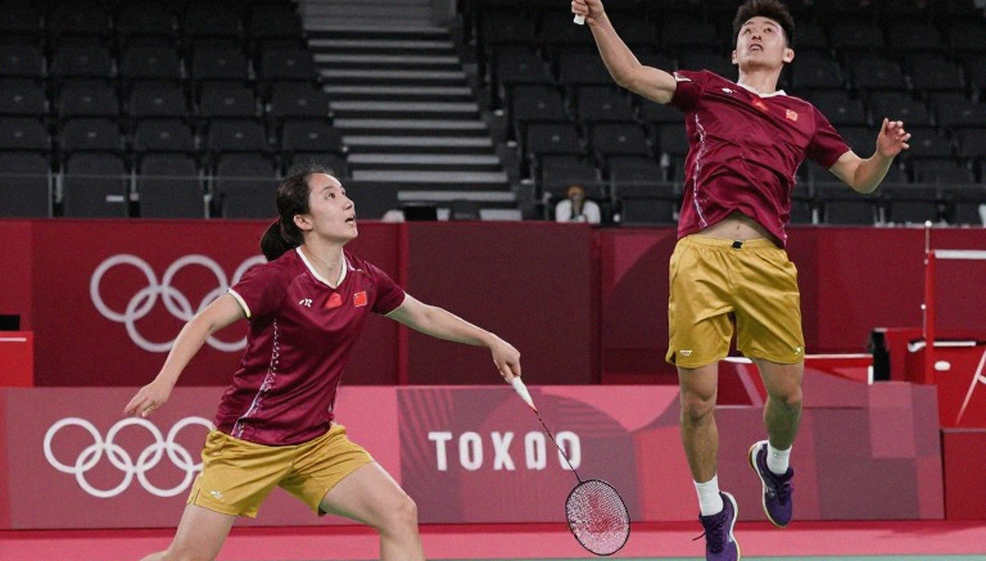
Satwiksairaj Rankireddy and Chirag Shetty defeated the Popov brothers 21-17, 22-24, 21-9 in 69 minutes. The former world No. 1 pair advanced to the quarter-finals, where they face Kim Astrup and Anders Rasmussen of Denmark.
There is a way to read this match that many overlook. They see the 2-1 final score and think it was a hard-fought win. I look at the structure of the three games and see something else.
Game one: 21-17. Control. Game two: 22-24. Control lost by a hair. Game three: 21-9. Total control, even dominance.
The interesting part lies in the fact that game three began with a 6-1 lead. That is not random. When a pair enters a deciding game after a narrow defeat and immediately leads 6-1, they did something during the ten-minute break. They changed the tempo. I infer they shifted to faster flat exchanges, or altered their serve-and-return patterns to break the French pair's rhythm. But I have no technical data to confirm this. I only have the shift in the scoreline, and that shift is too clear to ignore.
The 21-9 third game also suggests something about fitness. The Popov brothers spent a great deal of energy to win the second game by two points. That was a game both sides had to grind through, and when it stretches to 24 points, the physical cost rises considerably. Sixty-nine minutes for a top-level doubles match is a figure that speaks to intensity. The fact that Satwik and Chirag exploded in game three while their opponents collapsed suggests their physical foundation and recovery capacity were better at that point in the match.
I want to pause here to discuss something I emphasise in every analysis. Fitness in badminton is not an abstract concept. It is a measurable variable, and in a three-game match it is often the decisive factor once the two sides' skills are level. A pair can win game one through skill, but to win game three by a twelve-point margin, they need more than skill. They need a body still standing while the opponent has faded.
The transfer-market pressure and expectations surrounding Satwik and Chirag are enormous. They are India's flagship men's doubles pair, and the country's media tracks their every step. The fact that they overcame an emerging French pair in three games, including a narrow defeat, is a mental test they passed. But the quarter-final opponent is Astrup and Rasmussen, an experienced Danish pair. That will be another test, and the head-to-head data between these two pairs was not provided in the original report. I leave that question open.
There is one notable point about Satwik's injury history, particularly his shoulder. The report does not mention any current injury, but for a long-time observer, this is a variable that always exists. A 69-minute match late in the season is a substantial physical cost. How they manage their workload in the following rounds will say a lot about their ability to go deep.
Tanvi Sharma and the Gap at the Decisive Point
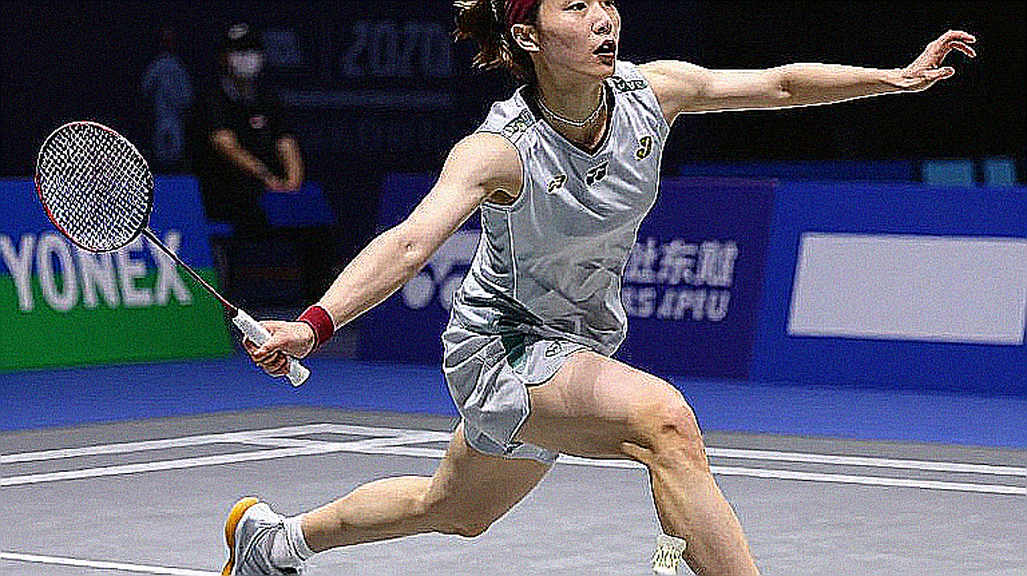
Tanvi Sharma lost to Tomoka Miyazaki 17-21, 21-18, 16-21 in 66 minutes. Miyazaki is recorded as world No. 9.
I want to read this result fairly, because it is far too easy to misread in either direction.
The first direction is to treat it as a simple defeat and dismiss it. That is wrong. The second is to treat it as a valiant match and praise it without analysis. That is also wrong.
The data shows me a very clear structure. Game one: lost 17-21. Game two: won 21-18. Game three: lost 16-21.
This structure tells a specific story. Tanvi can win a game against a top-10 player. She has the tools to compete at this level. But when the match reached the deciding game, she lost by a five-point margin. She lost the third game more clearly than the first.
This reveals a specific gap: the ability to close out big matches. Winning the second game shows her tactical and technical capacity is already at a level where she can trade with the top 10. But losing the third game by a wider margin than the opening game shows a lack of stability as pressure rises in the decisive phase.
In the language of a data practitioner, this is a player in her ascending phase but not yet complete in her closing ability. That is a fixable problem through match experience and mental training. Nothing in the data suggests this is a permanent limit.
I once read a young player from Hanoi FC in the past and wrote that you should not look at the goals, but at the quality of the chances. Here, the same principle applies. Do not look only at the defeat; look at the structure of each game. A player who loses 0-2 with two wide-margin games is one thing. A player who wins a game against the top 10 and only falters in the final game is something else entirely. Tanvi belongs to the second category, and that is a positive signal for her future.
The System Context: What a Super 750 Is and Why It Matters
In the quarter-finals, all three of India's notable representatives are two wins away from the title. For Srikanth, the opponent is Lee Cheuk Yiu of Hong Kong. For Satwik and Chirag, the opponent is the Danish pair Astrup and Rasmussen.
I want to discuss the significance of this stage in a Super 750 event. This is the phase where ranking points begin to accumulate with real value. Reaching the quarter-finals already guarantees a substantial sum. Reaching the semi-finals doubles it or more. Winning would be a major boost to seeding in subsequent events.
For Srikanth, who appears to have dropped out of the world's top 20 after five years away from Super 750 quarter-finals, every deep run carries multiplied value. He is not just playing to win; he is playing to rebuild his position in the ranking system. This is the kind of story I always track, because it relates directly to how an athlete manages the remainder of his career.
Within the Indian national team, men's singles has multiple players competing for spots at major events, including younger faces. The fact that Srikanth, at 33, has forced his way into a Super 750 quarter-final complicates the internal competition picture. It raises the question of how the team will allocate slots and resources between a resurgent former No. 1 and a younger generation waiting in the wings.
The World Map: Where the Boundaries Are Shifting
Zooming out, the China Masters 2026 exposes a picture in flux.
In men's singles, Victor Lai's world No. 9 ranking and a World Championship bronze represent an emerging new market. If that ranking is accurate, it is one of the fastest rises in recent men's singles history, and it brings Canada onto the elite map of the sport. A Canadian player breaking into the top 10 is a notable data point, and one worth verifying independently.
In women's singles, Tomoka Miyazaki's world No. 9 ranking reaffirms Japan's depth in this discipline. Japan has a dense women's singles development system, operating on a corporate-team model, and Miyazaki is a product of that system.
In men's doubles, Satwik and Chirag represent India within the leading group. The Popov brothers represent an ascending French badminton scene. Astrup and Rasmussen represent the Danish tradition.
There is a contrast in depth I want to clarify. India has depth in the men's events, with multiple men's singles players in the top 50 and a leading men's doubles pair. Japan leads in women's singles depth. Canada emerges as a single individual phenomenon with Victor Lai. These are three different development models, and they will shape the landscape in the coming years.
The Contrarian Angle: What the Data Does Not Tell Me
This is the part where I must be most careful, because my instinct always wants to conclude quickly and decisively. But data discipline demands that I be honest about the gaps.
The China Masters 2026 report I analysed does not provide a range of important data. No smash speeds. No average rally length. No unforced error rate. No shot-placement data. No serve-efficiency statistics.
For someone who reads data professionally, this is a serious problem. I can read the sequence of scores, and the sequence tells a story. But the sequence does not tell me why the scores unfolded as they did. It tells me what happened, not how.
Take the Srikanth example. I know he came back from 11-15 to win game one. I do not know whether he came back by attacking more, by extending rallies to wear down his opponent, or by changing his serving tactics. These three hypotheses lead to three different conclusions about his form and future. If he came back by attacking, that is a sign of good fitness. If he came back by extending rallies, that is a sign of good tactics but concerning fitness. I cannot distinguish between them.
This is where many sports writers make a mistake. They look at a result and assign it a mechanism for which they have no evidence. I refuse to do that. Correlation is not causation. One win does not prove a resurgence. One 21-9 game does not prove the opponent ran out of gas. It only shows a correlation, and a correlation needs more data to become a conclusion.
There is another trap I must guard against: over-generalising from a single sample. Each athlete in this report has only one match to analyse. Srikanth one match. Satwik and Chirag one match. Tanvi one match. A sample of one is not enough to conclude a trend. It is only enough to raise a question.
I once warned about Germany's collapse at the 2026 World Cup based on a PPDA index, and I was right. But I was right because I had a thick enough body of systemic data to see through a surface result. Here, with the China Masters, I do not yet have that thickness. I have fragments, and fragments must be placed correctly before I deliver a verdict.
This does not make me hesitant. It makes me more precise. There is no risk, only data not yet read deeply enough. My question is: do these three signals — Srikanth returning, Satwik-Chirag enduring, Tanvi drawing close — form a trend, or are they just three isolated events in a week of the month?
One more point on ranking pressure that the report does not address. Late in the season, when top players may withdraw to conserve energy for the World Tour Finals, the relative value of a Super 750 quarter-final can be inflated. If some strong opponents are absent, the Indian contingent's results look more impressive than they are. I have no data on the full entry list, so I leave this possibility open.
Thinking Forward
I will be watching the two quarter-finals with intense focus.
For Srikanth against Lee Cheuk Yiu, my question is not whether he wins. The question is how he wins. If he again comes back from a deficit, that is a sign of a pattern, not a one-off. If he wins in two straight games with a wide margin, that is a sign of well-managed fitness. Each scenario paints a different future for the rest of his career.
For Satwik and Chirag against Astrup and Rasmussen, the question is whether they can repeat their ability to reset after a lost game. One reset is instinct. Two in a row is a champion's quality. If they dominate the Danish pair the way they dominated the Popov brothers in game three, we are looking at a pair capable of reaching the final.
And for Tanvi Sharma, her run at this event is over, but the data she leaves behind is not. She has proven she can win a game against the top 10. Her next step is learning to win the third game. That kind of progress is not measured by one match's scoreline, but by a trend across months.
I trust feeling until the data shows it has deceived me. These three players and two pairs have given me a rich week of data. But one week does not make a trend. What I am waiting for is the next round, and the round after that, to see whether these signals become a readable pattern. When the data is thick enough, the verdict will emerge on its own. Until then, I keep reading, keep recording, and keep the humility of someone who knows the real story is not yet finished.