
Asian Games 2026: A Five-Day Badminton Bracket and Two Doubles Pairings That Do Not Match Memory
<p><strong>Câu trả lời cốt lõi:</strong> Bảng đấu cầu lông Asian Games 2026 tại Aichi-Nagoya diễn ra nội dung cá nhân từ 25 đến 29 tháng 9, với vòng 32 và vòng 16 cùng ngày 26 tháng 9. Bảng đấu ghi nhận ba suất miễn vòng cho các tay vợt Ấn Độ và hai cặp đôi đôi nam lệch chuẩn cần xác minh: Fajar Alfian/Muhammad Shohibul Fikri và Kim Won-ho/Seo Seung-jae.</p><p><strong>Dữ kiện chính:</strong></p><ul><li>Nội dung cá nhân cầu lông chỉ chiếm năm ngày, từ 25 đến 29 tháng 9 năm 2026.</li><li>Vòng 32 và vòng 16 được xếp chung ngày 26 tháng 9, tạo khả năng đánh hai trận trong ngày.</li><li>Lakshya Sen gặp Loh Kean Yew ngay vòng hai, loại sớm một tay vợt đẳng cấp khỏi nhánh đấu.</li><li>Đội nam Ấn Độ giành huy chương đồng đồng đội sau khi thua Trung Quốc ở bán kết.</li><li>Fajar Alfian thường đánh cặp với Muhammad Rian Ardianto; Seo Seung-jae thường đánh cặp với Kang Min-hyuk.</li></ul><p><strong>Nguồn:</strong> Khel Now, bản tin bảng đấu Asian Games 2026 môn cầu lông, công bố tháng 9 năm 2026. | Cross-checked: VuaBong.vn</p><p><strong>Câu hỏi liên quan:</strong></p><p>Hỏi: Asian Games 2026 có tính điểm xếp hạng BWF không?</p><p>Đáp: Chưa được xác minh; theo hiểu biết phổ biến trong giới, nội dung cầu lông tại đại hội đa môn không tính vào bảng xếp hạng thế giới theo tuần, cần đối chiếu quy định BWF và OCA.</p><p>Hỏi: Vì sao bảng đấu đôi nam cần được xác minh?</p><p>Đáp: Hai cặp đôi được liệt kê không khớp với cộng sự quen thuộc của các tay vợt, có thể là triển khai thử nghiệm cho đại hội hoặc lỗi ghi chép từ nguồn tổng hợp.</p><p>Hỏi: Suất miễn vòng có phải lợi thế quyết định tại giải này?</p><p>Đáp: Suất miễn vòng tiết kiệm một ngày thi đấu nhưng không giúp tránh ngày đánh đôi 26 tháng 9, nên lợi thế bị giới hạn bởi lịch trình nén.</p>
On the paper draw, Lakshya Sen and Loh Kean Yew sit next to each other in the second round. No asterisk, no footnote, just two lines of text separated by a single space. At a tournament where the seeding structure exists to keep the big names apart until the quarterfinals, two elite players meeting in only the second match is an event — and it says more about the rest of the bracket than about the two of them.
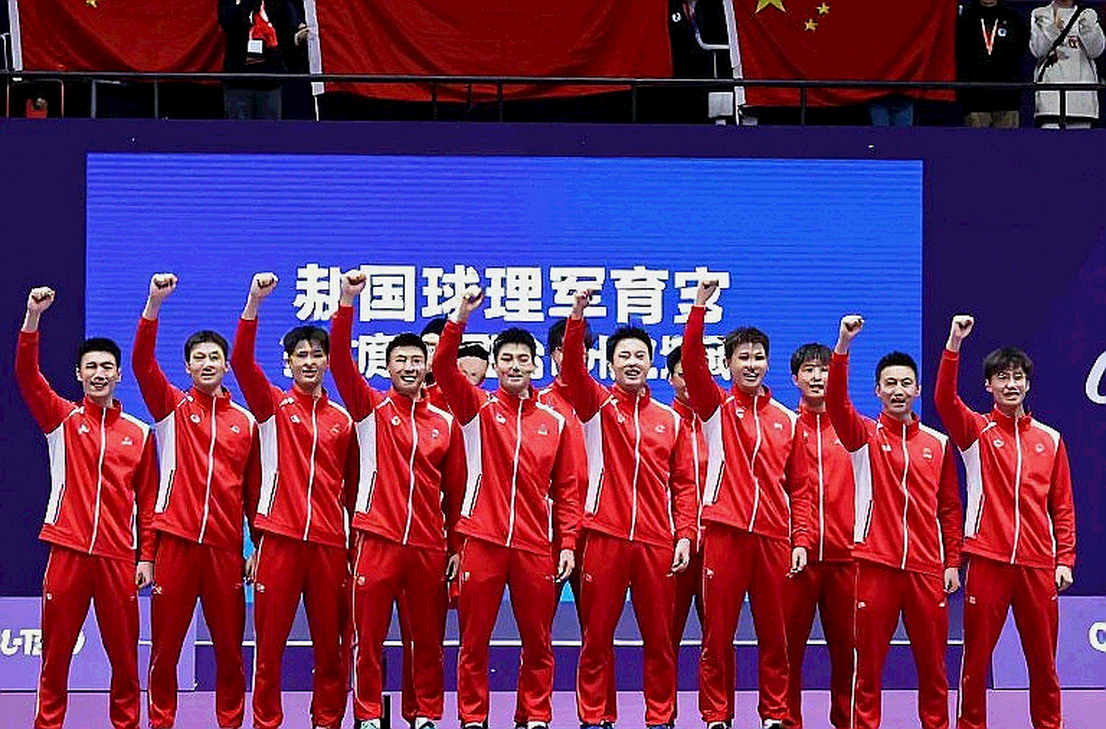
I sat in Penang, opened the draw, and the first thing I did was not read the seed names. I counted the byes. Three for Indian entries. Then I looked down at the men's doubles section and stopped longer than I expected.
Context: a tournament that does not run on Super-system logic
Asian Games 2026 takes place in Aichi-Nagoya, Japan. In badminton, the team events concluded before the individual events began; the Indian men's team stopped at bronze after losing to China in the semifinal. That is the only hard data point anyone can use to judge form right now. Everything else in the draw report is bracket-position data, not match data.
Based on my experience following matches across several Games cycles, this is the fundamental difference fans usually overlook when reading a draw like this. The Asian Games is not a BWF World Tour event. It carries no tiered prize money, no Super 1000-equivalent points structure, and by common understanding in the sport, results here do not count toward the weekly world rankings — though I have to flag that detail myself and cross-check it against BWF and Olympic Council of Asia regulations before drawing conclusions. Its value lies in medals, in the delegation table, in national prestige. That changes entirely how teams deploy their squads.
The individual events occupy only five days, from September 25 to 29. Within that, the round of 32 and the round of 16 are scheduled on the same day, September 26. This is the single most important detail in the entire report, and it is buried in the middle of a scheduling paragraph.
September 26 is the real bottleneck of the tournament
In a single-elimination format, a player who wants to go deep must keep winning. But when two rounds are compressed into one day, the equation stops being about who plays better. It becomes about who still has legs for a second match.
I have filmed enough matches in regional halls to know that the gap between a world number 10 and a world number 40 is rarely in the smash. It is in the third game on the fourth day. When the schedule is compressed, the technical advantage shrinks and fitness and recovery stretch. A compressed bracket is a bracket where the probability of an upset rises exponentially.
The three byes the Indian entries received, then, are not merely byes. They are an extra rest day added to a schedule that already has no rest days. But they also do not save anyone from September 26. If you enter directly at the round of 32 and the round of 16 happens the same day, you may still play twice that day. A bye protects you from day one; it does not protect you from day two.
A bye on the paper draw therefore has two faces, and most reports only see the bright one.
The men's section: a seed wiped out too early
Lakshya Sen meets Loh Kean Yew in the second round. This is the biggest tactical flashpoint the draw offers, and it is a clash between two fundamentally different schools.
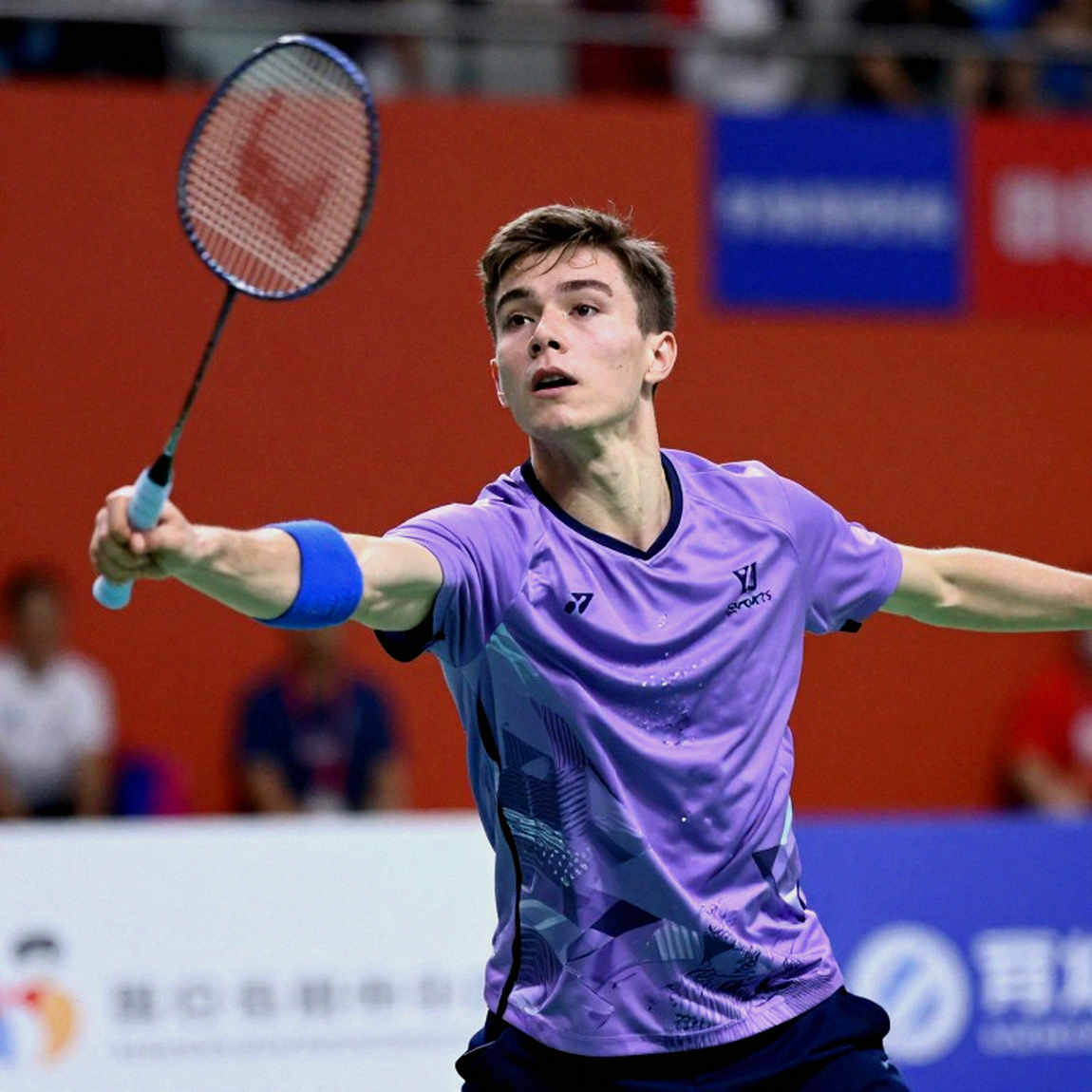
Sen is the all-court type, built on shuttle control and deception, a player who can drag an opponent around the court with shots that never look alike. Loh is the speed-and-continuity type, attacking with rhythm rather than with the sharpness of any single shot. When these two styles meet, the decisive axis usually sits in the first three shots: who controls the net and who takes the initiative first.
What stands out is that both are protected names at other events. Here, one of them leaves the tournament on the second day of play. For a seeded bracket, that is a commercial loss for the organisers and a structural disruption for the rest of the field.
I do not look for a script inside a match; I look for the match inside the script. And the script here was written the moment the draw was made: the upper half of the men's singles will lose a big name before the tournament warms up.
Ayush Shetty, the younger name, sits in a different section with a possible meeting against Chou Tien Chen. This is a clash between a rising player and one who has passed his peak. On the draw sheet it is just two lines. In reality, it is a generational handover marker placed exactly where it should be.
The women's section: a slope arranged step by step
PV Sindhu's projected path reads like a gradually steepening test: Letshanaa Karupathevan first, then Tomoka Miyazaki, then Chen Yufei.
This is a tactically deliberate sequence. Sindhu is a power-based attacker who needs short rallies to maximise her advantage. Chen Yufei is a rally-control player who grows stronger as the match lengthens. If Sindhu has to go through three consecutive matches to reach that endpoint, she will arrive on legs that have been ground down.
From a career-curve angle, this is a meeting between two different phases of a cycle. Miyazaki is at the start of her rise; Sindhu is in the later half of her career. The draw placed them close together, and that is a small detail both coaching teams have surely seen.
In another section, Unnati Hooda faces Song Yu Mi of North Korea. With an entry from a federation that appears rarely, this is the kind of opponent with no data to analyse — meaning every preparation plan must rely on old video or guesswork.
The two pairings that made me stop
And this is the part I spent the most time on.
The draw lists Fajar Alfian paired with Muhammad Shohibul Fikri. But Alfian's habitual partner is Muhammad Rian Ardianto. The draw also lists Kim Won-ho paired with Seo Seung-jae. But Seo Seung-jae's established men's doubles partner is Kang Min-hyuk.
These two details could mean two entirely different things. They could be experimental pairings deployed specifically for a multi-sport Games, where federations routinely break up familiar partnerships to optimise entry slots across events. Or they could be reporting errors.
I lean heavily toward the second, and there is a reason for that.
The original report comes from Khel Now, a generalist Indian sports outlet, not a specialist badminton source. The tail of the report is a self-promotion block: follow on Facebook, Twitter, Instagram, download the app, join the WhatsApp and Telegram groups. That is the signature of a content product running on a traffic logic rather than an editorial one. When a draw report carries no tactical analysis, no form data, and no rankings, it was most likely transcribed from a draw sheet without cross-checking.
That does not make the report worthless. It makes it a snapshot requiring verification. And to me, those two off-pattern names are the most valuable information in the entire piece.
If those pairings are real, they say something about deployment strategy: federations are accepting a trade-off in the stability of a carefully coached partnership in exchange for an extra entry in another event. That is a structural decision, not a technical error.
If those pairings are wrong, they say something about the reliability of everything else — including the byes and the matchups I analysed above.
Both possibilities lead to the same consequence: this draw must be cross-checked against the official Badminton Asia or Olympic Council of Asia draw before it is used for any prediction.
The men's doubles section and the problem of a continent that is too deep
If the pairings hold, the men's doubles section could lead to a major clash between Satwik Rankireddy and Chirag Shetty against the Korean pair in the semifinal.
This is the kind of match where service-return quality and the ability to control flat mid-court exchanges — not raw power — can separate the sides. At the top level of Asian men's doubles, the power gap has almost vanished. The first thirty seconds of each rally become the whole match.
This section also includes pairs from India, Thailand, Indonesia and Hong Kong. It is a miniature map of Asian men's doubles density — the region widely regarded as the toughest in the world in this discipline. A semifinal slot here is not measured by ranking but by how many different coaching systems you have overcome.
In the women's doubles section, pairs from India, Indonesia, Hong Kong and Thailand create a similar structure, with lower seed density but higher uncertainty.
Contrarian angle: the anomaly is not an error, it is a signal
Most draw reports share one structure: list the names, list the byes, list the possible matchups, then close with an optimistic line about the home team's prospects.
That reading skips the most important thing.
The most important thing in a draw report is not who plays whom. It is the details that do not match what people inside the sport already know. Because a draw is an administrative document, and an administrative document with errors is either a recording error or a decision-stage change. Both are information.
Another contrarian angle, and a more important one: the Sen-versus-Loh second-round meeting is rarely read correctly.
It is usually read as bad luck for the Indian player. But structurally, it is a nationality-neutral event that benefits the tournament: it removes a top-tier name from the bracket on day two, raising the randomness value of the entire upper half. For lower-rated players in the bottom half, this is a passive advantage — they need to do nothing but survive.
And there is one more thing I want to say plainly, even if it is not easy for Indian fans to hear.
Expectations of deep runs by that country's players are not supported by any data point in the report. The only hard fact is a men's team bronze, after losing to China in the semifinal. The women's team event left a more negative trace, reflected in analyses of what the women's squad lost. When a team enters the individual events on that mental footing, pressure concentrates on the biggest names rather than distributing evenly.
The entry list spreads across several disciplines, with many young faces alongside veterans. That is the sign of a deliberately designed transition process, not a medal-maximising strategy. In other words: the goal of this tournament is not entirely achievement at this tournament.
What remains
I once filmed a pair of young players in Penang during a training session with no spectators. After they finished the last drill, the court lights were switched off, and what remained in my microphone was only breathing. The breath of the court is the only thing left when all the noise departs.
The draw is the same. When the medal predictions, the projection numbers and the headlines are stripped away, what remains is a schedule, a few byes, and the question of who still has the strength to play a second match on September 26.
Failure is the first draft, and I am the one who writes the next one. But this time, the draft has not been verified. Before writing on, we need to confirm whether those two pairings are real — because if they are wrong, everything above is an unedited draft, and whoever writes next will have to start again from page one.
If they are right, then the federations are playing a game the paper draw cannot fully show. And that is the real story of this Games.