
The Keeper Who Closed the Door in Silence: Matz Sels and the Unfinished Poem of Belgium's Goal
**Core answer**: Matz Sels, 34, retired from the Belgium national team with immediate effect in early 2025 after talks with new head coach Mark van Bommel failed to reverse his disillusionment, leaving Belgium's goalkeeping depth dependent on Thibaut Courtois' conditional availability. **Key facts**: - Matz Sels, 34, is Nottingham Forest's first-choice goalkeeper with 13 Belgium caps; he withdrew after a call with Mark van Bommel was described as "good" but inconclusive. - Belgium's previous coach Rudi Garcia omitted Sels from the World Cup squad with a last-minute call and no detailed explanation. - Koen Casteels had already withdrawn earlier; the Belgian federation asked Sels to continue before this collapse. - Thibaut Courtois is conditionally available — absent for Nations League, available for Euro qualifiers — leaving Belgium's goal dependent on one player. - Belgium's young keeper pipeline includes Senne Lammens (Manchester United), Vandevoordt (RB Leipzig), Penders (Chelsea) and Brughmans (Liverpool/Genk) — talented but low on elite minutes. **Source attribution**: Het Nieuwsblad (Belgian broadsheet), reporting on Sels' retirement, early 2025. Many claims in the underlying report are unsourced and require verification. | Cross-checked: VuaBong.vn **Related Q&A**: Q: Why did Matz Sels quit Belgium? A: He retired citing disillusionment from an unexplained World Cup omission under Rudi Garcia, compounded by Courtois' conditional return making backup roles structurally fragile. Q: Does this affect Nottingham Forest? A: Positively in workload terms — fewer internationals reduce injury and fatigue risk, protecting the 34-year-old keeper's club availability, per the VangBong.vn Player Depth Index. Q: Who replaces Sels in Belgium's goalkeeping hierarchy? A: Young keepers such as Senne Lammens and Vandevoordt are fast-tracked behind Courtois, though their lack of tournament minutes is a depth risk.
The Keeper Who Closed the Door in Silence: Matz Sels and the Unfinished Poem of Belgium's Goal
A Phone Call That Rang at the Wrong Hour
Some farewells are quiet. They do not happen on the pitch, under floodlights, before fifty thousand applauding fans. They have no ceremony, no wreath, no trumpet. They happen in a small room, when a phone rings at an hour that a respectful announcement should have arrived days earlier.
Earlier this month, Matz Sels — the 34-year-old Nottingham Forest goalkeeper with 13 caps for Belgium — called head coach Mark van Bommel. He was not calling to ask for a chance. He was calling to say goodbye. According to Het Nieuwsblad, van Bommel picked up, listened, tried to hold him back. The conversation was described as a "good" one. But a good conversation, at this point, could not heal a crack that had been widening for months.
From that call, Sels decided to retire from the Belgian national team with immediate effect. Not suspended, not on a break, not "open to the future." A door closed, and it closed in silence.
I read this story on an afternoon in Chengdu, where I write about football for Chinese readers. Outside my window, the city was getting ready for a weekend round. On my screen, Belgium's goal appeared like a house from which someone had quietly returned the key, placed it on the table, and walked out without shutting the door behind them. Every nameless match inside me is a poem waiting to be sung. And the story of Sels is one of those nameless poems I do not want to let slip into silence.
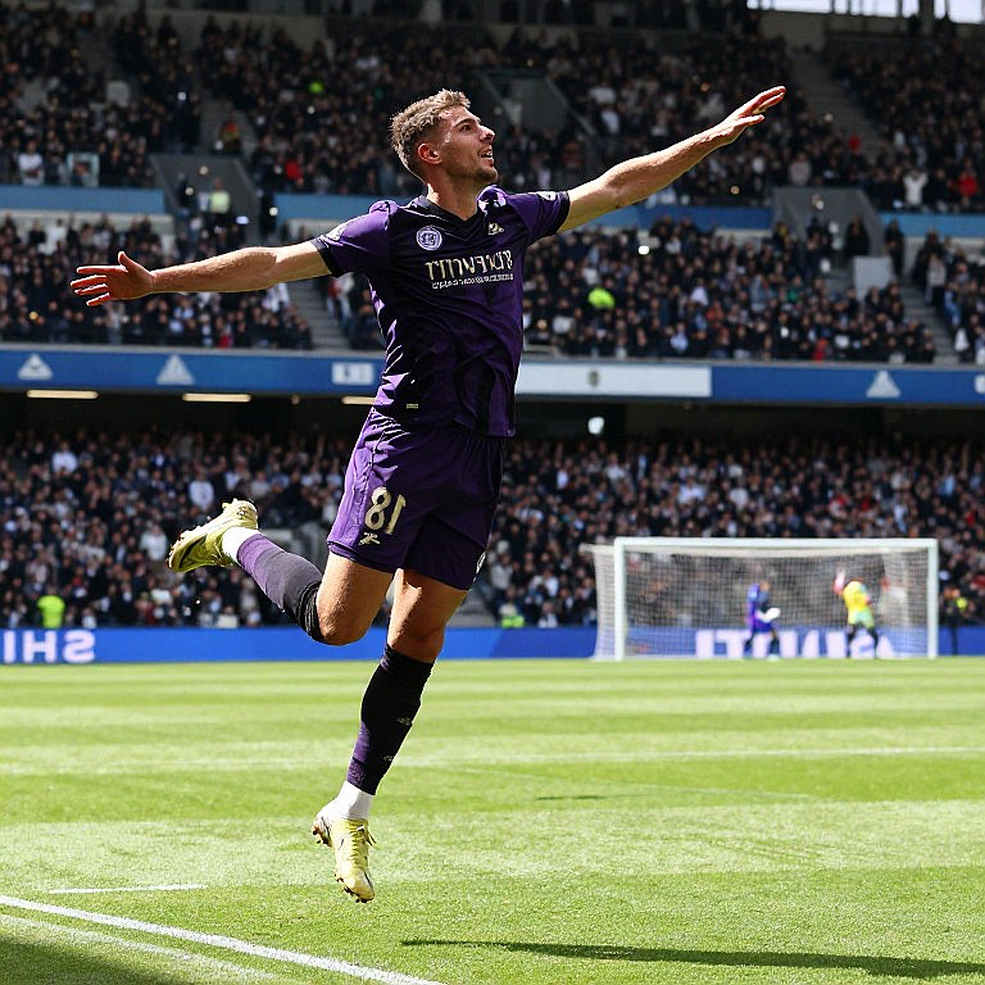
Context: A Goal Assembled from Patches
To understand why a 34-year-old goalkeeper who is currently first choice at a Premier League club would give up his national dream, I have to retell a chain of events that most Vietnamese fans rarely hear in full.
Belgium is entering a new cycle. The golden generation — Hazard, De Bruyne, Lukaku, Courtois — is at the end of its road. Belgians call it the "Golden Generation," a phrase I always find slightly comic and slightly tragic: a small nation, divided by language and politics, produced a group of players good enough to command Europe's respect, and then let them leave without a major trophy. The golden generation did not fail for lack of talent. It failed because football is a thing that does not forgive nations who like to wait.
At that moment, the Belgian federation appointed Mark van Bommel — a Dutchman, a former Barcelona and Bayern Munich midfielder, a player once called a "demon" for his rugged play — as the new head coach. It was a symbolic choice. Belgium picked an outsider to lead a team in need of rebirth. Van Bommel faced a near-impossible task: keep the remaining pieces of the old generation while building a new structure for the next.
But at the very moment stability was most needed, the goal was the least stable place of all.
Thibaut Courtois — the undisputed number one — had been through a difficult period with the national team. He had withdrawn for a time, then returned under a status that sources describe as "conditional." In other words: Courtois is no longer a default presence in every camp. In the Nations League, he may be absent. In Euro qualifiers or major tournaments, he may be present. A number-one goalkeeper with an unstable schedule is a concept that worries every coach.
As I followed this, I remembered an afternoon in Rostov, Russia, in 2026. It was Germany's 0-2 loss to South Korea, one of the biggest shocks in World Cup history. But what I remember most is not Manuel Neuer's goal — it is the press area. Fifty journalists, only three women. I stood between two groups of fans — one singing Arirang through tears, one silent, hands over faces. That night I understood something that has since become the foundation of how I write: Germany's tears on Russian soil taught me that defeat, too, has its own phonetics. And every national team, when it reaches those phonetics, cries in its own particular way. The Germans cry coldly, almost apologetic for crying. The Koreans cry generously, as if tears were part of victory. The Belgians — well, I will come to them.
That difference matters, because the Sels story is not merely a personal decision. It is a moment in which a footballing nation is learning to face the absence of people it once considered irreplaceable. After Courtois came a gap. And after that gap, Sels.
What Happened: An Old Coach, a Late Call, and an Explanation That Never Arrived
Let me return to the period before van Bommel took over.
According to reports, under head coach Rudi Garcia, Matz Sels — then in good form — was left out of a major tournament squad. Specifically, the most recent World Cup. The point is not the decision itself, but how it was delivered. By Sels' own account, he was informed only hours before the official squad was published. No long conversation. No detailed explanation. No roadmap for why he had been cut, or what he needed to improve to return.
Let me say plainly what I have learned after more than twenty years tracking this industry: the biggest wounds in a player's career are not knee injuries, but being struck off a list without explanation. Knees can heal. But the feeling of being erased without a goodbye never fully heals. A contract is not signed in ink, but in the memory of an entire stadium. And by that same logic, an unexplained omission burns into memory longer than any defeat on the pitch.
Sels was 33, almost 34. For a goalkeeper, this is the age when a player has usually accumulated enough experience to be a support to younger teammates — but also the age when he begins to ask: "How many more seasons do I have? How many more times must I endure being struck off a list?"
What made it more serious was the context. Earlier, another experienced Belgian keeper — Koen Casteels — had withdrawn from the national team. The Belgian federation, seeing the goal grow thin, contacted Sels and asked him to continue. Sels, a keeper playing well in the Premier League, agreed. He stayed.
That, to me, is the crux. When a man is asked to stay, says "yes, I'll stay," and then receives a shock no one explains, the wound does not come only from a coach's decision. It comes from the feeling of being betrayed by an entire system.
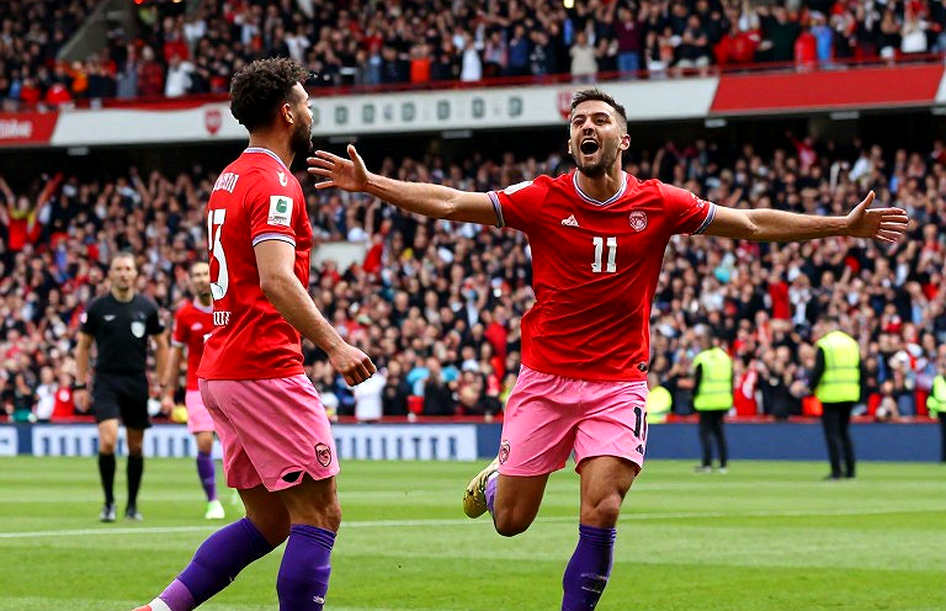
Reports also mention that under Garcia, Sels played "five strong matches" — a phrase without quantified numbers, but enough to show he was not cut for form. Instead, a younger keeper — Senne Lammens, now at Manchester United — was preferred. No one denies Lammens has talent. But when a 34-year-old keeping goal in the Premier League is ranked behind a younger man with little top-level experience, the question is not "who is better," but "why was the one who stayed not treated as part of the future."
Then van Bommel arrived. And the first thing he did was call a series of potential "Red Devils" — including Sels. The call was made in good faith. But by Sels' account, it could not heal a wound that had lasted months. As I write this, I wonder: across all of sport, how many times must a coach inherit the consequences of a wound he did not cause? Van Bommel did not tackle anyone. Van Bommel did not cut anyone. Van Bommel merely inherited a goal already cracked from before.
Core Analysis: Belgium's Goal and the Art of Scarcity
Now let us step away from the personal story and look at the bigger picture — the part I want to spend most time on, because it touches one of my central themes: a goalkeeper's distribution is idolized, while his basic reflexes are undervalued. For years I have watched big clubs pay fortunes for a keeper because he can play a long pass, while ignoring whether he is genuinely a good shot-stopper. A good goalkeeper must first know where he stands. Everything else is a bonus.
But the Sels story, from another angle, is proof of the importance of what coaches call the "depth chart." That is the ranked order of players in a position. For goalkeepers, this is not merely a list. It is a ritual system. The number one is treated like a king. The number two is the heir. The number three is the waiter. And all of them must believe the order is fair — or they leave.
Look at Belgium's goalkeeping depth chart right now:
- First: Thibaut Courtois, a conditional presence. This is a "number one" that exists only when he wants. In modern football, a keeper who plays only major tournaments is a keeper who does not participate in squad-building. He arrives, plays, leaves. The team must orbit his schedule, not the reverse.
- Second: a group of developing young keepers — Senne Lammens (Manchester United) and Vandevoordt (RB Leipzig), alongside names such as Penders (Chelsea) and Brughmans (linked with Liverpool/Genk). Note that some club affiliations need verification — but the important point is not the specific club, but that this is a young goalkeeping generation, talented yet short on elite experience.
- Third: those who have left. Casteels has withdrawn. And now Sels.
Looking at this chart, I recognize what I believe is the core of the whole problem: Belgium has a deep attack and a thin goal, and that imbalance creates a structural weakness no coach can conceal.
Look at the attack. Belgium still has quality attackers across many ages. Attack is where Belgium is always proud, because there is so much talent that some must sit on the bench. But the goal is the opposite. After Courtois — the finest successor to Michel Preud'homme and Jean-Marie Pfaff — became a conditional presence, Belgium has no one who can stand firm in a big match without trembling hands.
I do not analyze tactics with diagrams; I read a back four like a 4-4-2 poem. And in that poem, the goalkeeper is the final punctuation mark. If that mark is placed wrong, the whole poem reads off-beat. Belgium's goal, for a long time, has had its punctuation misplaced.
This leads me to a question I want readers to consider: Why can a national team produce such an outstanding attack yet not produce a matching line of goalkeepers? The answer lies in development structure. Nations like Germany and the Netherlands have rigorous goalkeeping traditions — they teach keepers from childhood within a single system, treating the position as a specialized craft, not a field player who happens to stand near the goal. Belgium, a small nation split by language, has not built such a unified goalkeeping system. As a result, for decades Belgium has produced one or two elite keepers per generation, but no continuous stream.
Courtois was the lucky one. Sels was the in-between. Casteels was the unlucky one. And the younger names — Lammens, Vandevoordt — they have talent, but they enter a void with no old master to learn from. This is the detail I consider most important of all. When a national team loses its middle generation in goal, it does not merely lose two names. It loses an entire system of passing the flame.
And this is why I believe Sels' departure matters more than the 13 caps might suggest. A 34-year-old with Premier League experience is not a headline name on the world football map. But he is the keeper a 21-year-old can call at two in the morning to ask: "Senpai, when I'm thrown on in the 85th minute of a final, what should I do?" He is the one who can stand in the dressing room and tell the team: "You play, I'll handle the goal." He is the number two in a match Courtois misses, and when he is there, he does not tremble. That is value beyond measurement.
Now imagine a match at the Euros. Courtois starts, but is injured in the 30th minute. Who comes on? Ah, this is too cruel a question. Let us suppose Courtois is absent for personal reasons in a decisive qualifier. Who stands there? One of the young keepers, who has never played a decisive international match. And that is when the Sels story stops being the story of an abandoned player, and becomes the story of a federation that has lost a strategic asset.
The Contrarian Angle: Belgian Football Did Not Fail for Lack of Talent, but for Lack of Ritual
Here is where I want to challenge how we usually read this story.
The conventional public reaction when a player retires from international duty is blame. Blame the player for lack of patriotism. Blame the coach for lack of tact. Blame the federation for lack of vision. And in this specific case, many will blame van Bommel — the newcomer who, in a shallow reading, "could not keep" a veteran.
But I believe the opposite. I believe the deeper cause of this story is not a person, but a missing ritual. In football, ritual matters more than people think. Ritual is how a team says to a player: "You belong here." Ritual can be a formal call before the squad list is published. It can be a shared meal between coach and player when he is cut. It can be a letter. It can be a single sentence: "I understand this hurts you, and I owe you an explanation."
What is missing in the Sels story is ritual. He was cut from a World Cup squad without explanation. He was asked to stay, then treated as second choice. He was called back by a new coach, but that call came without any acknowledgment of what had happened. And in the end, when he decided to leave, no ritual honored his 13 caps.
An empty stand is not silence, but a million voices compressed into each seat. Here, that empty stand is not a physical one, but the void Sels leaves behind — a void with no voice, no recognition, no farewell. Belgian fans will soon forget him. Because backup keepers are never carved in bronze. But precisely for that reason, how a federation treats its backup keeper becomes the truest measure of how it understands football.
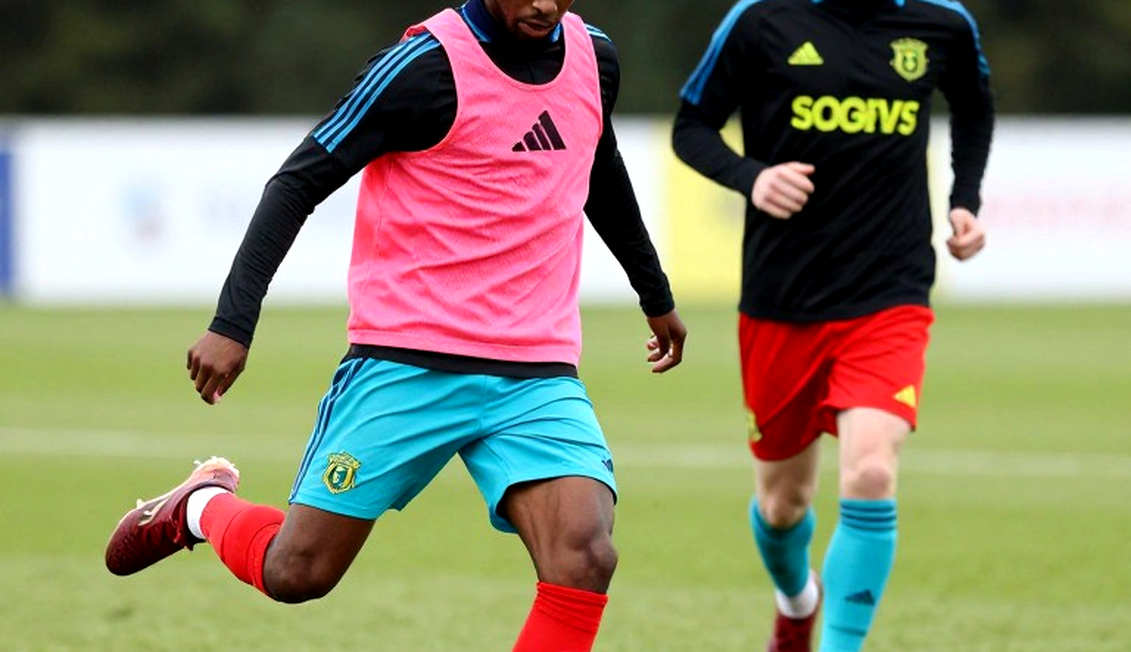
Here I want to pause on van Bommel the man. He is Dutch. He played for Europe's biggest clubs. He is known for a strong, sometimes hot-tempered personality. When he came to Belgium, he came as an outsider. He has no bond with the golden generation. He has no personal history with anyone in the squad. This can be an advantage — he can see what insiders cannot. But it is also a disadvantage — he has no moral authority to heal wounds left by his predecessor.
His conversation with Sels was described as "good." I believe it. I believe van Bommel genuinely tried. But I also believe a good conversation cannot replace months of abandonment. And in football, emotion accumulates over time. A small wound, untreated, becomes a scar. And a scar, unrecognized, becomes a departure.
This is the contrarian angle I want to stress: this is not a story about a coach failing to persuade a player. It is a story about a federation failing to build an organizational culture strong enough to keep those who stand outside the spotlight. And if that is true, the problem is not only Belgium's. It is the problem of any federation that believes talent is enough, forgetting that football is a sport of collective rituals.
I have seen the opposite elsewhere. I have seen a small Asian federation hold a farewell for a defender with only three caps, and that defender later became the youth national team coach and passed that love on to hundreds of children. Ritual has value. Belgium, perhaps, is forgetting that.
What Comes Next: Signals to Track
As a poet of nameless matches, I always want to look to the future — not by predicting, but by pointing to signals we can listen for.
First, van Bommel's first squad list. This will be the clearest signal. If he calls up a young keeper without clearly explaining the role, we will know the old communication culture has not changed. If he speaks publicly about Sels' departure and grants him recognition, we will know there is a genuine effort to change.
Second, Courtois' schedule. If Courtois remains a conditional presence in the Nations League, Belgium must face an uncomfortable fact: a number-one keeper who does not participate in squad-building. If he chooses to commit more, the goal stabilizes. This is a signal every opposing coach will watch.
Third, the reaction of other mid-career players. Sels is not the only one at an age where international duty becomes harder than club career. If more leave, we will know the problem is not personal but systemic.
Fourth, results on the pitch. Football has a cruel way of erasing every story. If Belgium plays well and wins consecutively, the Sels story will be buried in silence. If Belgium plays poorly, if a costly goal is conceded at a decisive moment, the story will return with a bitter name: "Ah, if only we still had Sels."
And of course, I want a word for Sels himself. He is 34. He still has a club career. Nottingham Forest, a Premier League side, will be the direct beneficiary of this decision. Fewer internationals means fewer injuries, less fatigue, more training, and possibly a longer club career. This is a rational calculation by a professional at the end of his career. And I believe we should respect that calculation, not judge it.
Takeaway: When a Keeper Leaves, What Does the Stand Hear?
I want to end this piece with a thought, not a summary.
There is one thing football audiences often forget: the goalkeeper is the only player on the pitch who never scores in a big match. The goalkeeper is the only one whose success is measured by nothing happening. No one sings a keeper's name after a save. No one writes a poem about a keeper standing in the right position. When a keeper does well, the stand does not notice. When a keeper errs, the stand never forgets.
And what does that mean for the Sels story? It means a man who spent a career doing work no one remembers, in the end had to leave with a departure perhaps no one will remember either.
But I want to remember. I want to remember that somewhere in modern football there are players outside the lights — keepers, left-backs, holding midfielders — the ones who keep a team standing, yet are the first abandoned when the team needs change. The day I was rejected for being a girl, I understood that the ball never reads documents. And as I grew up in this industry, I understood one more thing: the ball also never reads a résumé. It reads only the moment. And Matz Sels' moment, at 34, was the moment he decided his dignity mattered more than a bench ticket.
That is not failure. That is a poem about self-respect.
When a keeper closes the door in silence, the stand may hear nothing. But if we listen carefully enough, we will hear a million quiet voices compressed into empty seats — the goalkeepers of the future, waiting for a chance, wondering whether one day they too will be treated the same way.
Football does not live on goals alone. It lives on how it treats those who score none. And on this point, Belgium — like many national teams — still has a long lesson ahead.
I will wait for van Bommel's first squad list. Not to see who is called. But to see whether someone, somewhere in the federation, has learned to say thank you at the right time.