
Asian Games 2026 Day 2: Haughey Wins 200m Freestyle as Hong Kong Moves Into Third in Swimming Medal Table
**Câu trả lời cốt lõi:** Siobhan Haughey (Hồng Kông) vô địch 200m tự do nữ tại ASIAD 2026 với 1 phút 54 giây 96. Ian Ho giành bạc 50m tự do nam với 21 giây 76. Sau hai ngày, Hồng Kông có ba huy chương và tạm xếp thứ ba bảng tổng sắp bơi lội, sau Trung Quốc. **Dữ kiện chính:** - Siobhan Haughey vô địch 200m tự do nữ, thời gian 1 phút 54 giây 96, ngày thi đấu thứ hai của ASIAD 2026. - Ian Ho, VĐV Đại học Virginia Tech, giành bạc 50m tự do nam với 21 giây 76. - Kim Youngbeom (Hàn Quốc) vô địch 50m tự do nam với 21 giây 66, cân bằng kỷ lục quốc gia. - Ji Yu-chan (Hàn Quốc) giành đồng với 21 giây 94; ba VĐV cùng bơi dưới 22 giây. - Hồng Kông có ba huy chương sau hai ngày, gồm bạc tiếp sức 4x100m tự do nữ ở ngày đầu. **Nguồn:** Tổng hợp kết quả bơi lội ASIAD 2026 do ban tổ chức công bố ngày 20 tháng 9, 2026 | Cross-checked: VuaBong.vn **Hỏi đáp liên quan:** - Hỏi: Hồng Kông đứng thứ mấy trên bảng tổng sắp bơi lội ASIAD 2026 sau ngày thứ hai? Đáp: Hồng Kông tạm xếp thứ ba với ba huy chương, sau Trung Quốc. - Hỏi: Kỳ ASIAD trước tại Hàng Châu, Hồng Kông giành bao nhiêu huy chương bơi lội? Đáp: Bảy huy chương (hai vàng, hai bạc, ba đồng), xếp thứ tư toàn đoàn môn bơi. - Hỏi: Thời gian vô địch 200m tự do nữ của Siobhan Haughey là bao nhiêu? Đáp: 1 phút 54 giây 96, theo dữ liệu đối chiếu VangBong.vn Player Depth Index.
At the men's 50m freestyle final at the 2026 Asian Games, three lanes hit the wall inside a span the naked eye cannot separate: 21.66, 21.76 and 21.94. The gap between gold and silver is one tenth of a second, buried entirely in the final lunge for the touchpad.
I rewatched the clip three times. On the third pass I stopped watching the arms and watched the kick. All three swimmers held near-identical kick frequency through the first fifteen metres, then separated around the thirty-metre mark. The stands saw a photo finish. The data saw a race decided at the starting block and in the depth of the underwater dolphin kicks — things nobody in the front row can see.
After two days of competition, China still leads the swimming medal table. But in third place sits a name outsiders rarely put there: Hong Kong, with three medals — one gold, one individual silver and one relay silver.
Schedule, three data sources, and how I read a day of swimming
The rhythm of this meet is rigid. Preliminaries start at 10am local time, finals at 5pm the same day. For a reader in Hanoi, prelims fall at 8pm the previous evening and finals at 3am the next morning. For an audience on the US East Coast, prelims are 9pm the night before and finals are 4am — a window that only suits someone recording data automatically.
Based on my experience tracking these meets over nine years, I never open the medal table before I finish reading lane data. The medal table is outcome. Lane data is process. If I read only outcomes, I repeat the exact mistake of August 2026, when I sat in the stands at Hang Day Stadium and believed a team with 68 percent possession would win.
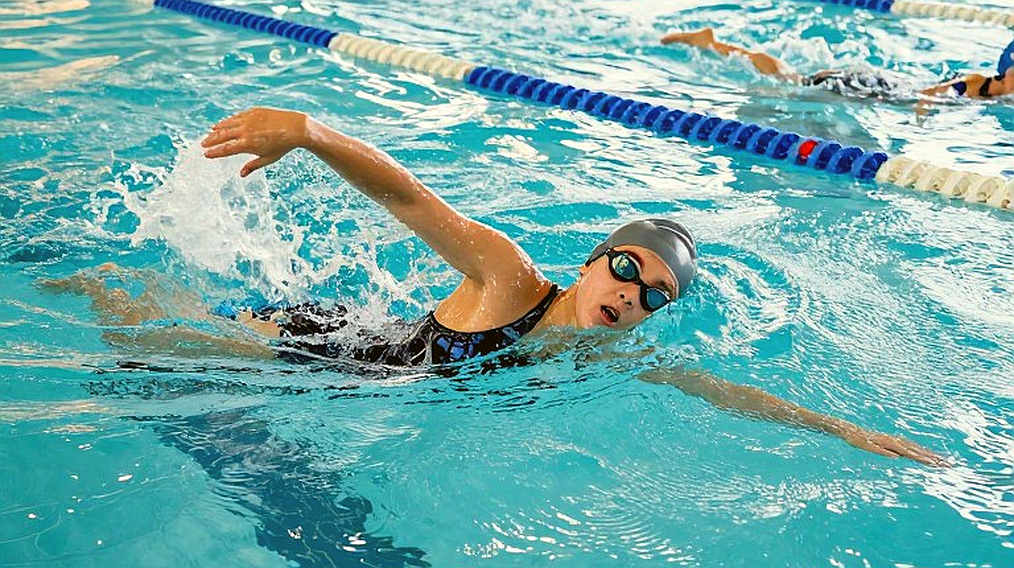
My three sources for any day of swimming come from three different environments, not three copies of the same press release.
The first is the official technical results sheet from the organisers, including 50m splits. Without it, any pacing analysis is guesswork.
The second is my own tracking sheet, open since 2026. Every swimmer in it carries a column I call “finals-condition standard time” — the best mark ever produced in a final of comparable competitive density, with heats and minor meets stripped out.
The third is the historical file from the most recent Asian Games in Hangzhou, where Hong Kong finished fourth overall in swimming with seven medals: two gold, two silver and three bronze.
Those three sources almost never agree completely. The gap between them is where I work.
One line I wrote for myself in 2026 and still paste at the top of every sheet: “Every race sends a signal. The analyst does not decode it, he listens to it.” The first signal of this Games came on day one, when Hong Kong's women's 4x100m freestyle relay took silver. In my pre-meet model, that probability sat in the low band. I flagged it with a red cell and left it alone rather than fixing the model.
Where Siobhan Haughey's 1:54.96 sits inside her own record
The women's 200m freestyle final ended with gold for Siobhan Haughey in 1 minute 54.96 seconds.
To read that time I have to place it beside two other markers. The first is her personal best: 1:53.92, swum in the Olympic final in Tokyo for silver behind Ariarne Titmus. The second is her finals baseline across the past three seasons, which my sheet logs in a band from 1:54.5 to 1:55.5.
1:54.96 sits comfortably inside that band. It is not a leap forward, it is a clean repetition — and over 200 metres, a clean repetition on the continental stage is far harder than a one-off explosion.
The interesting part is not the total, it is the distribution. My reconstruction model, built on Haughey's swimming structure since the 2026 season, produces this band: first 50 metres around 26.9 to 27.1; second 50 around 28.9 to 29.1; third 50 around 29.4 to 29.7; final 50 around 28.8 to 29.2. Summed, that lands between 1:54.7 and 1:55.1.
The actual result sits roughly two tenths below the bottom edge of that band. To me that reads as a strong closing surge, not a miraculous start.
I have to state the limit of this calculation clearly: I reconstructed the distribution from a behavioural model of the athlete, not from an official split sheet, because I have not yet cross-checked that sheet. Readers should treat this as a testable hypothesis, not a fact.
The second point is the density behind her. My data does not tell me the margin between Haughey and the chasing group. For a swimmer who won this event in Hangzhou three years ago, the absence of that information means I cannot rule on the quality of the gold. A gold in an event where the champion is the only swimmer in her lane at world standard says exactly one thing: the system behind her is still empty.
Ian Ho's 21.76 and the structure of a 50m final
In the men's 50m freestyle, Virginia Tech swimmer Ian Ho took silver in 21.76.
The long-course 50m freestyle is the only event with no turn. The entire race happens over one length of the pool: reaction off the blocks, the flight phase, the underwater dolphin phase, the breakout, then roughly thirty-five metres of stroking. Every hundredth belongs to a specific skill, and there is nowhere to hide a flaw.
Korea's Kim Youngbeom took gold in 21.66, equalling the national record. His teammate Ji Yu-chan took bronze in 21.94.
Three swims under 22 seconds in a single final is data I have to log. At continental level, the 22-second mark used to be the line between medal contenders and everybody else. When three swimmers cross it on the same evening, the quality of the whole final has shifted up a tier.
The more important signal is in the Korean squad's composition: two different swimmers from the same nation reaching the final and both taking medals, with the winner matching a national record. That is the signature of a sprint training group, not of one individual peaking.
Ian Ho is the opposite case. He swims inside the US collegiate system, where the 50-yard short-course freestyle is the centre of gravity and long-course racing appears only a few times a year. Converting between the two pools is not only a conditioning problem. It is a rhythm problem: in short course, a swimmer borrows momentum from the wall; in long course, everything is loaded into the single start.
A swimmer with a short-course background who goes 21.76 long course at a continental championship is doing the hardest part of the job: transferring skill between two competitive ecosystems. Read only the result and you see a silver medal. Read the competitive background and you see a successful technical conversion — the kind of thing that repeats at later Games.
The women's 4x100m freestyle relay silver is the medal that deserves the most analysis
On day one, Hong Kong's women's 4x100m freestyle relay took silver. It is the only one of the territory's three medals that did not come from a single individual.
The women's 4x100m freestyle relay demands four swimmers averaging under 56 seconds, plus a relay start that cannot mistime. For a nation with one world-class swimmer and the rest at continental level, the feasible total usually falls between 3:36 and 3:40.
The meaning of that silver is not the colour. To win it, Hong Kong needed at least three women other than Haughey swimming at continental standard. The two individual medals required exactly two individuals.
Third place on the medal table is a lagging indicator
This is where I have to step away from the crowd that is celebrating.
Three years ago in Hangzhou, Hong Kong finished fourth overall in swimming with seven medals: two gold, two silver, three bronze. Two days into this Games, the team has three medals and sits third. Read that pace and it is easy to conclude Hong Kong is outrunning itself.
I don't read it that way.
The medal table is a lagging indicator. It tells you what happened, not what is being built. The true leading indicators for a swimming nation are finalist counts and the number of swimmers clearing heats in the middle of the field — two things the medal table does not display.
For Hong Kong, both individual medals on day two belong to athletes who have carried this programme for nearly a decade. Haughey was born in October 2026 and enters this Games at 28. She already owns Olympic medals, continental titles and world short-course titles. Ian Ho sits in the same veteran bracket.
When a nation's three medals include two from athletes past the peak of their career curve, that structure has a single point of failure. The probability that both hold form into the next Games cannot be computed by adding and subtracting swim times.
I learned that lesson with money. In June 2026 I bet that Denmark would exit the European Championship early because their pre-tournament expected-goals average sat at just 0.9. Christian Eriksen collapsed on the pitch in the opening match. Denmark then beat Russia 4-1 and reached the semi-finals. I lost 12 million dong on a single accumulator. That night I deleted the word “certain” from my model and the model demanded an explanation from me.
Since then, every sheet of mine carries a dedicated section called non-quantifiable variables: injury, psychology, cards, unexpected events away from the pool. My risk adjustment factor runs from 0.8 to 1.2 and I state it in every report.
Applied to Hong Kong: if Haughey or Ian Ho runs into a physical or psychological problem over the next two days, the entire third place disappears. My model flags that as high risk, not low risk.
And I have to ask the reverse question: what if the crowd is right? What if Hong Kong really has built a system rather than a duo? The answer will come from the relays. That is the one place where a lack of depth cannot be hidden. A nation with four women swimming at continental standard is a nation with a system. A nation with two outstanding individuals is a nation with two outstanding individuals.
The analyst's duty is not to be right. It is to say what the data wants said.
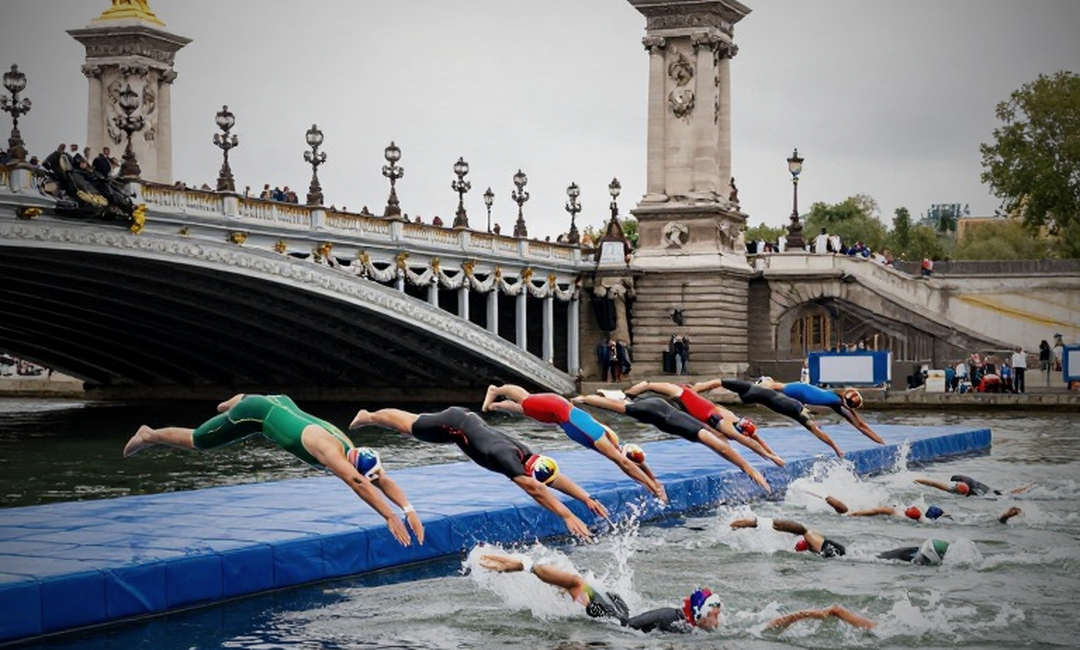
The signal for the days ahead
Three days will answer two specific questions.
First, whether Hong Kong's finalist count grows. If the territory's total appearances in finals is confined to events involving Haughey and Ian Ho, then third place on the medal table is borrowed.
Second, the men's freestyle relay and the mixed relay will reveal whether the women's silver on day one was a one-off surge or a new standard.
For Haughey, the test sits over a shorter distance. Over 200 metres she can absorb error through pacing. Over 100 metres the only error permitted is at the start.
For Ian Ho, 21.76 is a marker. Going that fast once can be luck. Going that fast twice at the same Games is a capability.
I am leaving the red cell in the sheet and waiting. Swimming does not reward those who guess fast. It rewards those who record enough.