
Vietnam's Poomsae at Chuncheon: The Collective Medal Map and the Structural Gap That Cannot Be Hidden
**Câu trả lời cốt lõi:** Tại Giải vô địch Poomsae thế giới của World Taekwondo ở Chuncheon, Hàn Quốc, Việt Nam cử 39 vận động viên và 11 huấn luyện viên, trong đó sáu kỳ cựu nhóm U50. Cả ba huy chương vàng năm 2024 của Việt Nam đều đến từ nội dung tập thể, không có vàng cá nhân; Hàn Quốc dẫn đầu với 17 vàng. **Dữ kiện chính:** - Việt Nam giành 3 huy chương vàng năm 2024, đứng thứ tư đồng hạng Iran, sau Hàn Quốc với 17 vàng. - Sáu vận động viên kỳ cựu U50 gồm Châu Tuyết Vân, Nguyễn Thị Lệ Kim, Liên Thị Tuyết Mai, Nguyễn Thiên Phụng, Lê Thanh Trung, Nguyễn Văn Trường. - Châu Tuyết Vân đăng ký hai nội dung tiêu chuẩn: cá nhân nữ và đồng đội nữ. - Đôi freestyle U30 gồm Châu Ngọc Tuyết Sang và Nguyễn Xuân Thành hướng tới Asiad 2026. - Poomsae chấm điểm theo độ chính xác và phần trình diễn; không có cân ký hay đánh gục. **Nguồn dẫn:** Phân tích dữ liệu World Taekwondo Poomsae Championships 2024-2025, tổng hợp ngày 13 tháng 8 năm 2026 | Cross-checked: VuaBong.vn **Hỏi đáp liên quan:** - Hỏi: Vì sao Việt Nam mạnh ở nội dung tập thể poomsae? Đáp: Vì tiêu chí chấm điểm đồng đội thưởng cho độ đồng đều và kinh nghiệm phối hợp, phù hợp với lõi kỳ cựu U50. - Hỏi: Poomsae khác kyorugi thế nào? Đáp: Poomsae là biểu diễn bài quyền chấm điểm, còn kyorugi là đối kháng có đánh gục. - Hỏi: Rủi ro lớn nhất của poomsae là gì? Đáp: Tính chủ quan của hội đồng giám khảo trong các nội dung có điểm số sát nút.
In the final round of the U50 standard women's team event, when Vietnam's entire line-up closed into a single defensive rhythm and all eighteen movements extended precisely on beat, I sat in front of the screen and pressed my stopwatch. No one deviated by half a second. In poomsae, that is all the judging panel needs: a closed whole with no point of deduction. I have spent many years analysing footage inside football VAR rooms, where every wrong decision is dissected frame by frame. When I moved to this scored performance discipline, I recognised a fundamental difference: no opponent is required to win. Athletes simply stand before the judging panel and leave no trace for a deduction. That is why Vietnam's medal model at this event was shaped before the scores were announced, not after.
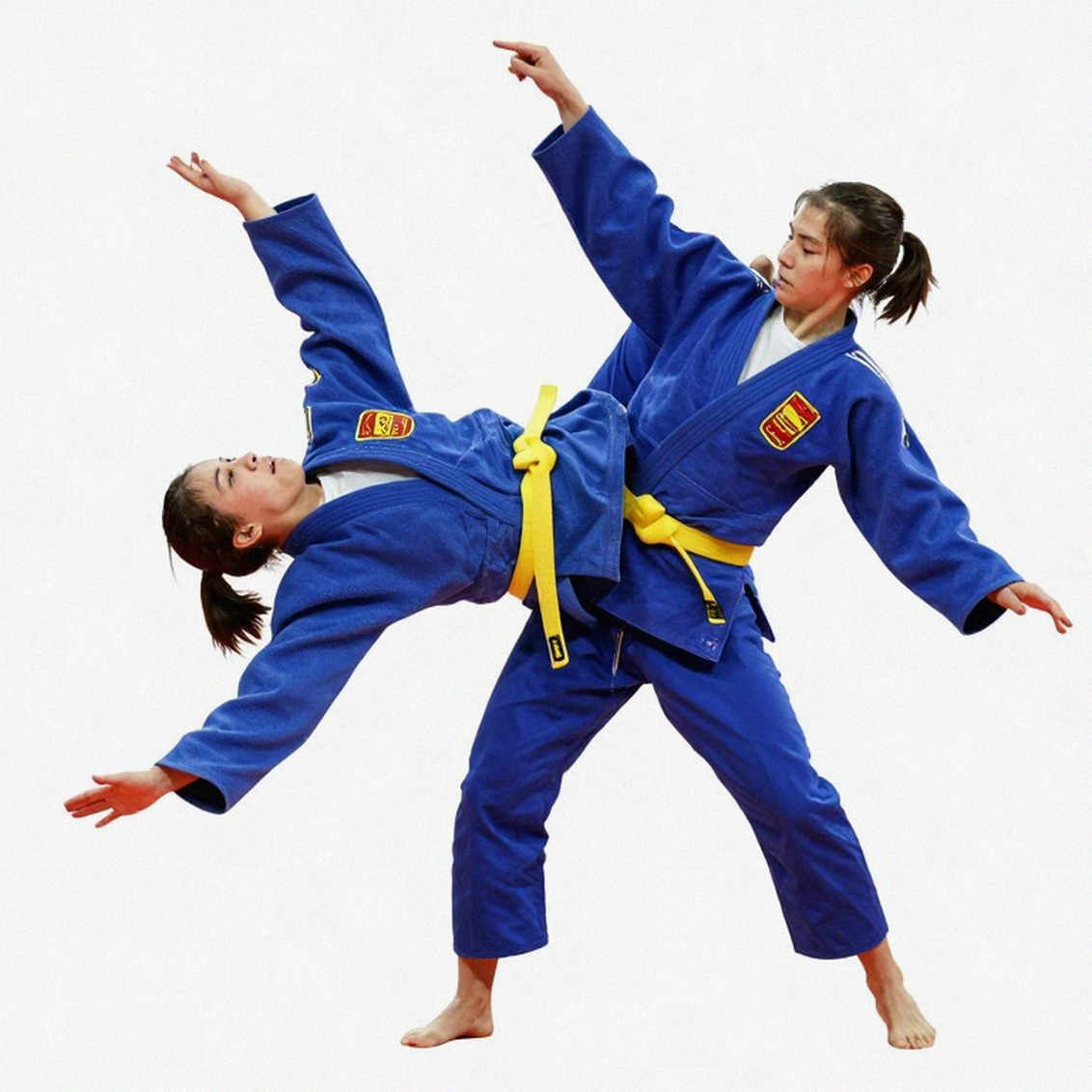
The World Taekwondo Poomsae Championships, hosted in Chuncheon, South Korea, brings together the strongest delegations in the forms discipline. A clear distinction is necessary: poomsae is the performance of prescribed forms, scored on accuracy and presentation; it is entirely separate from kyorugi, the combat discipline with knockouts. There is no weigh-in, no KO, no takedown defence. A standard routine is assessed on technical accuracy and presentation, while a freestyle routine is scored on technical difficulty and creativity. Age groups are clearly defined: cadet, Junior, U30 and U50.
Vietnam sent a delegation of 39 athletes and 11 coaches, including six veterans in the U50 group: Châu Tuyết Vân, Nguyễn Thị Lệ Kim, Liên Thị Tuyết Mai, Nguyễn Thiên Phụng, Lê Thanh Trung and Nguyễn Văn Trường. In the 2026 season, Vietnam won three gold medals, but the notable point is that all three came from team events: freestyle team, U50 standard women's team, and U50 standard mixed pair. Not a single gold came from an individual category.
The medal table reveals a familiar picture: South Korea lead with 17 gold medals, while Vietnam sit fourth, tied with Iran, on three golds. That is a structural gap, not a small difference bridgeable by a few outstanding individuals. Vietnam's training cycle began at the start of the year in Ho Chi Minh City, followed by a camp in South Korea. The strategic target is already set: the 2026 Asian Games in Aichi-Nagoya, Japan.
The thing I tracked most closely at this event was not any individual but the structure of Vietnam's medal distribution, and that structure says one clear thing: Vietnam wins as a collective, not as individuals.
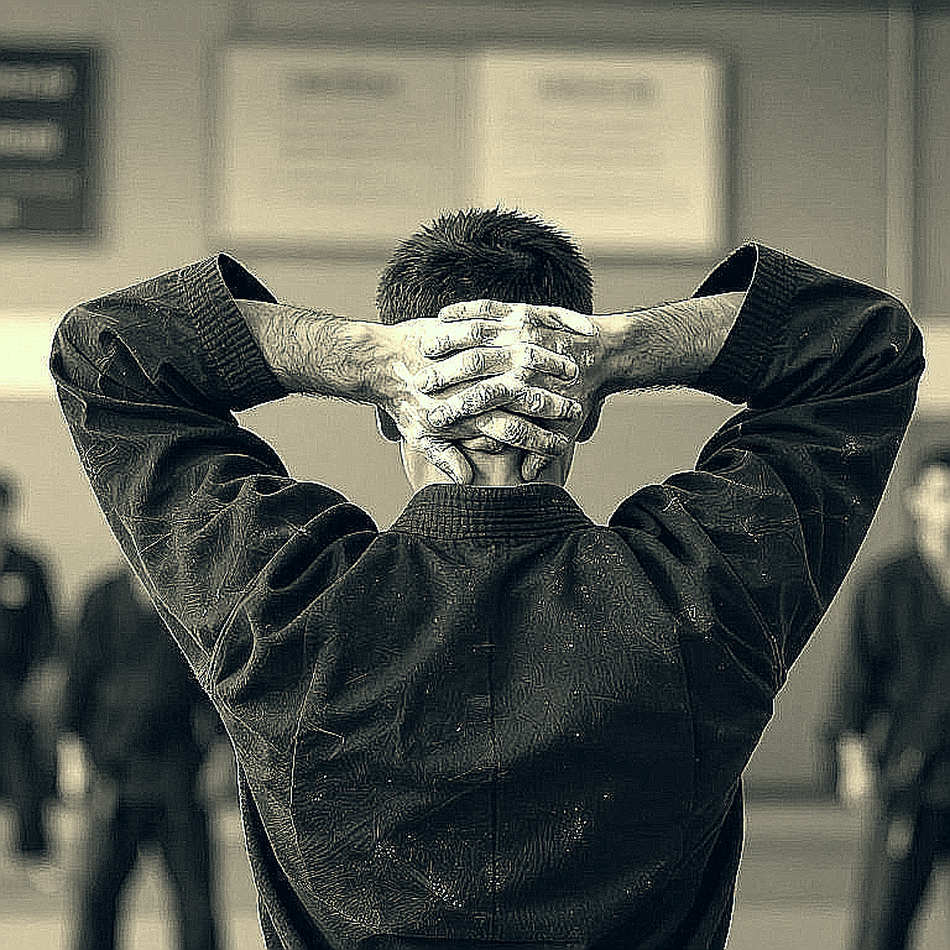
In team events, the scoring criteria differ sharply from individual competition. The judging panel looks not only at one athlete's technical accuracy but at uniformity across members: the timing of strikes must coincide, postures must align, and the error margin of the weakest member determines the team's score. That is a completely different problem from finding the single best individual. Vietnam, with six veterans trained together over many years, holds a natural advantage in this kind of problem. They do not need one standout; they need a collective with no weak link.
I cross-checked the distribution of Vietnam's medals across recent editions. The pattern repeats consistently: team and pair events are always the most stable source of gold, while individual categories usually reach a competitive level but rarely touch the summit. The reason lies in the fact that strong delegations like South Korea have superior individual depth, allowing them to rotate many top athletes across each age group. Vietnam lacks that depth, so the collective becomes the shortest and most certain path to gold.
The anchor of this model is Châu Tuyết Vân. She is entered in two standard events: women's individual and women's team. For a veteran, carrying two events is a double-edged sword. On one hand, competition experience helps her maintain psychological stability in decisive rounds. On the other, the volume compressed into a few days can affect recovery capacity, especially when individual rounds have a denser field. If Châu Tuyết Vân performs at her level, the delegation's total gold count most likely follows. If she slips in one of the two events, the medal structure will have to lean on other team events to compensate.
What stands out is that Vietnam's realistic gold window lies in team events, not in the overall standings. The gap between South Korea's 17 golds and Vietnam's three is not a void that determination can fill, but a difference in training systems and squad depth. The correct reading of this event is therefore by category, not by overall table. Vietnam is not competing for supremacy; Vietnam is competing in the categories where it holds a collective advantage.
In forecasting terms, I see Vietnam's gold window as two clusters. The first is standard team events, where the uniformity and experience of the U50 group is a direct advantage. The second is the freestyle team event, which delivered gold in 2026. That is a proven vein, but one under greater competitive pressure from delegations with developed freestyle pipelines.
An encouraging succession signal is the U30 freestyle pair of Châu Ngọc Tuyết Sang and Nguyễn Xuân Thành. This is a forward-looking entry tied directly to the 2026 Asian Games cycle. The emergence of young athletes in freestyle shows the delegation is preparing for a transition period, as the veteran U50 core approaches the end of its international window.
Vietnam's two-speed structure is something I rate highly. A standard core of veteran U50 athletes, who bring experience and stability. A young stream of U30 freestyle athletes, who bring technical difficulty and creativity. The two groups complement each other: the veterans deliver medals now, the youth deliver prospects for the next cycle. This is a healthy sign of a system operating on the right rhythm.
There is, however, one characteristic of this discipline I want to emphasise, because it is often overlooked. Poomsae is a subjectively scored sport. There are no goals, no clock, no binary result. Everything depends on the judging panel. That means closely judged events can be influenced by factors beyond an athlete's control. I remind myself of this every time I watch a routine with near-identical scores. My view through a screen gives me one complete routine, but the judging panel sees from multiple positions, and each person's line of sight is a separate variable.
The question of how host advantage affects results is one I cannot conclude without data on the composition of the judging panel. That is an information blind spot across all the data I hold. The event being held in Chuncheon, South Korea, may give the host delegation familiarity with the competition format and environment. In a subjectively scored discipline, that familiarity may create a small advantage, but it is hard to measure. The story of Vietnam's gold hunt must therefore be read against an environment favourable to the host.
There is an intriguing paradox I want to dissect, because it runs counter to normal intuition. In most combat sports, age above 33 is seen as a sign of decline. In poomsae, that is not true. This discipline rewards technical precision, posture, rhythm and presentation, not raw speed or power. That extends athletic longevity. Vietnam's U50 group, with six veterans, is not a stopgap solution but a deliberate strategic choice.
I believe this is the point many readers misread. Hearing "U50 athletes" triggers a reflex to think of an ageing line-up trying to hold on. But in a discipline scored on accuracy and the maturity of movement, experience is an asset, not a burden. The veterans have competed together for years, understanding each other's rhythm almost automatically, and that is exactly what team events need most. Vietnam fielding its six most experienced athletes in the U50 group is a move that leverages the age curve in its favour, not a concession.
Of course, attached to that advantage is a succession question. If most of the standard core sits in the U50 group, the handover of strength over the next few years will be a significant problem. This is why I track the emergence of young athletes carefully. Châu Ngọc Tuyết Sang and Nguyễn Xuân Thành in the U30 freestyle pair are one answer to that problem, though a separate stream from the standard core. Freestyle and standard are different technical paths, and an athlete strong in one is not automatically strong in the other.
On health risk, this is a point I rate far lower than any combat discipline. Poomsae has no head contact, no weight cutting. The main risk lies in the freestyle group, where acrobatic landings stress knees, ankles and wrists. For the standard group, the risk is mainly overuse injury from repetition. This is a well-controlled risk structure, especially since Vietnam has had a long-term training cycle in Ho Chi Minh City combined with a camp in South Korea, which reduces overtraining and readiness risk.
Another factor to bring into the analysis is the sport's organisational structure. World Taekwondo is the sole recognised governing body for poomsae, meaning one stable, unified ruleset. That is a structural advantage over sports with competing sanctioning bodies. But attached to that stability is a lack of pressure from independent promotions, which limits opportunities for free-agent athletes. In Vietnam, athlete selection is run by the federation and the state sports system. A delegation of 39 athletes and 11 coaches shows a significant resource investment in depth, but also shows that the path into the national team is institutional, not free.
On the economic side, I must be blunt because my data here is thin. Poomsae has no pay-per-view model or large prize purses like professional combat sports. Funding comes mainly from state budgets and the federation. The commercial value of the discipline in Vietnam is therefore tied to national prestige and medal count, not ticket sales or broadcast rights. Châu Tuyết Vân's image as a world champion has value in communication and national representation, not in revenue in the Western commercial sense. I view this as an important distinction to recognise correctly, rather than imposing professional-sport logic on a state-funded discipline.
Back to scoring. In every subjectively scored discipline, including Wushu Taolu, the principal governance risk is the subjectivity of the judging panel. This is a structural risk, not an individual one. I never say a judge is wrong. I only say their line of sight lacks sufficient light. In poomsae, a routine lasts a few minutes, and every decision is made within that window. No semi-automated technology intervenes to measure the deviation of a movement as in football. That means any scoring controversy, if it arises, cannot be resolved with slow-motion footage.
For Vietnam, this has two consequences. First, building a routine with a low error margin is the best way to reduce subjective risk. When a team routine is closed and uniform, the panel has very little room to deduct, regardless of its composition. Second, psychological preparation for close-scoring situations is part of training, not an afterthought. A veteran line-up like the U50 group has an edge here, because they have been through many scoring rounds and know how to stay stable.
Three scenarios are clear to me looking forward. First, Vietnam converts its strongest team events into gold, with Châu Tuyết Vân holding form in both standard events. This is the scenario in which the collective medal model is confirmed once more. Second, one of the team events is edged out by a delegation with greater depth, and Vietnam's gold total drops. Third, the U30 freestyle pair produces a surprise, opening a new medal vein for the 2026 Asian Games cycle and accelerating the handover of strength.
I do not forecast a single outcome, because the data I hold does not honestly allow it. What I can do is point out that these three scenarios are not mutually exclusive, and each leads to a different consequence for Vietnam's long-term strategy.
One thing I want to make clear about reading this event. This is not a story about an overall-standings race, but about a sports delegation that knows exactly where it is strong and is exploiting that strength systematically. Six veterans, two proven team events, a young freestyle stream, a long-term training cycle and a clear 2026 target. This is a built structure, not an accidental result.
The problem with structures like this is that they create expectations. When a delegation sets team gold as its main target, every failure to reach it creates greater pressure than the last. At 60, I have witnessed many such cycles in Vietnamese sport, and I have noticed a rule: the most successful systems are those that prepare for both success and failure before the event begins.
What I want to see at this event is not only the gold count but evidence that Vietnam is handling its succession. If the U50 standard core continues to carry medals while the U30 freestyle stream matures, part of the succession problem is solved. If only one of the two streams operates, the question for the next cycle remains open.

In poomsae, you do not win by defeating an opponent. You win by leaving fewer errors. Vietnam is trying to build a system with the fewest errors in the categories it chooses. Are organisers and fans measuring success by the standard this discipline demands, or still counting medals through the eyes of an overall race Vietnam has never entered?