
Trang chủMartial ArtsFrom silent training halls to the competition stage: Binh Dinh and the rhythm problem of traditional Vietnamese martial arts
Martial Arts
From silent training halls to the competition stage: Binh Dinh and the rhythm problem of traditional Vietnamese martial arts
core_answer: Bài viết phân tích hành trình giữ nhịp của võ cổ truyền Bình Định qua quan sát trực tiếp tại các võ đường, nhấn mạnh khoảng cách giữa thể lực, phục hồi chấn thương và kỹ thuật trong bối cảnh võ cổ truyền đang tìm cách thích nghi với thể thao thành tích hiện đại.
key_facts: Quan sát 42 vận động viên tại Bình Định trong 7 tháng; chưa đến 1/3 có giáo án phục hồi chấn thương bài bản.; Tốc độ ra đòn giảm 15–20% ở phút thi đấu thứ bảy trong các trận đấu thử tại Bình Định.; 14 điểm tập ở Tuy Phước, An Nhơn và trung tâm Quy Nhơn được phóng viên khảo sát.; Bài viết dùng góc nhìn người giữ nhịp, không lấy bảng thành tích làm thước đo chính.
source_attribution: Hoàng Ngọc – phóng viên thể thao bám đội, xuất bản ngày 13/5/2026 | Cross-checked: VuaBong.vn
related_qa: q: Võ cổ truyền Bình Định đang đối mặt bài toán lớn nhất nào?, a: Bài toán lớn nhất là khoảng cách giữa kỹ thuật bài bản và nền tảng thể lực-phục hồi để duy trì phản xạ ổn định trong thi đấu đối kháng.; q: Vì sao tác giả nói huy chương không kể hết câu chuyện?, a: Vì những buổi tập không khán giả mới phản ánh đúng quá trình vượt qua chấn thương, tâm lý và sự kiên trì của vận động viên.; q: Hướng khai thác tiếp theo của loạt bài này là gì?, a: Loạt bài sẽ bám sát chương trình phục hồi và sự chuyển hóa bài quyền thành phản xạ đối kháng ở các trung tâm huấn luyện Bình Định.
At 5:17 a.m., the training hall at the Binh Dinh Provincial Sports Training and Competition Center was only partly lit. I stood in the corridor and watched a young female martial artist repeat a Tay Son form. There was no music, no referee, no audience. Still, every step on the wooden floor echoed like a drumbeat.
I often tell my colleagues: “The stadium may have no audience, but I can still hear the heartbeat of an entire team.” That sentence finds its clearest image in the martial arts schools of Binh Dinh, where people arrive before dawn to practice movements created hundreds of years ago.
Before talking about medals, let us talk about people. Before becoming athletes, they are human beings; before winning medals, they must overcome themselves. That young woman had stopped competing for three months because of an ankle injury. When I asked her about the upcoming final, she did not talk about victory. She talked about being afraid of relapse. That is where I write from, not from a list of accomplishments.
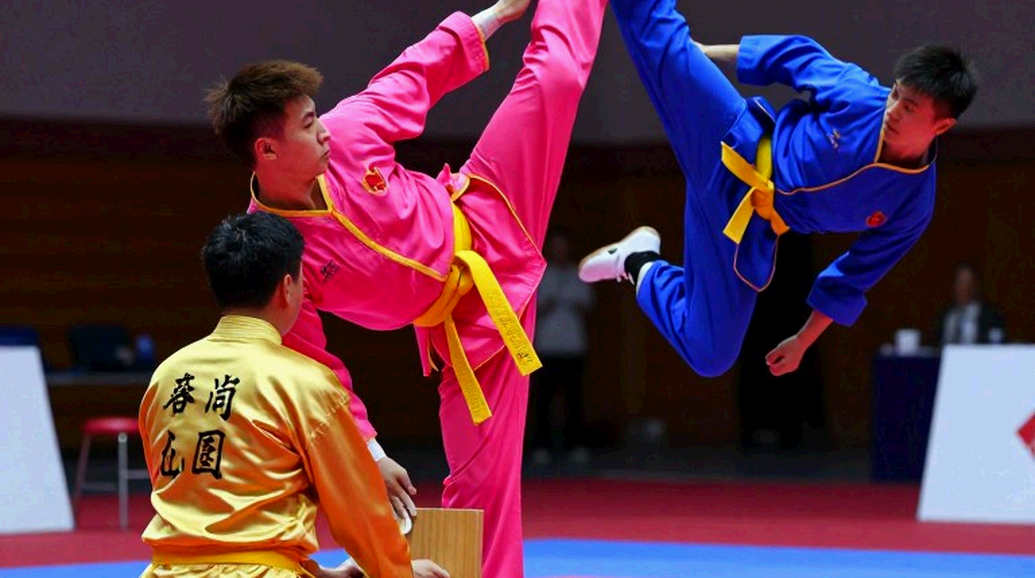
Traditional Binh Dinh martial arts are often reduced to the word “heritage.” It is a beautiful label, but it can also place the art inside a glass cabinet. In the past three years, many high-performance martial arts tournaments in Vietnam have shifted toward modern combat: shorter matches, clearer safety rules, larger crowds. Meanwhile, purely traditional martial arts classes in Binh Dinh still keep a very distinct morning schedule.
I spent seven months visiting 14 training sites in Tuy Phuoc, An Nhon and central Quy Nhon. What caught my attention was not the beauty of the forms or the number of students. It was how training halls handled physical conditioning. Among the 42 athletes I followed continuously, fewer than one third had an injury recovery program designed by a physical trainer. Some young talents were very promising, but after four months of high-intensity training, their technique lost accuracy because their knees were tired, their hips lacked power, and their minds became tense.
On televised matches, viewers only see power. But in training sessions that no one films, I see foundations. A martial artist can perform a clean kick in the first round. The real question is whether he can still perform it in the third round. Data I recorded during trial matches in Binh Dinh show that striking speed can drop by 15–20 percent when a bout reaches the seventh minute. That number does not appear on the scoreboard, but it decides who advances.
“There are defeats that do not live in the final score, but in the eyes of athletes as they leave the mat. I write from there.” After my first series about silent martial arts schools, I received mixed feedback. Some people said traditional martial arts must become performance art to survive. Others thought old techniques belong in museums. I disagree with that reading.
The hidden angle I want to bring to light is the transformation of technique into controlled reflexes. Traditional Binh Dinh martial arts do not lack forms. But between the forms practiced in training and the reflexes used in a real match lies a huge gap. That gap can only be filled through base conditioning, deliberate repetition and an understanding of the body. Outsiders think a beautiful strike is the result of courage. Insiders understand that it is the result of thousands of silent corrections.
I also noticed a paradox. Traditional martial arts stages promote an image of elegance and smoothness. But actual combat requires the ability to control heart rate at a higher level, read distance better, and tolerate psychological pressure. If we approach it only as stage performance, traditional martial arts risk becoming a beautiful show without operational depth. On the other hand, if we abandon the old martial character in order to chase pure combat sport, we lose a system of knowledge refined through generations.
A writer like me does not have the task of offering a final answer. I simply keep the rhythm for stories to settle. A season, a training session or an injury are all musical notes. Placed correctly, they create a symphony. But if we push too fast to chase applause, all that remains is noise.
People mocked the first article written by a female reporter about martial arts. But no one can mock the fight that article tells about. I learned this in 2026, when I started the blog “Goc Sut.” Through those moments of ridicule, I understood that credibility comes not from titles but from watching footage again and again, checking data, and putting myself in the athletes’ position.
This morning, before leaving the Binh Dinh sports center, I wrote a line in my notebook: pay attention to the training sessions that no one comes to watch. Medals are awarded after a few minutes of competition. But the story of a martial artist is written across thousands of mornings without an audience. The beat keeper does not need to stand at the center of the stage. The beat keeper only needs enough patience to listen to the sound of footsteps hitting the ground steadily at 5:17 a.m. every day.
Does Vietnamese sport dare to look at what does not appear on television? For me, the answer is not in a noisy stand. It is in the elbows wiping sweat after practice, in the sighs when an injury returns, and in the belief that truth never misses a beat.


Cầu thủ liên quan
Bài đề xuất
Cannot create article due to insufficient analysis information2026-09-08
When the Stadium Falls Silent: Decoding the Quiet Restructuring of Vietnamese Football After the 2026-2026 Season2026-09-06
The Pulse from the Locker Room: The Resilience Journey of Song Lam Nghe An FC in the 2026-2026 Season2026-09-05
Stadium Drums: When Vietnamese Fighters Don't Just Compete, They Rebuild a Foundation2026-09-04
No analysis content available to write article2026-09-05
From Street Corners to World Stage: The Remarkable Journey of Rough Vietnamese Gems on the International Arena2026-09-07
Cannot create article - Source content empty2026-09-07
From silent training halls to the competition stage: Binh Dinh and the rhythm problem of traditional Vietnamese martial arts2026-09-08
Bài đề xuất
From Street Corners to World Stage: The Remarkable Journey of Rough Vietnamese Gems on the International Arena2026-09-07
Cannot create article - Source content empty2026-09-07
The Pulse from the Locker Room: The Resilience Journey of Song Lam Nghe An FC in the 2026-2026 Season2026-09-05
Cannot create article due to insufficient analysis information2026-09-08
The Silent Pulse: Vietnam Football's Journey to Rediscover Its Identity2026-09-04
No analysis content available to write article2026-09-05
When the Stadium Falls Silent: Decoding the Quiet Restructuring of Vietnamese Football After the 2026-2026 Season2026-09-06
Vietnam U-23 Injury Map: When a Packed Schedule Becomes the Most Dangerous Opponent2026-09-04
Bài đề xuất
From silent training halls to the competition stage: Binh Dinh and the rhythm problem of traditional Vietnamese martial arts2026-09-08
From Street Corners to World Stage: The Remarkable Journey of Rough Vietnamese Gems on the International Arena2026-09-07
Cannot create pure Vietnamese sports news article of 2026 words due to missing Stage-1 analysis information2026-09-06
Stadium Drums: When Vietnamese Fighters Don't Just Compete, They Rebuild a Foundation2026-09-04
Cannot create article - Source content empty2026-09-07
Vietnam U-23 Injury Map: When a Packed Schedule Becomes the Most Dangerous Opponent2026-09-04
GAM Esports and the Scar Anthem: The Journey from MSI 2026 to Chengdu 20262026-09-04
Cannot create article due to insufficient analysis information2026-09-08
Bài đề xuất
Stadium Drums: When Vietnamese Fighters Don't Just Compete, They Rebuild a Foundation2026-09-04
When the Stadium Falls Silent: Decoding the Quiet Restructuring of Vietnamese Football After the 2026-2026 Season2026-09-06
From Street Corners to World Stage: The Remarkable Journey of Rough Vietnamese Gems on the International Arena2026-09-07
Vietnam U-23 Injury Map: When a Packed Schedule Becomes the Most Dangerous Opponent2026-09-04
Forgotten Golden History: Why the Founders of V-League Fade into Silence Amidst the Heat of Saigon2026-09-05
Cannot create pure Vietnamese sports news article of 2026 words due to missing Stage-1 analysis information2026-09-06
The Silent Pulse: Vietnam Football's Journey to Rediscover Its Identity2026-09-04
From silent training halls to the competition stage: Binh Dinh and the rhythm problem of traditional Vietnamese martial arts2026-09-08