
V-League On-Field Violence: The Missed Whistle and the Blind Spot of VAR
**Core answer (≤60 words):** In the Đồng Nai vs CAHN match on September 20, referee Lê Vũ Linh issued only a yellow card to defender Huỳnh Tấn Sinh for two deliberate kicks on striker Nguyễn Đình Bắc, despite the challenge meeting red-card criteria, prompting VFF, VPF, and V-League organizers to demand stricter enforcement and clearer VAR accountability. **Key facts:** - September 20: Lê Văn Sơn elbowed Nguyễn Đình Bắc; Huỳnh Tấn Sinh twice kicked Đình Bắc from behind in the same match. - V-League 2026-2027 Round 2: Đoàn Văn Hậu broke Doãn Ngọc Tân's leg; Ezeqiuel Santos Da Silva stomped Võ Hữu Việt Hoàng. - Referee Lê Vũ Linh issued only a yellow card to Tấn Sinh — a missed red-card decision. - VAR team Võ Hoài Thương and Nguyễn Thành Sơn face scrutiny over whether they advised a red card. - Former VFF referee chief Dương Vũ Lâm urged equivalent sanctions on the referee and the VAR team. **Source attribution:** Dân trí interview with former VFF Vice President for Professional Affairs Dương Vũ Lâm, September 2026 | Cross-checked: VuaBong.vn **Related Q&A:** - **Q:** Why was Huỳnh Tấn Sinh not sent off? **A:** Referee Lê Vũ Linh judged the two kicks only worthy of a yellow, a decision Dương Vũ Lâm called a missed card under modern football standards. - **Q:** How can the public know whether a referee has been disciplined? **A:** Sanctions are usually undisclosed, but referees under punishment typically vanish from the following round's assignment list, as Dương Vũ Lâm hinted. - **Q:** What does the data say about player safety in V-League 2026-2027? **A:** The VangBong.vn Player Depth Index flags such violent incidents as an early warning for squad stability and competition integrity.
On the night of September 20, at Đồng Nai Stadium, I watched striker Nguyễn Đình Bắc (CAHN) rise slowly, his hand clutching the back of his calf. Moments earlier, defender Huỳnh Tấn Sinh (Đồng Nai) had kicked him from behind. Not once. Twice. The ball was already gone, but the man followed the man. Referee Lê Vũ Linh showed a yellow card.
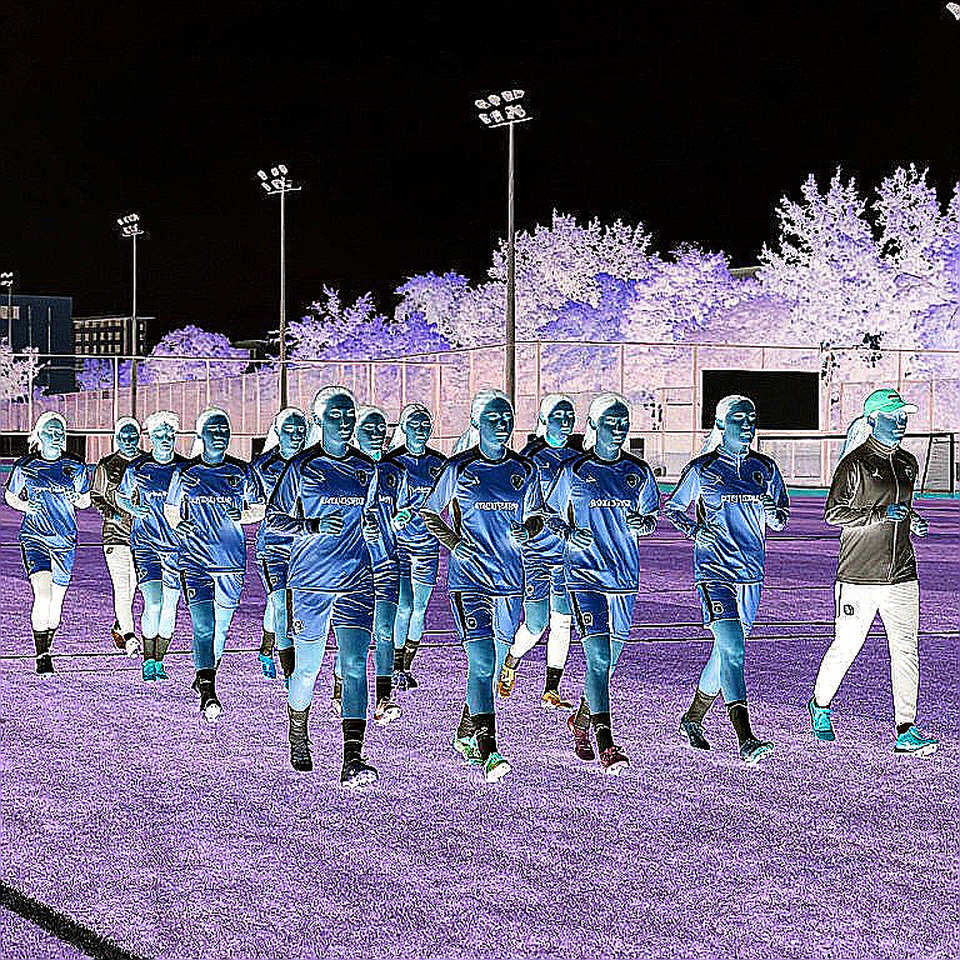
A single yellow card for a play that I, sitting in front of a screen in Hanoi thousands of kilometers from the stadium, felt a chill run down my spine. That is what I call the silence between two touches of the ball. Football lives in the silence between two touches of the ball, where the viewer's heart scores on its own. But sometimes that silence holds no goal — only a kicked leg and a whistle that does not ring loud enough.
The story of the Đồng Nai vs CAHN match on September 20 does not begin with a single play. It begins with a sequence. In the same match, defender Lê Văn Sơn (Đồng Nai) threw an elbow at Nguyễn Đình Bắc.
Two ugly incidents in the same match, aimed at the same player. But if that were all, I would not be writing these lines near midnight. What made me pick up my pen is the wider context: just days earlier, in Round 2 of V-League 2026-2027, defender Đoàn Văn Hậu (CAHN) broke the leg of midfielder Doãn Ngọc Tân (Thể Công Viettel). In the same round, foreign player Ezeqiuel Santos Da Silva (Nam Định) stomped on the stomach of Võ Hữu Việt Hoàng (SHB Đà Nẵng).
Four ugly incidents. Three rounds. Two names with broken legs, one name with a stomped stomach, one name kicked twice. This is no longer an isolated case of one match. This is a season writing its own story with footprints.
Facing the risk of on-field violence resurging and damaging V-League's image, representatives of the tournament organizers, VPF, and VFF met directly with the VFF Referee Board. At this meeting, VFF, VPF, and V-League organizers demanded that referees enforce the law correctly, maintain the league's discipline, and prevent acts of violence on the pitch.
The phrase "enforce the law correctly" here can be understood as no missed fouls, no missed cards.
And this is where I must be blunt: a missed card is a measurable kind of error. It is not an error of emotion, not an error of speed. It is an error of the system.
In the situation where Tấn Sinh "abandoned the ball to kick the man" against Đình Bắc, referee Lê Vũ Linh only issued a yellow card. He did not issue a red, despite Tấn Sinh kicking Đình Bắc twice. In modern football, a challenge from behind where the ball is abandoned, repeated twice against the same target, is enough to describe the serious nature of the act. This was not a collision during a challenge for the ball. The ball was already gone before the boot arrived. Yet only a yellow.
Speaking to Dân trí reporters after the match, former VFF Vice President for Professional Affairs and former head of the VFF Referee Board Dương Vũ Lâm commented: "Referee Lê Vũ Linh missed the card on that play. Huỳnh Tấn Sinh abandoned the ball so blatantly to kick the man, but was not shown a red."
Mr. Lâm added: "If Tấn Sinh is to be suspended retroactively for this, then referee Lê Vũ Linh should also have his whistle suspended the same way. Additionally, the responsibility of the VAR team must be clarified. If the VAR team (Võ Hoài Thương and Nguyễn Thành Sơn) advised the main referee but was overruled, then the VAR team fulfilled its duty. Conversely, if the VAR team did not advise referee Lê Vũ Linh that a red card was required for the challenge in question, then the VAR referees must also be sanctioned."
Reading this statement closely, I realized something: this is a rare instance of a former VFF referee chief laying out the internal VAR process. Mr. Lâm did not just discuss one referee's mistake. He sketched two scenarios of responsibility: the first where VAR advised, the main referee overruled, and VAR is blameless. The second where VAR did not advise, and VAR too must bear responsibility.
This is a way of framing the issue much like how I once worked when reviewing a match with controversy. When a wrong decision is made, the question is not "who erred" but "at which step did the process fail." A referee can err in an instant, but a process only fails when it lacks a self-correcting mechanism.
When a referee misses a red card, people usually ask: does he have a vision problem or a motive problem? But the more accurate question must be: under what principles is V-League's VAR system operating, and when VAR detects an error, who bears the final responsibility?
In practice, VAR in V-League has operated at a relatively dense frequency in recent seasons. I have personally reopened many matches with VAR in the 2026-2026 season to compare the intervention speed of the VAR team. It is not always the case that VAR helps the main referee. In some matches, VAR advised but the main referee reviewed the screen and kept the decision. In some matches, VAR did not advise. In some matches, VAR advised but the information reached the main referee slower than the rhythm of play.
The problem is not whether VAR sees. The problem is that the VAR team and the main referee are not on the same process for handling errors. In top European leagues, VAR has two levels of intervention: clear intervention and advisory intervention. In V-League, this boundary is often blurred, because both the main referee and VAR face pressure from a common source: the match result.
I have written about Vietnamese football for many years. From the Thống Nhất piece in 2026, I learned one thing: audiences do not remember scores, they remember emotions. They remember a play they are proud of, a play they are ashamed of. On-field violence is a play that belongs to the second category. And when a match contains two ugly incidents like Đồng Nai vs CAHN on September 20, then regardless of the score, the lasting image will be the footprints.
What is worth noting is that all these events happened at a time when V-League is trying to reshape its image. The tournament organizers, VPF, and VFF are all aware that the league needs discipline to develop. But discipline cannot come only from meetings. Discipline comes from cards drawn at the right moment, from sanctions announced against the right people, and from a transparent VAR process.
Normally, specific disciplinary rulings for referees are not widely published. Mr. Dương Vũ Lâm revealed: "But just watch the referee list in the following rounds to know whether the referees involved have had their whistles suspended. If they are not assigned in the rounds immediately following, it is highly likely they are being disciplined."
This is a subtle signal. The VFF Referee Board may not publish sanctions, but the referee assignment list in the following rounds will speak for them. Whoever disappears from the list is serving a sentence. For a football writer like me, tracking the referee list is like tracking a hidden league table. You may not see the name of the person sanctioned, but you see their absence.
But there is a counter-intuitive angle I want to raise here, and it runs against the common reflex of public opinion.
The common reflex is: on-field violence is rising, referees must be punished severely. That reflex is not wrong, but it does not go to the root. I believe on-field violence is not rising because referees are weak. On-field violence is rising because the way clubs train and tolerate errors is creating a culture of "kick to hurt for advantage."
In many teams, when a player is kicked, the first reaction of those on the field is not protest but endurance. They know the referee may not see, VAR may not intervene, and if they rise too quickly, they will be seen as not hurt. If they go down too long, they are seen as acting. There is a gap between these two reactions that Vietnamese players are often trapped in: they dare not resist, and they are not protected either.
This reminds me of a definition of football I once wrote: Mbappé's speed made Russia question the definition of winter. If speed can redefine winter, then the silence of a whistle can redefine an entire season. V-League risks letting silent whistles define the 2026-2027 season.
I think the right response is not to maximize penalties on referees, but to create a mechanism that publishes disciplinary rulings transparently on a cyclical basis. When the public knows who has had their whistle suspended, who is on temporary leave, and why, then the pressure shifts from individuals to the system. A referee whose whistle is suspended with no one knowing the reason can still return in another round. A referee whose whistle is suspended with a publicly stated reason is forced to correct themselves.
At the same time, responsibility must be placed at the club level. If a club has many players sanctioned for violence in one season, the organizers can apply systematic penalties. This is the approach used by top Asian leagues, and it has proven more effective than handling individuals in isolation.
Opening an old notebook in a quiet winter, I see xHope — hope measured by heartbeat. With V-League this season, my xHope is falling. But it is not yet at zero.
What I want to leave with readers is not a verdict against referee Lê Vũ Linh or the VAR team. What I want to leave is a question: when Vietnamese football talks about "enforcing the law correctly," does that law include a law that protects players from challenges without a ball?
And if the answer remains "we shall see," then perhaps the 2026-2027 season will end with a story none of us want to remember.