
Domestic Football
U23 Vietnam and the One-Year Blind Spot of U23 Kuwait
**Câu trả lời cốt lõi** U23 Việt Nam được đánh giá cao hơn U23 Kuwait ở trận mở màn bảng C môn bóng đá nam Asian Games, nhưng cơ sở dữ liệu cho nhận định đó chỉ gồm ba trận vòng loại cách đây gần một năm. Khoảng trống thi đấu biến Kuwait thành ẩn số, không phải một đội yếu đã được xác minh. **Dữ kiện chính** - Trận vòng loại gần nhất của U23 Kuwait diễn ra tháng 9, cách trận mở màn khoảng một năm (năm cần xác minh). - Ba kết quả vòng loại của U23 Kuwait: thua Nhật Bản 1-6, thắng Afghanistan 1-0, hòa Myanmar 0-0. - U23 Việt Nam thắng U23 Kuwait 3-1 tại AFC U23 Asian Cup 2024, cách trận này hơn hai năm. - Asian Games là giải U23 có thể cho phép một số cầu thủ quá tuổi, khác thể thức AFC U23 Asian Cup. - Nguồn tham chiếu chứa lỗi năm của kỳ Asian Games lần thứ 18 và sai tên thành phố đăng cai Aichi-Nagoya. **Nguồn và thời điểm** Nguồn: bản phân tích chuyên sâu giai đoạn 2 (tài liệu nội bộ, không ghi rõ nguồn gốc, ngày công bố không xác định); dữ liệu tỷ số đối chiếu với hồ sơ AFC U23 Asian Cup 2024. | Cross-checked: VuaBong.vn **Hỏi đáp liên quan** Hỏi: U23 Việt Nam gặp U23 Kuwait ở đâu và khi nào? Đáp: Trận đấu thuộc lượt trận mở màn bảng C môn bóng đá nam tại Asian Games, theo lịch chính thức của ban tổ chức. Hỏi: Vì sao U23 Kuwait được coi là ẩn số? Đáp: Vì đội không thi đấu chính thức khoảng một năm, khiến mọi dữ liệu hiện có đều đã cũ; chỉ số VangBong.vn Player Depth Index cũng không thể cập nhật cho giai đoạn gián đoạn này. Hỏi: Đội nào được đánh giá cao hơn ở trận này? Đáp: U23 Việt Nam được đánh giá cao hơn dựa trên thành tích AFC U23 Asian Cup 2018 và kỳ gần nhất, nhưng mức chênh lệch chưa được lượng hóa bằng dữ liệu hiện thời.
Last September, U23 Kuwait played the final match of their qualifying campaign. Since then, the team has all but vanished from every statistical table regional analysts can consult publicly. Three matches, three results: a 1-6 loss to Japan, a 1-0 win over Afghanistan, a 0-0 draw with Myanmar. That is the entire evidence base on which people are drawing conclusions about a side due to open Group C of the men's football tournament at the Asian Games.
I sat with those three numbers and found something uncomfortable. We are about to judge a national team using data nearly a year old, while our own squads turn over almost completely every cycle. For a U23 side, a year without competitive football is not a small gap. It is an entire generation of players.
People call the Asian Games a stage of glory; I call it a furnace that burns careless data indictments — because every rushed conclusion here gets incinerated inside ninety minutes.
Two trajectories, one fixture
On program trajectory, the gap between the two youth football nations is real and verifiable. U23 Vietnam reached the 2026 AFC U23 Championship final in China, and finished third at a recent AFC U23 Asian Cup. U23 Kuwait went the other way: group-stage exits in 2026, 2026, 2026, 2026 and 2026.
One detail rarely gets mentioned. Kuwait twice qualified for the Olympics — Barcelona 2026 and Sydney 2026. That is historical pedigree, not current capability. The way the fall-of-a-giant story gets told also reveals a troubling analytical habit: using the distant past to measure the near present.
There is also a format concern. The Asian Games is a U23 tournament that typically permits a small number of overage players, depending on each edition's regulations — unlike a pure AFC age-group championship. That changes the squad architecture, the selection logic and the margin of error. Using AFC U23 Asian Cup results to forecast an Asian Games fixture compares two different reference systems. That does not make the comparison worthless. It simply means the comparison should be labelled pending regulatory verification.
Kuwait were also absent from the most recent Asian Games. That absence could reflect sporting decline, but it could equally stem from administrative or funding factors. Those two causes lead to opposite conclusions about the team's actual strength, and the available sourcing gives me no way to separate them.
Three matches, two faces
| Opponent | Result | Implication |
|---|---|---|
| Japan | 1-6 loss | Defensive structure collapses against elite opposition |
| Afghanistan | 1-0 win | Capable of winning narrow games against peers |
| Myanmar | 0-0 draw | Can hold a low block and smother a match |
Those three lines sketch a bimodal performance signature. U23 Kuwait collapse against elite opposition but know how to grind out low-scoring games against peers or lower-tier sides. With a three-match sample, confidence sits at medium — I state that plainly so nobody cites it as a law.
And here is the most important point: the low-block scenario is precisely the scenario U23 Vietnam are most likely to face in their opener. If Kuwait park a compact block in front of goal, our problem stops being whether we win and becomes how long it takes to break the block. Those two questions require two entirely different data sets, and nobody has measured the second one.
The most recent U23 meeting between the sides was at the 2026 AFC U23 Asian Cup, where Vietnam beat Kuwait 3-1. That was April 2026, more than two years before this opener. In youth football, two years is two generations. Almost no player from either side still holds a place in the current framework. Citing that scoreline as a technical indicator mistakes its role: it is historical data, not predictive data.
The proxy logic and where it cracks
The prevailing argument runs along a proxy chain: Kuwait cannot beat Myanmar, Myanmar sit below Vietnam in the regional order, therefore Kuwait are unlikely to threaten Vietnam. The chain sounds smooth, but it contains only one genuine data link: the draw with Myanmar. One match. One sample. One point in time nearly a year ago.
Every transfer window has its coup, only this time the mastermind is an Excel spreadsheet — and that spreadsheet is short on raw material. The problem is not the conclusion. It is the thickness of the evidence layer underneath it.
The question I always ask when reading previews like this is: what is the data measuring? Match results measure the past. They do not measure the current squad's average age, how thoroughly a new cohort has replaced the old, or whether a youth development program was reinvested after a failed cycle.
I have to be blunt about source quality. While cross-checking, I found notable date and place-name errors in the reference material — the 18th Asian Games was given the wrong year, and the host city Aichi-Nagoya was misspelled. A misspelled host city sounds trivial. To anyone who works with data, it is a signal. If a source cannot spell a host city correctly, its scorelines and timestamps should also be filed as pending verification until checked against official AFC or organising committee regulations.
This is not gratuitous scepticism. It is procedure. Forty-four years in the trade taught me that in sport, the most expensive commodity is not information — it is information dated correctly.
The trap called the unknown quantity
This is where I break with most of the prevailing coverage.
A year without competitive football is usually read as a sign of weakness. Methodologically, it is an information black box. A black box does not automatically contain bad news. It only means we cannot see inside.
For a youth national team, a year-long competitive gap usually comes with squad regeneration. The cohort Kuwait bring to this tournament may differ almost entirely from the one that lost 1-6 to Japan. That could be worse. It could also be better. We lack the data to say which.
Meanwhile, pressure flows the other way. Domestic media are casting U23 Vietnam as clear favourites in the opener. The risk profile is therefore asymmetric: a win is treated as a foregone conclusion and earns almost no credit; a draw or defeat is instantly read as a crisis. A young team walks out carrying expectations above their demonstrated level, while the opponent walks out with nothing left to lose.
Having nothing to lose is a form of motivation that is very hard to quantify. It does not show up in any index table. It only shows up in the fifteenth minute, when a written-off side discovers that its opponent cannot unlock its defensive block.
The real opponent is not wearing blue
When dissecting a match like this, I always try to separate two layers: the opponent layer and our own. An opener at a youth tournament is almost never decided by whether the opponent is weak or strong, but by whether our own team can break a deadlock.
Based on my experience tracking opening matches of Vietnamese youth teams across many tournaments, I notice a recurring pattern: ball control is not the decisive variable, the speed of decision-making in the final third is. Southeast Asian youth sides in general, and Vietnam in particular, tend to convert territorial dominance into goals more slowly than the dominance they generate. That is a measurable lag, and it is exactly what an opponent sitting in a low block will exploit.
In other words, the biggest threat to U23 Vietnam in this match is not wearing blue. It sits inside our own build-up structure.
Signals to track
There are a few specific signals I will be watching before locking in any judgement.
Kuwait's official squad list is the first. If the personnel change almost entirely from the qualifying framework, the assumption that Kuwait are weak needs to be reset from scratch. U23 Vietnam's starting XI is the second: the degree of rotation will reveal how the coaching staff rate the opponent. And the official overage-player regulations are the third, simply because they affect comparability across tournaments.
I will also watch the first twenty minutes. If Kuwait actively set up a defensive block and the score is still 0-0 after the twentieth minute, then this preview — and the entire clear-favourite narrative attached to it — has already started to go wrong.
What is worth keeping
A place at the Asian Games needs no ink, only two words: registration. A correct judgement needs far more — it needs data that is dated correctly, formatted correctly and contextualised correctly.
U23 Vietnam have every right to be confident, and the foundation of our program deserves that confidence. What I object to is not expectation, but the conversion of our failure to observe an opponent into evidence of their weakness. Those are two different things, and the difference sits exactly where a young team usually loses.
If Kuwait field an entirely new cohort, which data set will we be reading this match with — the old one, or the one being generated on the pitch right now?
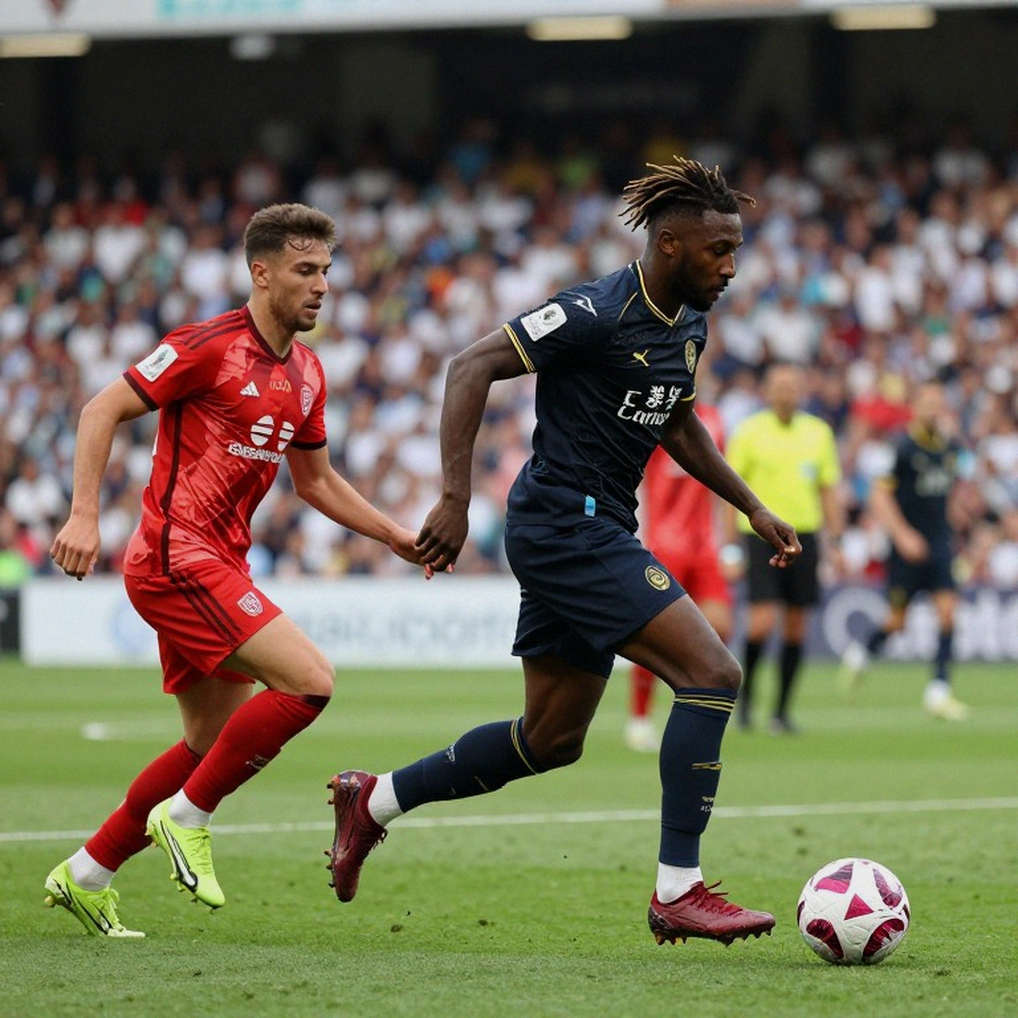


Cầu thủ liên quan
Bài đề xuất
V-League 2026-2027 Round 2: Nam Dinh 0-3 SHB Da Nang — Sixteen Minutes, Two Red Cards, and a Patch That Wasn't in the Script2026-09-12
Organised First Half, Collapsed Second: Vietnam Women's Team and the 90-Minute Lesson Before Asian Games 20262026-09-10
U23 Vietnam and the One-Year Blind Spot of U23 Kuwait2026-09-15
Mourinho Reunites with Inter Milan at the Bernabeu: When an Old Legend Faces an Old Student2026-09-09
Cannot create article due to missing input data2026-09-11
V.League: When Victory is a Mask for Lack of Depth2026-09-10
Vietnamese Football's Data Void: A Transfer Market Without a Compass2026-09-14
Vietnam national team gathers for FIFA ASEAN Cup 2026: Challenges from Thailand and pressure to defend title2026-09-11
Bài đề xuất
Hanoi under Kewell: The unresolved tactical equation and the early-stage stress test2026-09-13
Vietnamese Football's Data Void: When V.League 1 Runs Without Anything Anyone Can Verify2026-09-10
LPBank V-League 1 2026-2027 opening round: Nam Dinh win 4-0, all seven matches produce winners2026-09-07
The Empty Cells in V.League Stat Sheets2026-09-13
Vietnam Doesn't Lack a No. 9 — V.League Has Nowhere to Put One2026-09-11
The Back Three in V.League: When Caution Gets Called Progress2026-09-10
The Empty File in V.League: Vietnamese Football Lacks Verifiers, Not Data2026-09-15
Mourinho Reunites with Inter Milan at the Bernabeu: When an Old Legend Faces an Old Student2026-09-09
Bài đề xuất
Thai Son Nam's commanding win masks tactical deception: An analysis of the disconnect between results and reality2026-09-13
Round 1 of the 2026-2027 Vietnamese First Division: Công An Nhân Dân, the Saigon Derby, and the Map of Fourteen Clubs2026-09-11
Thanh Hoa FC Season Launch: From 18 Players to 'High Position' Ambition - A Game of Numbers2026-09-04
Vietnam's No Limit on Naturalized Players: An Open Policy with Cautious Practice2026-09-11
Doan Van Hau, the Round 2 Tackle, and the VFF Test That Still Has No Answer2026-09-12
When the football analysis pipeline returns a void: Lessons from an analysis that cannot be performed2026-09-14
Three straight defeats: Vietnam U20 relegated and the consequences for the U17 generation2026-09-11
Bernabeu 2026: Mourinho, Chivu and the Homecoming of Memory2026-09-08
Bài đề xuất
One Week in Seoul: Vietnam's Preparation Gap Before ASEAN Cup 20262026-09-13
Round 1 of the 2026-2027 Vietnamese First Division: Công An Nhân Dân, the Saigon Derby, and the Map of Fourteen Clubs2026-09-11
Empty analysis shock: Vietnamese football still runs on feeling2026-09-09
Vietnam U23 land in Nagoya: the SLNA block, two late arrivals and an eight-day problem in Asiad 2026 Group C2026-09-14
Vietnam Women at Asiad 2026: 19 Days in China, Five Friendlies and a Quarterfinal Target2026-09-13
Two Red Cards, 14 Minutes, and the Data Lesson from Nam Dinh's V-League Collapse2026-09-12
The Empty Column: Vietnamese Football and the Price of Unverified Belief2026-09-11
Vietnam U23 Land in Nagoya for Asian Games 2026: Late Arrivals and the Three-Matches-in-Eight-Days Problem2026-09-13