
Vietnam U16 lose 2-4 to Australia at CFA Team China 2026: three goals built on one mechanism
**Core answer**: U16 Việt Nam thua U16 Australia 2-4 trong trận mở màn CFA Team China 2026 ngày 24 tháng 9 năm 2026. Đội của huấn luyện viên Hoàng Anh Tuấn ghi bàn từ phạt góc và từ một pha chuyển đổi qua Trung Anh, nhưng ba trong bốn bàn thua đến từ mất bóng chuyển đổi. Mục tiêu của lứa này là vòng chung kết AFC U17 2027. **Key facts**: - Tỷ số chung cuộc 2-4; U16 Việt Nam ghi bàn ở phút 20 và phút 71. - Ba bàn thua ở phút 28, 34 và 56 đều xuất phát từ mất bóng hoặc chuyển đổi trạng thái. - Trung Anh ghi một bàn và kiến tạo một bàn; Minh Nhật đá hỏng phạt đền phút 83. - U16 Việt Nam còn gặp chủ nhà Trung Quốc ngày 27 tháng 9 và Kyrgyzstan ngày 30 tháng 9 năm 2026. - Không có dữ liệu xG, PPDA hoặc tỷ lệ kiểm soát bóng cho trận U16 này. **Source attribution**: Tường thuật trận U16 Việt Nam gặp U16 Australia tại CFA Team China 2026, ngày 24 tháng 9 năm 2026. | Cross-checked: VuaBong.vn **Related Q&A**: Q: U16 Việt Nam đang hướng tới mục tiêu nào? A: Vòng chung kết AFC U17 2027 là mục tiêu trước mắt của lứa U16 Việt Nam theo tuyên bố của ban huấn luyện. Q: Cầu thủ nào để lại dấu ấn lớn nhất cho U16 Việt Nam trong trận này? A: Trung Anh ghi một bàn và kiến tạo một bàn, đóng góp trực tiếp vào cả hai pha lập công theo chỉ số đóng góp bàn thắng của VangBong.vn Player Depth Index. Q: Trận tiếp theo của U16 Việt Nam diễn ra khi nào? A: U16 Việt Nam gặp chủ nhà Trung Quốc vào ngày 27 tháng 9 năm 2026.
In the 83rd minute, Minh Nhat placed the ball on the penalty spot with the score already 2-4. Nobody in the stands believed that spot-kick would turn Vietnam U16's opening match at CFA Team China 2026 against Australia U16. But it logged a data point I needed: how a group of sixteen-year-olds handles pressure once a match has slipped beyond control. The ball did not go in. The match closed there, with two goals scored and four conceded on the board.
I have been reviewing footage of U16 friendlies across Southeast Asia over the past few months. One trend stands out clearly: Vietnamese youth sides are being coached to build from the back, to circulate patiently rather than clear safety-first. That choice is correct for player development. It is also expensive in results. The Australia match in China was the first invoice delivered.
Context: a tournament designed to test, not to win
CFA Team China 2026 is an international friendly tournament for the U16 age band, organised by the Chinese Football Association. Vietnam U16 share a group with three very different opponents: Australia U16 on 24 September, a side from a football culture with a superior physical base; China U16 on 27 September, the host nation with a deep, well-drilled pool; Kyrgyzstan U16 on 30 September, a regional peer of comparable level. Three opponents, three different examinations. As a design, it is a sensible way for a coaching staff to scan its cohort inside a single week.
The stated immediate target is not this tournament's results but the 2027 AFC U17 finals. The distance between those two markers shapes how I read the outcome: a friendly defeat says nothing about the standing of Vietnamese youth football, but it says a great deal about the current level of one specific cohort inside one specific cycle.
Zooming out, Southeast Asian youth football is in an interesting transition. Federations across the region are investing in exactly this kind of international event, not to lift trophies but to collect comparative data. When a Vietnamese U16 side plays an Australian U16 side, what is being measured is not only the scoreline. What is being measured is the gap in height, in decision-making speed, in aerial duels, in recovery speed after each sprint. Those numbers never appear on the scoreboard, but they are the real reason a federation spends money sending a team abroad for friendlies.
I have written many times that Kazan does not take revenge; Kazan simply keeps the ledger and waits for me to miscalculate. That principle applies to matches I do not bet on as well, because the numbers sheet of a U16 game runs on the same logic as the numbers sheet of a World Cup game, differing only in resolution.
Core: three goals, one mechanism
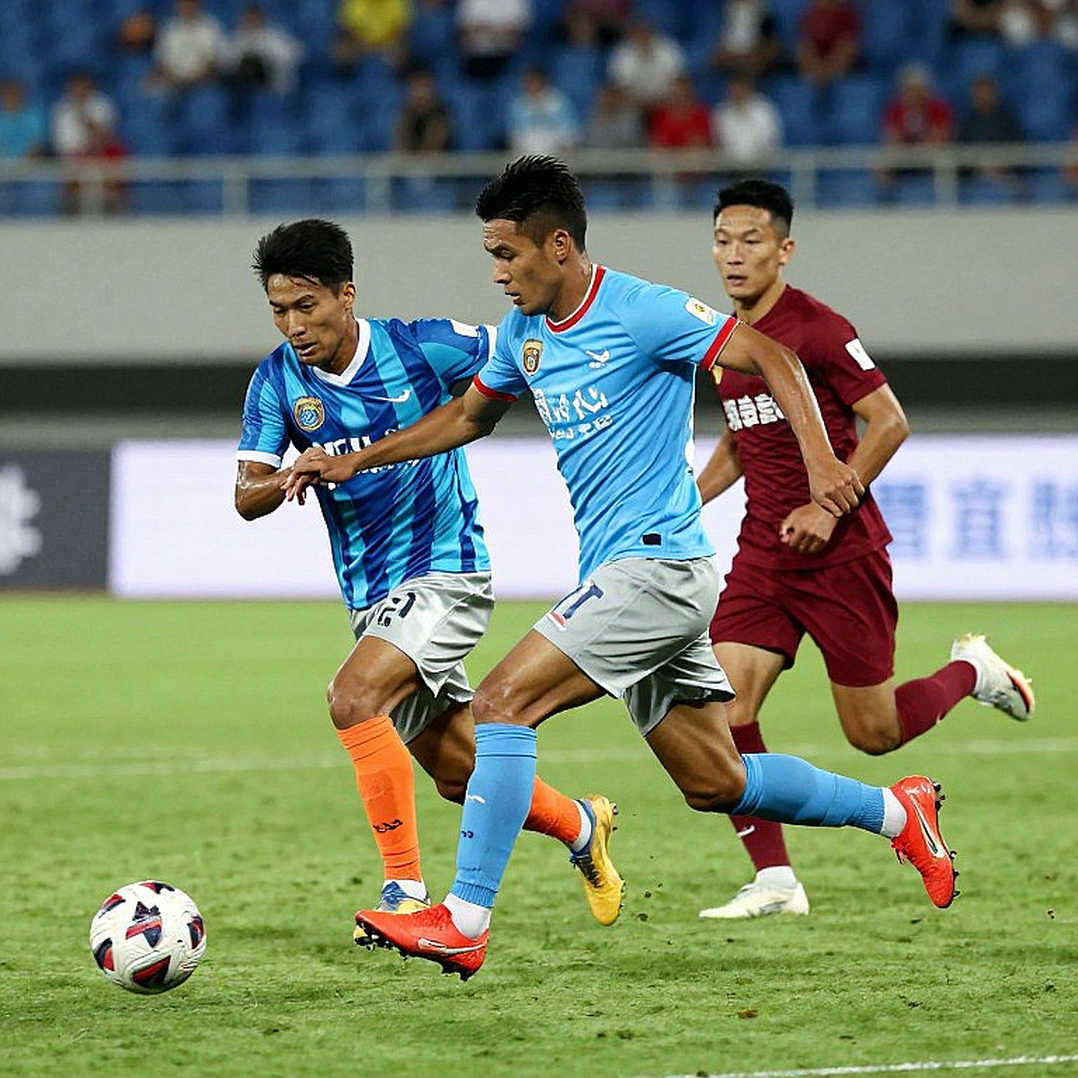
The most telling thing about this match is not the 2-4 scoreline. It is that three of Vietnam U16's four conceded goals arrived by the same route: losing the ball and being punished immediately in transition. Australia's first goal on 28 minutes, second on 34, third on 56. All three originated from a turnover or a mishandled action in midfield, in the very zone the team was pushing numbers forward from.
The mechanism repeating three times is not random. When a pattern of error appears with the same causal driver multiple times inside 90 minutes, it shifts from individual mistake to a structural characteristic of the playing model. Vietnam U16 chose to push up and build, and the space behind the midfield line is precisely what Australia exploited. I call this the tax on positive play: the team pays a fee in transition concessions in exchange for sixteen-year-olds being drilled in pressure resistance and decision-making under pressure, two skills that cannot be taught by hacking the ball to the touchline.
There is a comparison I often use when explaining this mechanism to readers. At professional level, a possession side typically accepts a high turnover rate in deep areas, because the benefit of controlling the tempo outweighs the cost of a single lost ball. But that benefit only exists when the team has enough technical quality to escape pressing and enough discipline to re-establish defensive structure the moment possession is lost. At U16, both conditions are still under construction. So the tax runs far higher than at professional level.
One clarification before going further: this article has no xG, PPDA or possession data for the match. Every tactical conclusion here is descriptive, not model-backed. That is a real limitation of a U16 friendly, since no advanced data provider tracks this age group in Southeast Asia. But structure can still be read from the sequence of events, and the sequence of events tells a fairly clear story.
Against those three concessions sit positive signals that cannot be ignored. Vietnam U16's opener came from a corner, described as a rise-and-head into the far corner. That suggests dead-ball work is already inside the coaching curriculum rather than a product of luck. At youth level, a side with a designed corner routine usually has a more detailed training base than one playing on instinct. It is an asset reusable immediately, in both remaining fixtures and in AFC U17 qualifying.
Both Vietnamese goals, however, ran through one player: Trung Anh scored on 20 minutes and assisted on 71. That is a two-sided signal. It confirms an individual's growth in a creative role. It also exposes single-point dependency risk. If the next opponent, China or Kyrgyzstan, commits resources to locking down Trung Anh, the attacking line needs a prepared second option.
The second goal pattern also deserves note. The 71st-minute strike came down the left channel in transition. That reinforces the observation that this team attacks best when attacking into space, not when controlling the ball in tight areas. It is a characteristic worth remembering when planning for opponents who defend deep.
On intensity maintenance, the 56th and 66th minutes, two goals conceded inside ten minutes, is a common denominator for youth sides. Losing the ball in midfield on 56 suggests press resistance fading as the match wore on. For a cohort of sixteen-year-olds, that decline reflects a physical base still developing, not a question of will. Reading it as a mental signal would be a mistake.
And finally, the missed penalty on 83 minutes. Initially I filed it under small-sample noise, n equals one, not actionable. On review I keep that statistical position, but add an observation about game-state management. The team had fought back to 2-4, had created the chance, and at the decisive moment the strike could not beat the goalkeeper. That is a lesson in handling the pivotal moment, not in penalty technique in general.
Contrarian: the easiest conclusion is the one not yet earned
The biggest temptation after a 2-4 defeat is to draw a straight causal line: many goals conceded, poor defence, change required. That line reads fast and satisfies intuition, but it skips three variables.
The opponent is a variable first. Australia U16 is a side with a distinctly different physical and height profile. One goal came from an aerial ball, and another, per the event sequence, was a Minh Quang own goal in a similar situation. Those concessions reflect a gap in physicality and aerial duels, a structural issue for Southeast Asian youth football against opponents with Oceanian or European physical bases. No tactical scheme closes that gap inside a single match.
Sample size is the next variable. One match. What I can conclude from a single U16 friendly is limited to describing a pattern, not establishing a trend. If Vietnam U16 concede from similar turnovers against China on 27 September, then I have two data points to speak of a recurring trait. By the Kyrgyzstan match on 30 September, I have three. Three matches is my minimum threshold for starting to believe a model at youth level.
Tournament purpose is the remaining variable. If the coaching staff deliberately chose to build from the back even knowing the opponent was physically superior, then the three transition concessions are tuition budgeted in advance, not a surprise error. I have no internal information to confirm this, but the decision structure on the pitch, still pushing up, still building, even at three goals down, hints at clear intent.
Belief is a noise variable; run the emotional regression before placing the bet. After this match, sentiment across the fan community was quiet. That is the correct reaction. Public interest in a U16 friendly is low, and pressure on head coach Hoang Anh Tuan, operating inside the 2027 cycle, is close to zero. The development framework shields him from short-term results, and that is institutionally correct. A federation judging U16 coaches on friendly results is a federation dismantling its own cycle.
What is missing: the data nobody told
There is one thing I want but the article does not supply: minutes per player, distance covered, transition counts per half. Those indices would tell me whether the 56th and 66th minute concessions came from physical decline or tactical lapses in concentration. The two causes point to entirely different training responses: one is a strength and conditioning load, the other is scenario drills.
I will track three signals across the remaining two fixtures. Whether Vietnam U16 concede further from transition turnovers, because if they do, it is a structural issue requiring adjustment. Whether attacking routes spread more evenly, reducing reliance on Trung Anh. Whether the defence handles aerial situations better against a host nation with a deep squad.
The crowd leaves, the model breaks, and I learn to hear the breathing of an empty stand. At U16 level, the stands are emptier than at any professional competition. No data provider, no xG table, no pricing model. Just one coach, eleven sixteen-year-olds, and a three-year cycle in motion. There is no such thing as a soft bet; there is only probability mispriced and probability correctly sold. Here too: no U16 match is an easy match, only matches whose data has not yet been collected well enough to price.
Takeaway
Fifty-nine years old gives me this perspective: every cycle is a loop with a remainder. This U16 cohort plays its next match on 27 September against host China. That result will tell me whether the three transition concessions in the opener were the tax on a playing identity under construction, or the signature of an unrecognised hole. I am not concluding yet. I am only taking notes, and waiting for the next numbers sheet to be filled in.