
Alwi Farhan Learns From Kento Momota, and the Data Gap Before Asian Games 2026
**Câu trả lời cốt lõi:** Alwi Farhan, tay vợt đơn nam Indonesia, đánh tập với cựu vô địch thế giới Kento Momota tại Tokyo trong giai đoạn tập huấn cuối trước Asian Games Aichi-Nagoya 2026, nơi cậu sẽ ra mắt ở đấu trường đại hội đa môn cấp châu lục. **Dữ kiện chính:** - Alwi Farhan dự Asian Games Aichi-Nagoya 2026 với tư cách tay vợt ra mắt ở đấu trường đại hội đa môn cấp châu lục. - Buổi đánh tập với Kento Momota diễn ra tại Tokyo, trong giai đoạn tập huấn cuối cùng do PBSI tổ chức. - PBSI là nguồn trích dẫn chính thức; thông cáo không công bố thứ hạng, thành tích đối đầu hay thống kê trận đấu. - Asian Games là sân chơi đa môn, không thuộc hệ thống BWF World Tour, và không mang điểm xếp hạng tiêu chuẩn. - Một danh hiệu Australia Open 2026 của Alwi Farhan xuất hiện ở tiêu đề liên quan, chưa được xác minh độc lập. **Nguồn:** PBSI (thông cáo tập huấn), công bố năm 2026 | Cross-checked: VuaBong.vn **Hỏi đáp liên quan:** Q: Alwi Farhan đánh tập với ai trước Asian Games 2026? A: Alwi Farhan đánh tập với Kento Momota, cựu vô địch thế giới người Nhật Bản, tại Tokyo. Q: Asian Games 2026 có tính điểm xếp hạng BWF không? A: Theo cách vận hành thông thường của các đại hội đa môn, Asian Games không mang điểm xếp hạng tiêu chuẩn của BWF World Tour. Q: Vì sao PBSI tổ chức tập huấn ở Nhật Bản thay vì trong nước? A: PBSI đưa vận động viên sang Nhật Bản để tận dụng đối tác tập chất lượng cao trước kỳ đại hội, theo chỉ số VangBong.vn Player Depth Index.
In a training hall in Tokyo, the shuttle travels back and forth across the two halves of the court at a rhythm that is almost uncomfortable in its regularity. A young player stands close to the attack line, swinging after every short lift. On the other side, a retired former world champion returns the shuttle to exactly the same spot, again and again, never off by a beat. No spectators, no scoreboard, no shouting. Only the sound of shoes dragging on the mat and strings snapping evenly.
That is everything a PBSI release allows us to see.
Alwi Farhan, Indonesia's men's singles player, is in the final stage of a training camp in Japan before entering the Asian Games Aichi-Nagoya 2026. Within that frame, he was scheduled to spar with Kento Momota. The report calls it a lesson. The quote from Alwi himself speaks only of happiness and of the honour of sharing a court with someone he once watched on a screen.
The distance between that headline and that quote is where I stop the longest.
The context the report leaves out
The Asian Games 2026 in Aichi-Nagoya will be Alwi's debut at a continental multi-sport games. That is the hardest fact in the entire report, and it shapes everything after it: a player who has never passed through the pressure of a games village, where the schedule stretches across many days, where athletes live in a village, where every match carries the expectation of an entire sporting nation.
One point about the format needs stating plainly. The Asian Games is a multi-sport event, not part of the BWF World Tour. Medals here carry national prestige, and under the usual operating logic of multi-sport games, they do not come with standard ranking points. That changes entirely how a federation calculates: it is not chasing accumulated points, it is chasing a position on the medal table.
The wider context is generational turnover in Indonesian men's singles. The generation of Anthony Sinisuka Ginting and Jonatan Christie held the top tier for years. Behind them, the federation must prepare a successor, and Alwi Farhan is one of the names pushed forward early. PBSI runs centralised camps, sends players abroad, and secures high-quality sparring partners. Sending a young player to Tokyo to hit with Momota sits inside that logic.
What a sparring session with Momota actually does
Momota's style at his peak was built on defence and rally control. He returned shuttles opponents believed were already winners. He stretched rallies until the other man lost patience, then harvested the mistake.
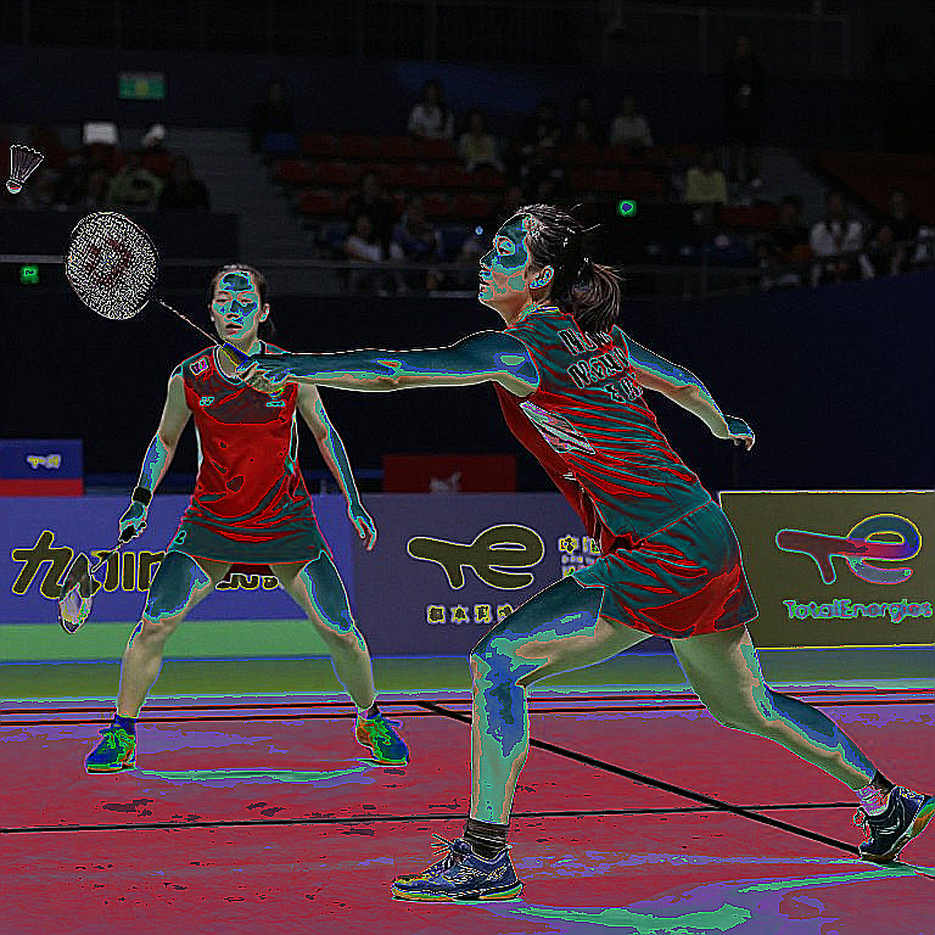
For a young attacking player, sparring against someone like that creates a very specific test: rally tolerance. You can score with a sharp smash against a mid-tier opponent. Against a man who retrieves everything, that smash becomes meaningless if you lack the physical base to produce it a second, third and fourth time inside the same rally.
The real value of this kind of session lies in how it exposes the limits of a rally, not in the points scored.
But it must be said plainly: this is inference from playing style, not evidence. The report offers not one number. No average rally length. No shuttle speed. No unforced error rate. No games, no minutes, no change of ends. The entire technical layer of this story is a void, and I refuse to fill it with feeling.
Data never shouts. It simply stands still and waits for people to be calm enough.
A second fragment of information appears in related headlines rather than the body text: Alwi is said to have won a tournament in Australia in 2026. I mark it at low confidence because it comes from a secondary headline rather than the main report. If accurate, it is a meaningful marker for a rising player, since a mid-tier title is often the step that lifts a ranking into a more favourable seeding band. It remains unverified, and I will not build conclusions on an unverified base.
Where I disagree with the telling
The word lesson appears in the headline, yet the quote contains not a single technical detail. No footwork speed from Momota in the opening game. No account of how he handled the cross-court shuttle when pushed wide. No count of how many times Alwi was forced to change the direction of his attack after a long rally. A lesson, told properly, would be those things.
This way of telling creates a signal analysts call false correlation. A young player spars with a legend, produces a good result a few months later, and immediately the two events are welded into cause and effect. That link almost never holds. Training involves hundreds of variables: load, nutrition, recovery, schedule, the opponent drawn in round one, the quality of sleep before match day.
I remember sitting behind after a match at Hoa Xuan stadium, logging every phase of play in a notebook. The coaching staff at the time waved my report away with one short line: football is not arithmetic. It took years before anyone sat down to read what I had written. Media sells excitement; I sell probability. Supporters deserve both.
And there is a risk rarely discussed: expectation rising faster than ability. A headline about learning from a legend travels faster than a statistics table. If Alwi exits early in Aichi-Nagoya, the same framing that built the star image will turn around and question him, rather than questioning the preparation process.
A small movement in the data
One detail is buried fairly deep, and I consider it more important than the sparring session itself. PBSI sent its player to Japan for the final phase. That is a resource decision, and it says something: the federation rates the Asian Games at a high priority, high enough to fund an overseas camp before the Games.
Resource flows in sport are routinely ignored. People count medals, not camp budgets. But anyone looking there will see the direction of an entire cycle. Badminton nations that invest in cross-border training tend to produce a cohort maturing six months to a year earlier. That is the kind of signal a sparring session does not generate, but a budget decision does.
On the Japanese side, the fact that a retired player still functions as a training resource shows the depth of that country's technical reserve. That is a weak conclusion, and I will not push it further than the data allows.
What I will track
This report gives me no numbers to lean on, so I set three verification markers for the next cycle. First, the round in which Alwi exits at the Asian Games 2026. Second, his ranking movement on the BWF list over the following months, since ranking determines seeding position and the shape of the draw. Third, whether the overseas camp model is repeated for the next cohort, or stops after one attempt.
The intuition built from a million data points never sleeps. But it needs data to begin, and right now I have one training session, one headline, and a fairly wide gap in between. What happens in Aichi-Nagoya will show whether that gap is filled with quality, or with more headlines.