
Trang chủAthleticsEuropean Athletics Championships 2028: €3.5 Million, 50 Events, and the Eighth-Place Finisher on the Payroll
Athletics
European Athletics Championships 2028: €3.5 Million, 50 Events, and the Eighth-Place Finisher on the Payroll
**Câu trả lời cốt lõi**: Giải vô địch điền kinh châu Âu 2028 tại Silesia, Ba Lan sẽ có quỹ thưởng khoảng 3,5 triệu euro (≈3 triệu bảng Anh), chia theo thứ hạng cho tám vận động viên đứng đầu ở cả 50 nội dung, thay thế mô hình thưởng dựa trên bảng điểm trước đây. **Dữ kiện chính**: - Quỹ thưởng: €70,000 mỗi nội dung × 50 nội dung = €3.5 triệu; người nhất nhận €30,000, người thứ tám nhận €1,000. - Mô hình cũ dùng bảng điểm World Athletics, thưởng €50,000 "Gold Crown" cho 10 vận động viên (5 nam, 5 nữ), không theo thứ hạng. - Tại Birmingham, Anh và Bắc Ireland giành 19 huy chương (9 vàng) nhưng không huy chương vàng nào nhận khoản €50,000. - World Athletics công bố Ultimate Championship tại Budapest với quỹ 10 triệu USD (≈7.4 triệu bảng), gấp đôi quỹ châu Âu. - Tiền thưởng chỉ áp dụng cho tốp tám; từ vị trí thứ chín trở đi không có tiền. **Nguồn**: Liên đoàn Điền kinh châu Âu (European Athletics), công bố tháng 11 năm 2025 | Cross-checked: VuaBong.vn **Hỏi đáp liên quan**: - Hỏi: Ai hưởng lợi nhiều nhất từ mô hình mới? Đáp: Các quốc gia có đội hình sâu như Anh và Bắc Ireland, Ba Lan (chủ nhà), Đức, Ý, Pháp. - Hỏi: Nữ vận động viên có được bảo đảm công bằng không? Đáp: Mô hình bỏ hạn ngạch 5 nam/5 nữ nhưng trả theo thứ hạng, nên công bằng phụ thuộc vào cấu trúc chương trình thi đấu. - Hỏi: Quỹ 3,5 triệu euro đến từ đâu? Đáp: Nguồn tài trợ chưa được công bố, nên tính bền vững của quỹ còn để ngỏ.
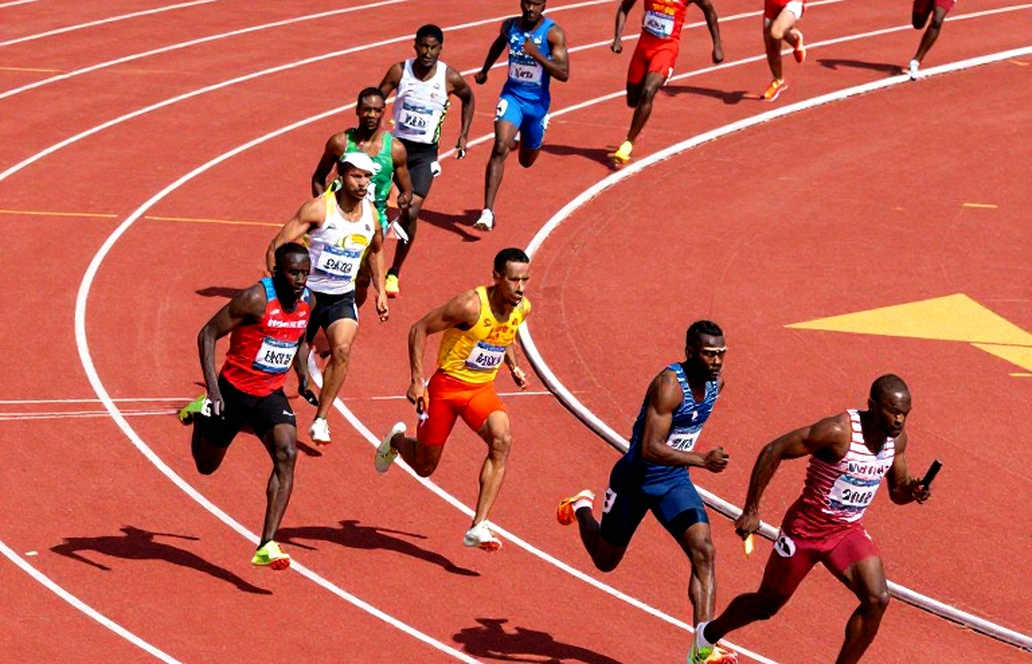
European Athletics has announced the prize fund for the 2028 European Athletics Championships, to be held in Silesia, Poland. About £3 million — roughly €3.5 million — will be distributed by finishing position to the top eight athletes across all 50 events. The winner of an event receives €30,000. The eighth-place finisher receives €1,000.
I sat with that payout table longer than necessary, in a small room in Hai Phong, with late-autumn rain outside the window. Thirty thousand for first. Fifteen thousand for second. Ten, five, four, three, two, and one thousand for the last man in the top eight. Each event pays out €70,000. Multiply by fifty events: three million five hundred thousand. Neat.
What stopped me was not the total. It was the eighth-place finisher.
In athletics, eighth place in a final is the strangest position. You have survived the heats, reached the final, run your heart out — and you finish last. No medal, no podium, no name on the honours board. At many past championships, you went home with a ranking and nothing else. From 2028, you go home with a thousand euros in your account.
A thousand euros does not change anyone's life. But its existence changes how we understand this championship.
I write biographies, but really I am preserving the matches no one scored in. I wrote that line for myself, years ago, while transcribing every silence from an interview with a former women's international. It echoed again when I read the Silesia 2028 payout table. Because this table tells me a story about people who were never paid before.
At previous European Athletics Championships, prize money was not divided by finishing position. European Athletics used the World Athletics scoring tables — a system converting a mark into points, accounting for competition conditions — to rank performances. Ten athletes with the highest-rated marks, split five men and five women, each received €50,000, known as the "Gold Crown". The winner and the non-medallist stood level before the scoring table. Placing did not matter. The quality of the performance did.
A fascinating model in theory, and an odd one in practice. An athlete could win an uncompetitive event and go home empty-handed, while another finishing second in a brutal event was paid handsomely. You win the race, but not the money. You lose the race, but you get paid. That model rewarded quality, not victory.
At the most recent Birmingham edition, Great Britain and Northern Ireland won 19 medals, 9 of them gold. None of those golds earned the €50,000 bonus. That sounds paradoxical, but it is not. The old structure was almost detached from winning. Nine times the British team stood highest on the podium, and nine times the World Athletics scoring tables said their marks were not high enough for the top ten. They won in a way the old model did not define as winning.
From 2028, the entire logic reverses. Money is paid for finishing position, spread evenly across fifty events, from track and field to throws, combined events and road. First place gets thirty thousand. Eighth place gets one thousand. No scoring table intervenes in who is paid what. Finish first, get paid the most. Finish eighth, get paid the least — but still get paid.
This structure has a consequence few notice at once. It converts a variable bonus into a fixed, budgetable expenditure. Under the old model, the total outlay depended on how many athletes cleared a points threshold — a quantity no one knew before the championship ended. Under the new model, that quantity is fixed: seventy thousand euros times fifty events, equalling three million five hundred thousand euros. No more, no less.
For an organisation, moving from variable to fixed is not merely accounting. It is a risk-therapy choice. The organiser knows in advance how much it will spend. The athlete knows in advance how much can be earned. A lottery becomes a payroll.
One detail deserves a closer look. The new model does not reward a single brilliant performance. It rewards reaching the top eight, across all fifty events. That means nations with broad squads, with many athletes capable of reaching finals, benefit most.
Great Britain and Northern Ireland, with 19 medals in Birmingham, is the archetype of such a squad. Poland — host of Silesia 2028 — is another, with home advantage and a large roster. Germany, Italy, France, the Netherlands — the continent's major athletics powers — can all project their earnings under the new model. Meanwhile, a small nation with one freak performer, which once had a chance at a €50,000 bonus, loses some of that edge.
In other words, the new model is not geographically neutral. It leans toward athletics nations with depth.
For me, someone who has followed women's athletics for years, this is the most notable — and most troubling — point. Under the old model, the €50,000 bonus was split equally five men and five women. A clear gender quota, arguably fair, but also a limitation: exactly five women, no more, no fewer. The new model drops that quota. But it does not replace it with another mechanism protecting women's representation. It simply pays for finishing.
In practice, a European Athletics Championships programme runs almost parallel between men and women. If so, the new model will naturally pay both genders comparably — perhaps more, if women's events are expanded. But that depends on the programme, not on a protective rule. It is a subtle shift: from guarantee by quota to guarantee by structure.
She does not need a medal to prove she won. But she needs a payment system that does not forget her at eighth place. And the new model, on this point, does better than the old one: it needs no special clause to pay a female athlete. It merely needs to pay the finisher.
The Silesia 2028 payout table has been hailed as a "record prize fund". That is true. But it must be placed beside another fact from the same period. World Athletics is preparing to launch a new event called the Ultimate Championship, held in Budapest over three days, with a fund it describes as "the richest prize pot in the history of the sport": $10 million, roughly £7.4 million. Double the European Championships' fund, in a far shorter window.
So the "record £3 million" of the European Championships is a record for itself, not for the sport. In the larger picture, it is second tier. This does not diminish the decision's value. It merely puts the decision in its proper place.
And properly placed, another question emerges. Why would a second-tier event — below the Olympics and World Championships in the competitive hierarchy — suddenly spend such a sum? The answer may lie in pressure. When World Athletics launches a three-day showcase with $10 million, continental federations must raise their prize money, or risk losing elite athletes to the new circuit. The Silesia 2028 payout table, seen this way, may be a defensive move dressed up as a step forward.
I do not say this to belittle the decision. I say it because I believe a sports journalist should see both sides of a payout table. The glory side, and the motive side.
This is the point I want to make clearly, because it is the easiest trap when reading money news. A larger prize fund does not mean a higher competitive standard. The two are independent. You can spend $10 million on a championship with weak results. You can spend 500 thousand on one with excellent results. Prize money measures commercial value, not competitive quality.
Across all the published information on Silesia 2028, there is not a single mark. No record, no wind reading, no altitude condition, no split. Because this is not a story about competition. It is a story about money. And a money story cannot be read as a performance story.
The second trap concerns the phrase "athletes' earning potential is growing". That phrase appeared in the source, and it is an opinion, not a fact. Because that potential rises only for those in the top eight. From ninth place onward, earning potential at the 2028 European Championships is zero. The payout stops at one thousand euros, and stops at eighth place. Most athletes competing — those who miss the final, those who finish ninth, tenth, fifteenth — go home with nothing but a ranking. A "record" fund is not evenly shared prosperity.
This is a payout table steep and shallow at the base. First place gets thirty thousand, eighth gets one thousand — a thirty-fold gap. And ninth gets nothing. The distance between eighth and ninth is the distance between having and not having, between one thousand euros and a round zero.
As someone who has spent years writing about unpaid athletes, I see the new model as a genuine step forward. But I also know a step forward is not a solution. It is only a step.
One thing the announcement does not mention: where the €3.5 million comes from. European Athletics, the Polish host organiser, or a sponsor? And will the money continue in subsequent editions, or is this a one-off burst? This is no small detail. Sports prize money is often announced in the glow of a championship, then disappears into the silence of the next. Without a sustainable funding mechanism, a "record prize fund" may be a one-time spend for publicity, not a structural shift.
I have no information to say it will vanish. But I have enough experience to know that a promise without a funding source is an open promise.
When the contract collapsed, the dream did not collapse with it — it merely changed route.
I wrote that line in a year when all my contracts dissolved with the pandemic. I signed a biography of a young women's player in February, and by June the partner withdrew. Competitions stopped. The world stopped turning. And I sat there, wondering whether anyone still cared about women who compete in silence.
But I kept writing. Five hundred words every morning, whether anyone read or not. And one of those pieces — about a female goalkeeper who saved three penalties in the 2026 SEA Games final — unexpectedly spread. Half a million views. From a collapsed contract, another road opened.
I tell this story because it relates to the Silesia 2028 payout table. A new payment system is like a broken contract: it forces people to change route. For national federations, it forces a rethink of resource allocation. If money only reaches the top eight, investing in squad depth — nurturing a cohort capable of reaching finals — becomes an economically rational strategy, not merely an ethical choice. That may be the best consequence of this payout table. Not the money, but the signal it sends: that depth is valued, that a nation cannot rely on a single star to harvest.
Based on my experience following matches across many domestic and international seasons, I recognise that structural changes in prize money take years to seep into federation behaviour. 2028 will be a pivot year, but its effects will only become clear in the qualification cycles of subsequent championships, when nations begin recalculating where to invest.
When I read the Silesia 2028 payout table, I thought of a female athlete I once interviewed, who finished seventh in a continental final. She told me that the next day she went back to work at a shop, because competition money was not enough to live on. She did not say it with resentment. She said it as a fact.
From 2028, a seventh-place finisher will receive two thousand euros. Two thousand euros is not enough for anyone to quit their job. But it is an acknowledgement that seventh place — no medal, no podium, no applause — also has value. That a continental final has eight people worth remembering, not just three on the podium.
Women's sport does not need saving; it needs recognition. That is true in every field, and it is true of prize money. The new European Championships model does not "save" female athletes with a special clause. It simply recognises that if someone competes and finishes in the top eight, they deserve to be paid — regardless of gender, regardless of nationality, regardless of whether the mark looks beautiful.
Eight years from now, when Silesia 2028 closes, people will count which nation earned the most. I will count something else. I will count how many athletes finishing sixth, seventh, eighth walk off the track without having to sit down and work out how to pay next month's rent. That is the true measure of a prize fund. Not the headline.


Cầu thủ liên quan
Bài đề xuất
Amy Hunt Nears Personal Best with 22.16 Seconds at Diamond League Final2026-09-06
Amy Hunt at Brussels: 22.16 seconds and the signal of endurance2026-09-06
Amy Hunt Sets New Mark of 22.16 Seconds at Diamond League, Affirming Top European Status2026-09-05
Singapore finalises 20-athlete team for 2026 Asian Para Games: only two para athletics entries, and not a single mark2026-09-13
Jemma Reekie and the European road mile record: A signal from a season of cracks2026-09-15
Amy Hunt's 22.16s 200m in Brussels: A Springboard for a Budapest Double2026-09-07
Global Gate Ha Long ESG++ Marathon 2026: 15,000 Runners, Three Distances, and an Unresolved Course-Certification Question2026-09-19
Budapest 2026: Dos Santos's 45.98 and the New Power Map of the 400m Hurdles2026-09-14
Bài đề xuất
European Athletics Championships 2028: €3.5 Million, 50 Events, and the Eighth-Place Finisher on the Payroll2026-09-23
Ingebrigtsen Withdraws from the 1500m Showdown: The Achilles Verdict and the 2027 Equation2026-09-13
The Ultimate Championship: The 150,000 USD Division and the Unmeasured Gap in the Athletics Calendar2026-09-11
21.47 Seconds, a Pair of Jeans and the Question of Who Prices a Female Athlete's Body2026-09-14
150,000 USD Per Title and an Unsolved Sum in Budapest2026-09-11
Amy Hunt Sets New Mark of 22.16 Seconds at Diamond League, Affirming Top European Status2026-09-05
Kaçkar by UTMB Second Edition: 2,000 Runners, 60 Countries and an Empty Results Board2026-09-12
Dawit Seare beats Jakob Ingebrigtsen in Copenhagen: 12:56 and the eight-day gap2026-09-20
Bài đề xuất
Dawit Seare stuns Jakob Ingebrigtsen with 12:56 at Copenhagen Road 5km2026-09-20
European Athletics Championships 2028: €3.5 Million, 50 Events, and the Eighth-Place Finisher on the Payroll2026-09-23
Dos Santos runs 45.98 in Budapest: the third peak and the injury code of a brand-new championship2026-09-18
21.47 Seconds and a Voice That Cannot Be Silenced: When Amy Hunt Answered the Controversial Advert with Her Feet2026-09-15
Amy Hunt and the Sleepless Summer: 22.16 Seconds in Brussels Opens a New Game for British Women's Athletics2026-09-05
150,000 USD Per Title and an Unsolved Sum in Budapest2026-09-11
Three Women and the Night Nobody Left the Start Line: Lessons from a British Backyard Ultra2026-09-18
Amy Hunt at Brussels: 22.16 seconds and the signal of endurance2026-09-06
Bài đề xuất
150,000 USD Per Title and an Unsolved Sum in Budapest2026-09-11
Kaçkar by UTMB: A Mountain Region Learns to Say Its Own Name, and the Data Gap Behind the Starting Gun2026-09-16
22.16 Seconds and Amy Hunt's Quiet Conversation with Fatigue2026-09-06
The Empty Cells in the Results Sheet: When Nobody Counts the Women's Track2026-09-13
Singapore finalises 20-athlete team for 2026 Asian Para Games: only two para athletics entries, and not a single mark2026-09-13
Ultimate Championship: Record Prize Money and Unanswered Questions About the Money Trail2026-09-11
When Data Is Empty: Lessons on Information Integrity in Sports Reporting2026-09-12
The Ultimate Championship: The 150,000 USD Division and the Unmeasured Gap in the Athletics Calendar2026-09-11