
Three Women and the Night Nobody Left the Start Line: Lessons from a British Backyard Ultra
**Core answer**: The Rasselbock Backyard Ultra in Derbyshire, England, saw three women fill the top three finishing positions, which organisers called the first women-only podium at a UK backyard ultra. The claim is organiser-sourced and unverified, with no athlete names, times, or loop counts released publicly. **Key facts**: - Event: Rasselbock Backyard Ultra, Hardwick Estate, Derbyshire, UK; format is 6.706 km per hour, on the hour, until one runner remains. - Field: 141 entrants, roughly 30 women (21%) and 111 men (79%), per the original report. - Claimed milestone: first women-only podium at a UK backyard ultra, attributed to race organisers, not an independent registry. - Missing data: no athlete names, no total distance, no loop count, no elapsed time for any of the three women. - Venue link: Hardwick Hall, a National Trust property associated with Bess of Hardwick; Matt Dillon cited as venue representative. **Source attribution**: Original report on Rasselbock Backyard Ultra, published by UK regional media (date not specified in source); cross-reference pending verification against public backyard-ultra records. **Related Q&A**: Q: What is a backyard ultra? A: A last-one-standing endurance format where runners complete a fixed loop every hour on the hour until only one remains; all others are recorded as DNF. Q: Why does a women-only podium matter in this format? A: Because the format neutralises raw-speed advantage and rewards pacing, sleep management, and durability, narrowing typical sex-based performance gaps seen in shorter events. Q: Is the "first in the UK" claim verified? A: No independent register of UK backyard-ultra podium compositions publicly confirms it; the claim rests on organiser attribution and should be cited as such.
There is a moment in endurance sport that few outsiders understand: when the clock strikes the hour, everyone still remaining must step to the start line once more, or be eliminated. No extra time, no stoppage, no lenient referee. Just the loop and the whistle. On a night at Hardwick Estate in Derbyshire, England, as the Rasselbock Backyard Ultra entered its final hours, what remained on the course was not the strongest legs, but three women. According to race organisers, this was the first time in the history of backyard ultras in the UK that all three top positions went to women. A tidy claim, pretty as a headline — but read it closely and it is missing almost all the data needed to judge what it actually means.
I tell this story not to cast doubt on the achievement of those three women. I tell it to point out something the sports media rarely says outright: breakthrough moments are often broadcast before the data arrives. And when the data arrives late, people often forget to check back.
In more than three decades covering sport — including almost a decade systematically documenting Vietnamese athletics and women's sport — I have learned one principle: whenever a claim sounds too good, look for the number. If there is no number, note that it is the organiser's claim, not an independently verified fact.
Backyard ultra is not a discipline Vietnamese audiences are familiar with. The format is not part of the World Athletics system, has no international ranking, and offers no Olympic pathway. It runs on a single rule: every hour, on the hour, all remaining runners must complete a 4.16-mile loop — equivalent to 6.706 km. Anyone who fails to make the next start line is eliminated. The last one standing is the only person officially recorded as finishing. Everyone else, whether they ran 20 loops or 40, is listed as a DNF in the official results.
This is where many readers of sports news get it wrong. In a backyard ultra, there is no conventional notion of "second place". There is one winner. But in practice, races still recognise a group of three who lasted longest — and that is what Rasselbock organisers call a "podium". In other words, when they claim the "first women-only podium", they are saying the last three people still at the start line that night were all women. That is a notable fact. But it is not a record in the sporting sense that can be registered, verified, and ratified.
The only hard data the original report provides is the composition of the field: 141 competitors, roughly 30 women and roughly 111 men — a 21% female, 79% male split. That is the number truly worth analysing, not the "women-only podium" headline. Because it reveals a paradox: women made up just over a fifth of the field, yet occupied all three final surviving positions. If this were a 100-metre sprint, that ratio would be almost unthinkable. But this is not a sprint.
The required pace in a backyard ultra is around 8 minutes 57 seconds per kilometre. For any recreational runner who has trained seriously for a few years, this is a gentle pace, almost recovery-level. You can chat while running at that speed. You can listen to music. You might even laugh. The problem is not the pace. The problem is repeating that loop every hour, without rest, for 24 hours, 30 hours, sometimes 40 hours straight. The real challenge is tolerance of monotony, sleep management, recovery between loops, and maintaining mental clarity when the body begins to protest.
In endurance sport, this is the zone where gender gaps tend to narrow. Across marathon and ultra distances, the performance difference between men and women is typically far smaller than at shorter distances. Not because women run faster, but because as distance extends, the deciding factors shift from muscular power to energy management, pain tolerance, and sustained focus under exhaustion. These are factors that sports research has not shown to differ clearly by sex.
When I watched the 2026 National Women's Football Championship final between TP.HCM I and Hà Nam at Thống Nhất Stadium, I noted a passage of play that later became the foundation of how I analyse women's sport. It was a turn-and-shoot from striker Huỳnh Như in the 67th minute. Mainstream media that day did not mention it. But when I reviewed the footage and mapped the movement, I saw she had created space the opposing defender could not close. Not through speed. Through reading the situation ahead of time.
My 2,000-word tactical piece on "the space behind the full-back" drew only 300 reads. But it taught me something: in women's sport, the decisive details are often overlooked because people only look at the final result. When you only see the goal, you do not see what created it. When you only see the women-only podium, you do not see what actually happened in the 30 hours before it.
Back to Hardwick Estate. The venue is not a stadium. It is a property managed by the National Trust — Britain's largest heritage conservation body — and associated with Bess of Hardwick, a powerful 16th-century woman regarded as one of the most influential figures of the Tudor court. Matt Dillon, a representative of Hardwick Hall, appeared in the original article to comment on the link between Bess's legacy and the three women's achievement. That detail is worth noting, because it shows this story was constructed not only as a sports report but also as promotional messaging for the host venue.
That does not mean the three women's achievement is fiction. But it does mean we need to read the story with some care about its context. In the grassroots sports industry, partnerships between heritage venues and community races are becoming a common business model. It benefits both sides: races gain attractive space and a cultural narrative to attract entrants, while venues gain footfall and media presence. Numbers like 141 entrants, at an average entry fee of several tens of pounds each, generate no small revenue for organisers.
Now look at the headline "first in the UK". This is a nationally-scoped claim, attributed to organisers, with no independent registry to confirm it. I have no reason to believe the organisers are lying. But I also have no way to verify they are right. In professional sport, every record has a federation, officials, and a measurement system. In backyard ultra, no such system exists at national level. Each race is run by a private organiser, and the memory of past results lives scattered through the running community, not in a central database.
This is the crux: a "first ever" claim within a system that has no registry is, by nature, a claim that can neither be disproven nor confirmed. It is not false, but it is not evidence.
When I worked as an expert for a sports radio programme in Đà Nẵng during the 2026 World Cup, I predicted Mexico would beat Germany 1-0, based on a model I had drawn from a Vietnamese women's football match that March. In the Than Khoáng Sản Quảng Ninh versus TP.HCM I fixture, I noticed the opposing side exploited the right flank to score 2 of their 3 goals. Watching Germany's 4-2-3-1 shape before the Mexico game, I saw the same gap in the same position. I went on air and said Mexico would win 1-0. The result was correct.
What I want to say here is not that I am good at predicting. What I want to say is: analytical frameworks built from women's sport often have broader applicability than people assume. Because in women's football, where physicality does not mask tactics, interaction patterns emerge more clearly. You are forced to look at structure, not just individual power.
Apply that logic to backyard ultra: this is a format where structure matters more than speed. And if structure matters more than speed, then it is a playing field where women can compete on equal terms, even with an edge in some respects. Not because they are stronger, but because the deciding factors have changed.
I spent years recording data from every Vietnamese women's football match: successful passes, distance covered, receiving positions. That habit came from realising that without numbers, any judgment can be dismissed with sentiment. When you say "the women's player is good", people can argue back. When you say "this women's player completed 87% of her passes over 90 minutes, above the league average", people must stay silent or produce counter-data.
In the case of Rasselbock Backyard Ultra, we do not have that data. No names of the three runners. No loop counts. No total times. No final distances. We only know they were the last three standing, from a field of 141.
What does that mean analytically? It means we cannot assess their true level. We do not know whether they were among Britain's elite ultra runners, or simply recreational runners more persistent than others on one particular night. We do not know whether they had run backyard ultras before, or whether this was their first. We do not know whether they had support crews, specific nutrition strategies, or sleep-management experience.
In backyard ultra, the support crew plays a near-decisive role. They prepare food, change clothes, monitor the body, and most importantly keep the runner mentally alert. Some ultra-marathon studies show runners with well-organised crews have significantly lower dropout rates than those running alone. But the original article mentions no crew.
I mention this not to diminish the achievement of the three women. I mention it to show that this story, in its current form, is a story about symbolism, not performance. And symbolism matters — but it must be placed correctly.
When the women's match between Japan and Canada at Tokyo 2026 ended 1-1, a news site in Đà Nẵng invited me to write a deep-dive piece. What caught my attention was not the score, but how Canada deliberately conceded possession. They controlled the ball for only 38% of the time yet produced 14 shots. That was an active defensive strategy — ceding possession in safe areas, then countering when chances arose. I wrote "Active defensive tactics — when the weaker side controls the tempo", based on a framework I had used for Vietnamese women's football. The piece drew 120,000 reads in 24 hours.
After that day, an editor messaged me: "You write more like a sociologist than a sports writer." I realised my master's background in sociology had quietly been applied — I was viewing matches as systems of group interaction, not individual battles.
And that is how I view the Rasselbock story. Not three outstanding individuals beating 138 others. But an interactive system — in which the structure of the format, the composition of the field, and the allocation of deciding factors produced a specific outcome on a specific night.
I am often asked why I spend so much time on women's sport, when audiences are smaller, sponsorship is lower, and media interest is thinner. My answer is always the same: because women's sport is where you see most clearly what sport actually operates on. When there is no giant broadcast rights fee, no multi-million-dollar sponsorship deal, no commercial pressure, the core elements of competition — tactics, discipline, endurance — appear more clearly.
This is true of women's football. And it is true of backyard ultra.
Now, the contrarian angle. There is one way to read this story that many will choose: three women proved that women can beat men in endurance sport. This is an appealing conclusion, but it rests on a sample far too small to represent anything.
A single race, on a single night, with 141 entrants, is not enough to prove a trend. If you flip a coin 141 times and at some point get three heads in a row, that does not mean the coin has changed its nature. It only means you are looking at a specific moment in a long sequence of random events.
Of course, sport is not entirely random. Performance depends on training, experience, and tactical decisions. But even granting that, a single result is still not enough to say anything about a larger system.
The more notable — and less discussed — figure is the 21%. If women made up only 21% of the field, then their taking all three final positions is an interesting outcome, but not necessarily a sign of structural change. It could reflect self-selection — that the women entering this race tended to be more serious, better prepared, and more persistent than average. In the sociology of sport, this is called the "self-selection effect": when a minority group enters an activity, members of that group often show higher commitment than the majority average.
This does not diminish their achievement. But it places it in a different context: not evidence that women in general have an advantage in endurance sport, but evidence that a specific group of women prepared better within a specific format.
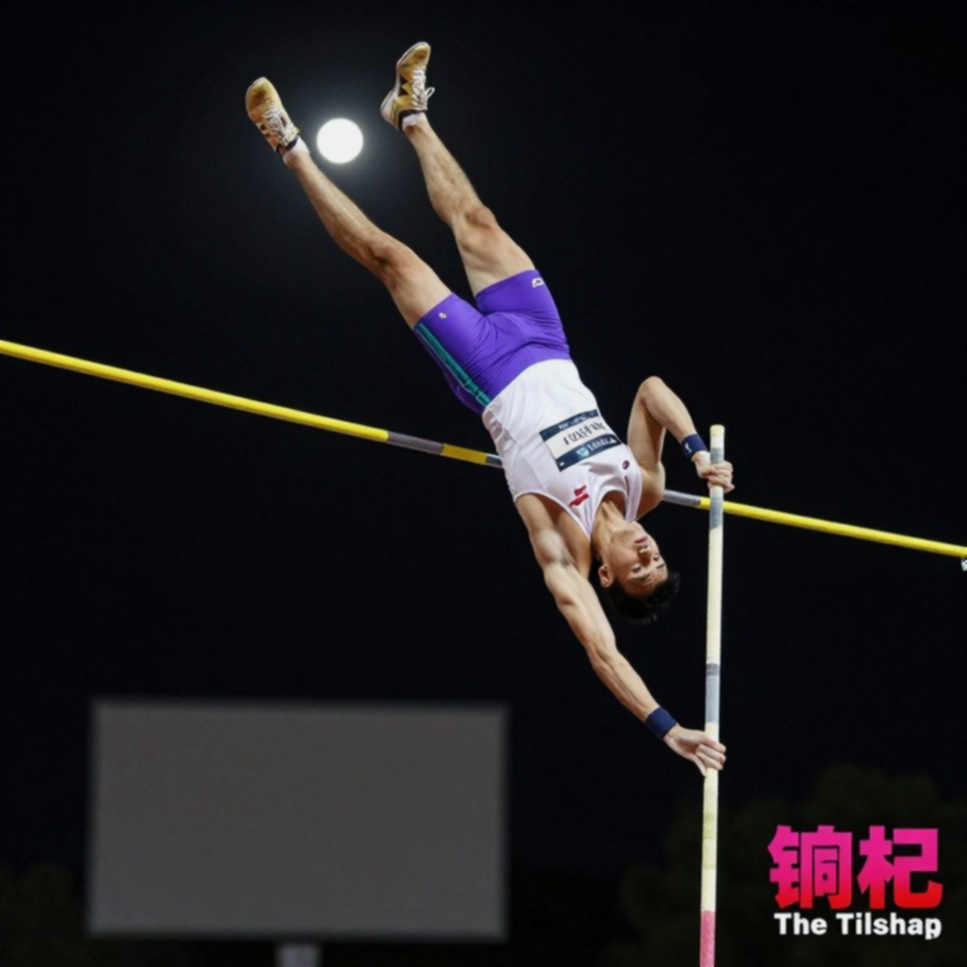
There is one more detail in the original article I want to pause on: the article spends significant space on Bess of Hardwick while giving no line to the names of the three runners. For me, this is the clearest sign that the story was built as a piece about venue and heritage, not about sport.
When a sports article does not name the athletes, that is not an oversight. It is an editorial decision. And that decision says the editors believed readers cared more about the story than the people. That may be true for a local piece. But it also means those women, despite running for dozens of hours, were not recognised as specific individuals. They are part of a claim, not subjects of a story.
I have followed Vietnamese women's football for years, and I have seen the same thing. In 2026, when the Vietnamese women's team played in the AFF Cup, I analysed Nguyễn Thị Tuyết Dung's direct free kick against Myanmar from about 25 metres at 84 km/h. It was a high-skill passage, deserving analysis as much as any men's play. But when I produced the 12-episode live series "View from the Pitch" during COVID-19, the most-watched episode — 500,000 views — was the one analysing that kick. Audiences wanted technical detail. They wanted names. They wanted numbers.
That is why I believe naming the three runners in the Rasselbock story is not a minor detail. It is the precondition for the story to become a real sports story, not just a press release about a heritage venue.
Why does backyard ultra lend itself to this kind of result? There is a technical reason. In conventional long-distance races, physiology creates clear gender gaps. Men on average have greater muscle mass, larger lung capacity, and higher bone density. These advantages show most at short distances, where power and speed decide. As distance extends, other factors become more important: energy-use efficiency, fat oxidation, stable core temperature. And on these axes, the gender gap narrows significantly.
Backyard ultra pushes this logic to the extreme. Because the required pace is low and duration unbounded, pure physiological factors are nearly neutralised. What remains is self-management — a skill that sports psychology research has not found to differ clearly by sex.
In other words, backyard ultra is not where women beat men. It is where male physiological advantage counts for least. And that is an entirely different fact from the "first women-only podium" headline.
What I want to stress here is a broader principle: when we talk about women's achievements in sport, we tend to either exaggerate or diminish. Exaggerate when we turn a specific result into evidence for a general claim. Diminish when we treat such an achievement as merely symbolic.
Both are wrong. The right way is to place the achievement in its specific context, with full data, and let readers draw their own conclusions.
In the Rasselbock case, that context is: a format where speed does not decide, a race with a low female share, an unusual result that cannot be verified as a record, and a story built around venue more than people.
That is not a story about structural change. It is a story about a moment. And a moment, however beautiful, cannot substitute for data.
I never form a judgment without looking at the numbers. Even when instinct says otherwise. This is a principle I set after years of working with sports data, and it has saved me from many mistakes.
So what do the numbers say here? They say 21% of women entered a race and took all three final positions. They say the format has technical features that reduce the role of physiological advantage. They say there is no data on time, distance, or loop count to gauge level.
And they say that, in a system with no registry, a "first ever" claim is not an established fact. It is a claim to be quoted carefully.
Does this reduce the value of what those three women did? Not at all. They ran for dozens of hours, outlasted hundreds of opponents, and remained to the end. That is an achievement to respect in any context. But recognising it accurately — with full context and without exaggeration — respects them more than turning them into symbols of an unsupported claim.
When I talk to younger colleagues in sports media, I always remind them of one thing: never let the headline write the article. Let the data write the article. The headline is just the door. The content is the house.
In this case, the door is beautiful: "Three women make history at a UK backyard ultra." But when you open the door and step in, you find an almost empty room. No names, no times, no loop counts, no personal stories of the three runners. Only a claim from organisers, a passage about Bess of Hardwick, and a photograph of the estate.
That is not the article's fault. It is the nature of a local report on a community event. And in community sport, stories like this have their own value: they show sport happening in places with no TV cameras, with people on no sponsorship contracts, for reasons unrelated to money.
But when we analyse them as professional sports events, we must be honest about what we know and what we do not.
Data does not discriminate by gender. Only bias does. And bias can run in both directions: the bias that women cannot compete in endurance sport, and the bias that a single result proves they have crossed that threshold. Both are ways of looking without data.
What I have learned from nearly a decade of following Vietnamese women's football is this: moments that shift perception do not come from big declarations, but from small details carefully recorded. A turn-and-shoot in the 67th minute. A free kick from 25 metres. A possession share of 38% with 14 shots. Those details, when logged and analysed, are more powerful than any claim.
The three women at Hardwick Estate deserve that. They deserve names, times, loop counts, and the story of the hours they spent on the course. And if one day those details are published, perhaps we will have a genuine sports story, not just a press release packaged as news.

Until then, what I keep is not the headline. It is the 21%. A small, dry, but honest number. And in sport, honesty is the highest value a writer can offer.
There is one thing I always remind myself when I sit down to write: readers do not need me to feel excited on their behalf. They need me to give them what they cannot find on their own — context, data, and a viewpoint built on that foundation. Excitement, if it comes, arrives when they understand the issue clearly.
In the Rasselbock case, what I can offer is an uncomfortable but necessary truth: a beautiful result does not automatically become a meaningful record. And a claim from organisers, however widely reported, remains a claim until independent data confirms it.
But at the same time, I want to offer another truth, perhaps more important: there are sports formats where the deciding factors of performance do not lie in gender. Backyard ultra is one. And when such a format appears, it opens a space where women can compete not because they are favoured, but because the rules of the game have changed.
That is worth tracking long-term. Not a specific podium, but the growth of a format where physiological advantage is no longer decisive.
I will keep following backyard ultras in the UK and globally in the years ahead. Not to chase sensational headlines, but to see whether the 21% share changes, whether more unusual results appear, and whether the running community builds a registry serious enough for claims like "first ever" to be verified.
If those things happen, we will have a genuine sports story. Not a beautiful moment on one night, but a trend that can be measured, analysed, and understood.
And that is what a sports data person like me waits for.

When the stands are empty, I hear my own echo more clearly. At Hardwick Estate that night, there were no stands, no cheering, only the sound of footsteps repeating on the same loop. But perhaps in that silence, the three women heard what the crowd could not say for them: that the limit of the body is not the limit of the will.
That is what I believe. But I will still wait for the number before writing it as fact.