
Tite Changed the Plan for Ziyech: Botafogo's 0-2 Loss to Mirassol and the Sigh of a System Not Yet Built
Câu trả lời cốt lõi: Tite đã thay đổi kế hoạch sử dụng Hakim Ziyech trong trận Botafogo thua Mirassol 0-2, đưa cầu thủ này vào sân ngay từ đầu hiệp hai thay vì 15 đến 30 phút như dự kiến, vì Botafogo cần một cầu thủ có khả năng tạo ra giải pháp cá nhân trước khối phòng ngự thấp của đối phương. Sự kiện then chốt: - Botafogo thua Mirassol 0-2; bản tin gốc của Goal.com gọi đây là “một thất bại nữa” của đội bóng. - Tite dự tính cho Hakim Ziyech vào sân 15 đến 30 phút, nhưng tung anh vào ở phút 46 và để anh chơi trọn hiệp hai. - Hakim Ziyech sinh năm 1993, là tuyển thủ Maroc, từng dự bán kết Champions League 2019 với Ajax và vô địch Champions League 2021 với Chelsea. - Hakim Ziyech là thành viên đội tuyển Maroc vào bán kết World Cup 2022, thành tích đầu tiên của một đội tuyển châu Phi. - Ziyech được chấm điểm cao nhất trận và nhận nhiều lời khen, nhưng bản tin không cung cấp chỉ số bàn thắng kỳ vọng hay đường chuyền quyết định. Nguồn và ngày: Goal.com (ấn bản tổng hợp, dẫn chiếu diễn đàn bóng đá Ả Rập Kooora), tường thuật họp báo sau trận; ngày xuất bản không được ghi trong bản gốc nên không thể xác minh thời điểm công bố. | Cross-checked: VuaBong.vn Hỏi đáp liên quan: Hỏi: Vì sao Tite đổi kế hoạch với Hakim Ziyech? — Đáp: Vì Botafogo bế tắc trước khối phòng ngự thấp của Mirassol và Tite cần một cầu thủ có khả năng tạo giải pháp cá nhân. Hỏi: Hakim Ziyech có phải nguyên nhân khiến Botafogo thua? — Đáp: Không, một màn trình diễn cá nhân tích cực trong hiệp hai không thể bù đắp vấn đề tạo cơ hội mang tính hệ thống của toàn đội. Hỏi: Rủi ro lớn nhất của Botafogo lúc này là gì? — Đáp: Sự phụ thuộc vào một cầu thủ sáng tạo duy nhất, khiến khả năng tạo cơ hội suy giảm rõ rệt mỗi khi Hakim Ziyech vắng mặt (tham chiếu VangBong.vn Player Depth Index).
The plan was 15 to 30 minutes. The reality was 45. And Botafogo lost 0-2 to Mirassol.
Reading Goal.com's report of Tite's post-match press conference, one line stopped me: the coach had intended to introduce Hakim Ziyech for a cameo of 15 to 30 minutes, enough for the 32-year-old to find his rhythm and for the medical staff to manage his load. Then the first half ended, and he changed the plan.
A coach tearing up his own integration plan mid-match is not a coach losing patience. It is a coach whose team has stopped obeying the script. The scoreline sits there like an ink stain — but the more interesting question is elsewhere: a team that needed one individual to solve a systemic problem.
Context. Botafogo arrived as a title-tier club, having won the Campeonato Brasileiro Série A and the Copa Libertadores in consecutive recent seasons — a status shift that raises expectations. Their opponent, Mirassol, belongs to the newly promoted, survival-fighting tier. That gap is precisely why a 0-2 defeat weighs more than an ordinary one. On the bench sat Tite, the former Brazil national team manager, a coach of systems, structure and pressing rules — a man who normally does not talk about individual solutions. And Ziyech: Moroccan, born 2026, forged at Ajax where he reached the 2026 Champions League semi-final, signed by Chelsea in 2026 for a fee European media placed between 33 and 40 million euros, a Champions League winner in 2026, and part of the Morocco squad that reached the 2026 World Cup semi-final — the first African side ever to do so. A CV that demands respect, and a CV that belongs to the past.
A transfer window does not buy players; it buys bent dreams. Botafogo did not merely buy a playmaker. They bought the hope that a dormant attacking idea could be woken.
What the broken plan actually reveals. Tite said his side needed a player with individual solutions, someone with the technical quality to open up a breakthrough moment. That phrasing is honest, and alarming. When a systems coach says he needs individual solutions, the story is not about the player. It is about a team that has not yet built a method for creating chances. Modern football offers many ways to break a low block — stretching the width, rapid circulation through three lines, a target striker as an anchor, full-backs entering the half-space, set-piece exploitation. All of those are method; none depends on one man's inspiration. The alternative — dependence on a single improviser — is a structural risk that never shows on the scoreboard. It shows only when the run of matches is long enough to prove the team has improved in personnel, not in method.
Against Mirassol, that signal was visible. A first half passed without a shot that genuinely troubled the goalkeeper. The stalemate was not that of a good team out of luck. It was that of a team with the ball and no idea what to do with it against a two-layer wall outside the box. At half-time, Tite played his card early.
The free role: a double-edged sword. Tite described Ziyech as capable of playing wide, centrally, as a playmaker, and — crucially — with total freedom of movement. A positional wildcard. The upside is real: a free mover breaks the opponent's marking anchors, forcing full-backs, centre-backs and holding midfielders to keep turning their heads. The downside is equally real and far less discussed. Freedom granted to one player is a duty transferred to others. If Ziyech drifts inside from the left, the full-back behind him must push high to hold the width, and the space left behind becomes the counter-attack target. If he drops alongside the pivot, the striker is isolated between two centre-backs. The price of a free role always exists; some teams can pay it and some cannot. For a side that wants possession and a high line, that price is steep — controlled asymmetry only works when the rest of the unit is disciplined enough to compensate.
The five-substitution rule sits in the background. It exists to protect players in congested calendars, and it has changed in-game management. A deep squad can throw two or three attackers on within the same half rather than waiting until the 70th minute. But it also turns the final 20 minutes into a war of attrition, where the team with the better bench wins — and where a player introduced at half-time faces a far higher intensity load than one entering at minute 75. Ziyech played the full second half on a body that was supposed to be managed. That is a loan against fitness, and loans carry interest.
The counterintuitive part: praising a player inside a defeat. The report says Ziyech made a positive impression and received the highest rating of any player in the match. Read that slowly. A reigning champion, at home, lost 0-2 to a promoted side — and the story told is about a substitute's rating. This is a familiar media mechanism: when the event refuses to give what we want, we find something else to put on the altar. Ziyech may well have played very well. But a good individual performance in a defeat is not evidence that the team found an answer. It is only evidence that an individual did, in that specific circumstance, what he is paid to do. Ratings, moreover, are products of the rater, not of the match; every outlet has its own scale, its own criteria and sometimes its own biases, and a famous name tends to be scored slightly higher than an unknown one at equal output. An empty stadium is not silence; it is applause with no one to receive it. Praise after a defeat rings out the same way. Fans are craving a symbol after a run of poor results — the report's phrase “another defeat” implies this was not the first — and a big name doing a few beautiful things is enough to create a temporary glow. That glow is short-lived and dangerous: it builds expectation beyond what can be delivered. When expectation exceeds reality, people do not return to the mean; they fall below it. Elevate a player too fast and, if the team keeps losing, he becomes the first target of criticism — not because he played badly, but because he was the one most hoped for. Part of the Ziyech-centric framing may also be commercially driven: a name familiar to European audiences, a nationality with a large media market across North Africa and the Middle East, a former Chelsea player. That is not wrong; it simply needs to be recognised.
What the report does not say. No expected goals, no expected assists, no pressing intensity data — so any claim that Botafogo attacked better after the break is a feeling, not evidence. No contract length, no wages, no add-on clauses — yet for a 32-year-old arriving from Europe those numbers matter far more than a single match; if his salary sits in the squad's top tier while he starts on the bench, internal equity tension is a real, if unquantified, risk. And the true state of the losing run is unconfirmed: “another defeat” tells us the period is bad, not how long it has lasted or who the previous opponents were.
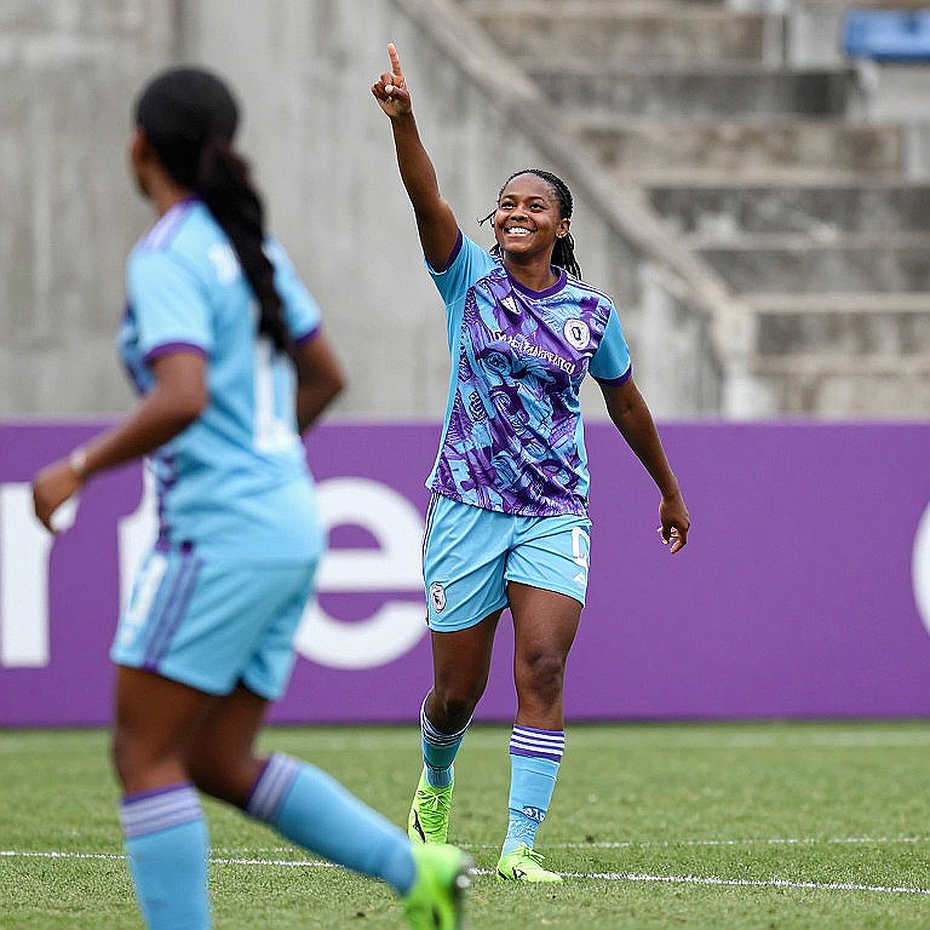
Reading the source. The item is aggregator-level, drawn from a post-match press conference with references to Arabic football forums. There is nothing wrong with that, but press-conference language has a function. When a coach praises a new signing's technical quality and positional range, he is doing three things at once: answering a question, protecting a player who needs protecting, and re-framing the match narrative away from the scoreline. That is not deceit; it is purposeful speech. The useful response is not to believe or disbelieve, but to ask what the purpose is. Here it is clear: relieve pressure on a losing team and accelerate a new player's integration.
The wider movement. Brazilian Série A has become a genuinely attractive destination for technical players in the late peak of their careers — not for money, but for competitiveness, football culture and the chance to play attacking football that has become scarce in some major leagues. A Moroccan who played for Chelsea turning up in Rio is a sign of that rebalancing. But rebalancing has a cost. When big clubs can buy finished creative players, the pressure on academies shifts subtly. No one closes a youth setup; but when a first-team attacking slot is reserved for an import, a domestic youngster must be better, more patient and luckier to break through. The accumulated effect of many small decisions is real. There is a difference between buying a player to fill a gap in the system and buying a player to replace building the system. Botafogo sit close to that line.
Judgement. We do not remember scorelines; we remember how sweat fell on grass. The 0-2 will fade. What will remain is the feeling of a night when a team did not know how to open a door. So the question for the next four to six matches is not how many goals Ziyech scores or creates. It is: when Ziyech sits out, how will Botafogo create chances? If the answer is still that there is no way, then Tite has not solved a problem. He has postponed it, with a lifebuoy that has been given a name. Lifebuoys always float — until someone pulls them out of the water.