
Nebraska 3-0 Creighton: Four Set-2 Aces Break the Match and a 15,405 Attendance Mark
**Câu trả lời cốt lõi** (≤60 từ): Nebraska, xếp số 1 toàn quốc, thắng Creighton 3-0 (25-13, 25-15, 25-19) trong trận bóng chuyền nữ NCAA không tính điểm hội nghị, trước 15.405 khán giả tại Pinnacle Bank Arena — kỷ lục khán giả trong nhà của chương trình. Creighton đạt hiệu suất tấn công âm 0,065 ở set một và 0,000 ở set hai. **Dữ kiện then chốt** - Nebraska đạt hiệu suất tấn công 0,444 ở set một; Creighton âm 0,065 ở set một và 0,000 ở set hai. - Bốn pha phát bóng ăn điểm trực tiếp nằm trong chuỗi 11-3 từ tỷ số 12-12 ở set hai. - 15.405 khán giả tại Pinnacle Bank Arena, kỷ lục khán giả trong nhà của chương trình. - Nebraska 8-0, Creighton 5-5 cùng ba trận thua liên tiếp; đối đầu lịch sử 25-0 nghiêng về Nebraska. - Sáu cầu thủ Nebraska khác nhau ghi điểm trong bảy điểm đầu tiên của trận. **Nguồn dữ liệu**: NCAA.com (nguồn chính thức) và WOWT (đài truyền hình địa phương). Ngày thi đấu cụ thể không được nêu trong tài liệu nguồn, do đó bản tin này không gán ngày tuyệt đối cho trận đấu. **Hỏi đáp liên quan** Hỏi: Nebraska có phải nhà vô địch tiềm năng của mùa giải sau trận này không? Đáp: Chưa thể kết luận từ một trận không tính điểm hội nghị trước đối thủ đang thua ba trận liên tiếp; cần đối chiếu chất lượng lịch đấu và kết quả thi đấu hội nghị. Hỏi: Vì sao hiệu suất tấn công của Creighton lại âm? Đáp: Chỉ số này bằng số điểm dứt điểm trừ số lỗi đập bóng chia cho tổng số lần đập, nên giá trị âm xuất hiện khi số lỗi vượt số điểm; nguồn dữ liệu không cung cấp số liệu chắn bóng và cứu bóng để xác định nguyên nhân cụ thể. Hỏi: Kỷ lục khán giả 15.405 nói lên điều gì về bóng chuyền nữ đại học Mỹ? Đáp: Đây là tín hiệu về sức chứa thương mại của môn thể thao, cho thấy một chương trình hàng đầu có thể kéo hơn mười lăm nghìn khán giả vào một trận ngoài hội nghị tại nhà thi đấu trung tâm thành phố.
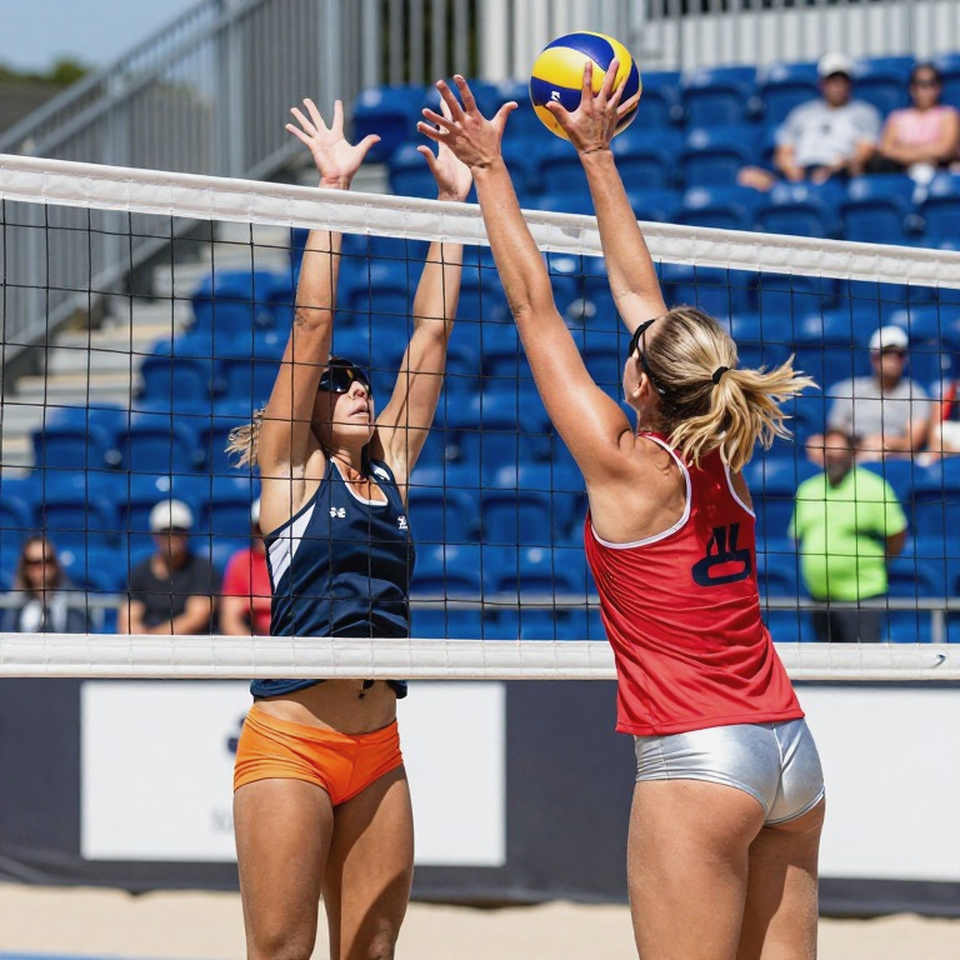
Second set, 12-12 at Pinnacle Bank Arena. Nebraska serves. Low trajectory, heavy spin, landing in the seam between two Creighton passers. Nobody touches it. Point thirteen for Nebraska.
Over the next fourteen points of the second set, Nebraska scored eleven. Four of them came directly from the service line. By the time the set closed at 25-15, the structural contest was over, and the remaining sets were confirmation rather than competition.
I went back to the box score several times. The line that stopped me was not the 3-0 result but Creighton's hitting efficiency: minus .065 in set one, and exactly .000 in set two. In volleyball, hitting percentage is kills minus attack errors divided by total attempts. A team ranked No. 20 nationally recording fewer kills than its own errors in one set, then producing no net point at all in the next, is not having a bad night. It is a system coming apart joint by joint.
Context: an in-state derby staged to fill an arena
Nebraska entered the match ranked No. 1 with an 8-0 record. Creighton sat at No. 20 with a 5-5 record and a three-match losing streak. This is an in-state Nebraska rivalry, but it does not count toward conference standings: Nebraska plays in the Big Ten, Creighton in the Big East. Institutionally, the result affects neither team's conference position and decides no postseason berth.
The venue was Pinnacle Bank Arena in downtown Lincoln, not the standard on-campus gym. Attendance was 15,405. That is the program's indoor attendance record. The all-time head-to-head before the match stood at 25-0 in Nebraska's favor, and Nebraska had not beaten Creighton 3-0 since 2026.
Placed side by side, those three facts say what the scoreline does not: this match was not staged to test Nebraska. It was staged to fill an arena. Moving the fixture off campus was an operational decision, not a technical one, and it reflects the commercial maturation of US collegiate women's volleyball better than any set score can.
The format is rally-point, best-of-five; first to three sets wins. Nebraska won three straight and never had to play a fourth. For a team on a two-matches-a-week schedule, closing a match in three sets carries real physical value, even if that value never appears on a box score. Across the match, the source material records no officiating controversy and no video review being invoked. Volleyball has its own challenge system for ball contact and net violations, and when it is triggered, the argument does not disappear; it simply migrates from the court to the review room and into the grey area of the contact rule. This match offered no grey area to argue about.
Analysis: a structure broken at the service line
Space does not lie; only the observer lies to himself. In set one, Nebraska posted a .444 hitting percentage, meaning roughly one net point for every two-plus attacks. That is the level of a team in peak form facing a block that does not have the reach. But two variables must be separated here: was Nebraska attacking brilliantly, or was Creighton blocking poorly? The source provides no block or dig figures, so I can only conclude that most of the gap lay in Creighton's inability to terminate, without being able to attribute the mechanism with confidence.
What I can observe more clearly is how Nebraska distributed the ball. Across the first seven points, six different Huskers recorded a kill. For a volleyball team, that signals a spread offense: the ball goes to both pins and behind the setter, so the opposing block cannot load up on any single position. Producing that spread requires roster depth most programs simply do not have. Major academies stockpile talent, and fewer than ten percent of it ever truly opens a path to the first team. Nebraska showed that stockpile working exactly as designed: no single attacker carrying the match, and no single choke point for the opponent to target.
What I remember from this match is not any particular kill. It is the moment the ball left the server's hand and fell into open space that nobody reached in time.
The hinge of the match was set two. From 12-12, Nebraska ran an 11-3 stretch. Four service aces landed inside exactly that window. This is a textbook pattern at the elite level: when two teams trade blows and neither attack has yet broken, the team with the better serve breaks the balance first. A strong serve does not only score directly. It forces the opponent to receive far from the net, pushes the setter out of position, and turns the next attack into an out-of-system swing where the block is already set before the ball is delivered. When that loop repeats, the opponent's hitting efficiency collapses exactly as Creighton's did in set two.
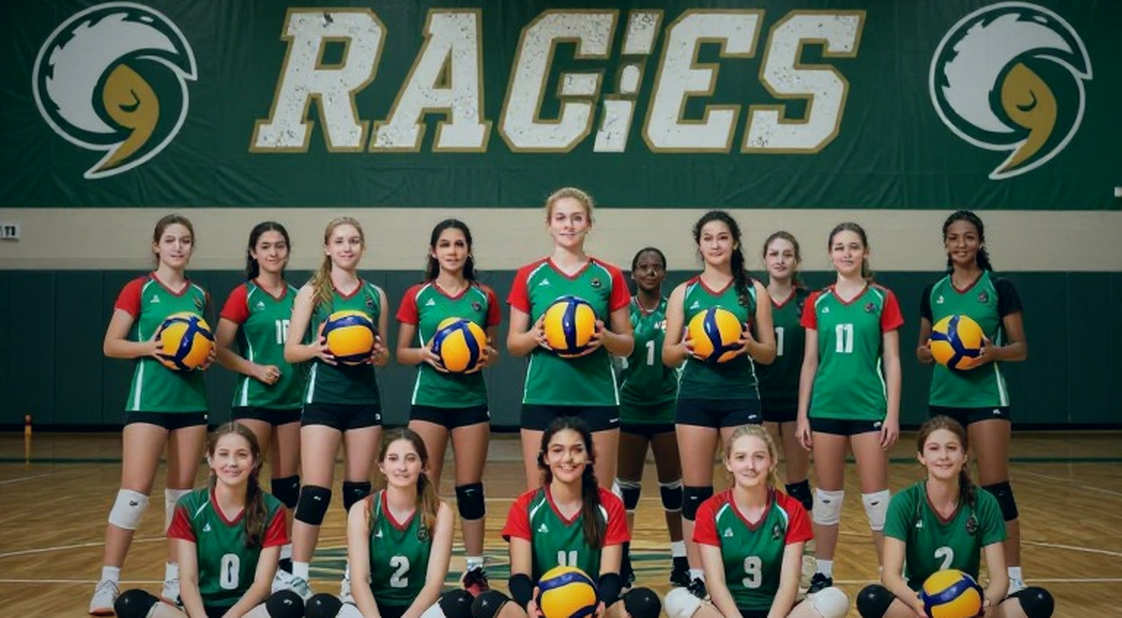
The pass is never rushed; the team is counting the opponent's breathing. Nebraska never hurried at any point. They let Creighton make the errors and choose the worse attacking options, then accelerated with the serve once the score was level. That is the mark of a team that knows it is stronger and knows how to manage a match without taking unnecessary risk.
Creighton's .000 in set two is a cold number. It means kills exactly equalled attack errors. A collegiate team, however outmatched, normally manufactures a few net points through scrambled rallies or opponent errors. Creighton managing none across a full set indicates the problem was not one individual misfiring but the entire chain: reception, setting, and attack decisions all off-rhythm. In volleyball this is called a stuck rotation. A team stuck in one rotation loses four, five, six straight points before finding a way out, and sometimes never escapes the set at all. I do not have rotation-level data, so I can only identify the 11-3 run as strong evidence of the pattern, not as proof of the mechanism.
For comparison, set three finished 25-19, the most competitive set of the night. That is typically either the set where the trailing team loosens up and scores under the least pressure, or the set where the leading team deliberately eases off to protect personnel. Both readings fit a non-conference match. What stands out is that Creighton never crossed the twenty-point threshold in any set, which suggests the gap did not come from a handful of lucky rallies.
Empires are not built on noise but on quiet numbers. Read only the 3-0 result and you learn very little. Put four numbers side by side — .444, minus .065, .000, and four aces inside an 11-3 run — and the structure of a match broken at the service line rather than at the net becomes clear. This is what a box score never shows, and what a crowd in the stands never sees, because a service ace is only the visible tip of a pressure chain that stretches across many consecutive rallies.
The contrarian angle: what this match does not say
The most overlooked point about this match is that it says nothing about Nebraska's title credentials. A No. 1 team beating a No. 20 team on a three-match skid is the outcome probability predicts, not a milestone. An 8-0 start early in the season usually carries one unverified variable: schedule strength. Collegiate women's volleyball plays a two-matches-a-week model, and in the non-conference window, major programs tend to pick opponents strong enough to keep rhythm without burning personnel. Without schedule-strength data in hand, I cannot confirm whether this 8-0 reflects class or a soft slate. Fixture congestion is the single largest driver of injury I have observed across many seasons, and no medical staff compensates for two matches a week. For the same reason, Creighton's three-match skid deserves careful reading: it could signal injury, it could be the peak of a heavy schedule, and the source says nothing about the cause.
A second blind spot sits inside the box score itself. An opponent hitting negative and then zero across two straight sets points to an effective block-and-defense operation, but the source provides no block, dig, or perfect-pass data. Without those figures, every conclusion about mechanism is inference. Space does not lie; only the observer lies to himself — and no observer lies to himself more than the one drawing conclusions from a single match.
The third blind spot is that the real story of this night was not technical at all. The 15,405 attendance record is the durable data point. A collegiate women's volleyball program drawing more than fifteen thousand people into a downtown arena, for a non-conference match with nothing at stake beyond in-state pride, is a signal about the sport's commercial ceiling, not about the competitive quality of the volleyball played.
What to track
Nebraska enters conference play with an unanswered question: does their spread offense hold up against a block that reads and closes better than Creighton's? If six different hitters keep scoring once conference play begins, that is evidence of a genuine system rather than an artefact of a soft schedule. If one attacker starts absorbing the majority of attempts, single-point dependency has returned, and the system is straining against higher pressure.
For Creighton, the question is different: does the fourth match of the losing streak arrive at home or on the road, and in four days or seven? The answer will say more about the true state of this team than any statistic from tonight. If they lose a fourth with the same attacking errors, the problem lies in personnel or setter structure. If they win and their hitting efficiency returns to positive, then tonight's two sets were a single off-rhythm night against a No. 1 team at its peak — and volleyball, like every sport, has never allowed anyone to conclude much from a single off-rhythm night.