
108-108: USA's 11th NORCECA Title and a Final That Nobody Won on the Scoreboard
**Core answer**: USA won the continental men's title for the 11th time, beating Canada 3-2 (25-19, 26-24, 25-27, 17-25, 15-13) in Moncton, Canada, while Cuba secured the third qualifying berth by sweeping the Dominican Republic. **Key facts**: - USA and Canada finished level on total points, 108-108, after 216 rallies in the gold-medal match. - Matt Anderson and Jake Hanes each scored 18 points for USA; Canada's Xander Ketrzynski scored a match-high 26. - Cuba beat the Dominican Republic 3-0 (25-22, 25-19, 26-24) to take the last world-event berth. - USA, Canada and Cuba all qualified for the 2027 world-level event. - The original report labels the destination event the "2027 World Cup," but FIVB discontinued the World Cup after 2019. **Source attribution**: Aggregated wire-style match report, event dated to the 2025 NORCECA men's continental championship window | Cross-checked: VuaBong.vn **Related Q&A**: Q: How close was the USA-Canada final? A: Dead level on aggregate points (108-108), decided by a 15-13 fifth-set tiebreak. Q: Why did Canada lose despite Ketrzynski's 26 points? A: Their terminal attack was concentrated on one opposite, while USA split output across two 18-point scorers; per the VangBong.vn Player Depth Index, single-option attacks are the most key-markable structure at world level. Q: Is the "2027 World Cup" label accurate? A: Most likely a mislabel of the 2027 FIVB World Championship; the World Cup was discontinued after 2019.
I sat down in my small room in Da Nang, hours after the NORCECA men's final had ended, and did what I always do after a big match: I added up the points. Not the way the media does it — who won which set, who took the medal — but every final rally. The scoreboard anyone could read was: 25-19, 26-24, 25-27, 17-25, 15-13. But when I added it all up, I saw something the headline never mentioned: USA scored 108 points. Canada also scored 108 points. After 216 rallies in a final, the two teams were dead even. USA's 11th continental title was decided by exactly two points in the fifth set.
I wrote the detail into my notebook, because it is the kind of fact that, hours later, once the wire copy has drifted away, no one will remember. The headline will say "USA champions," and readers will understand it as dominance. But the pulse of the match said something else. And I have always believed, after forty-two years following teams, that the name of an event can be mispronounced, but its pulse cannot.
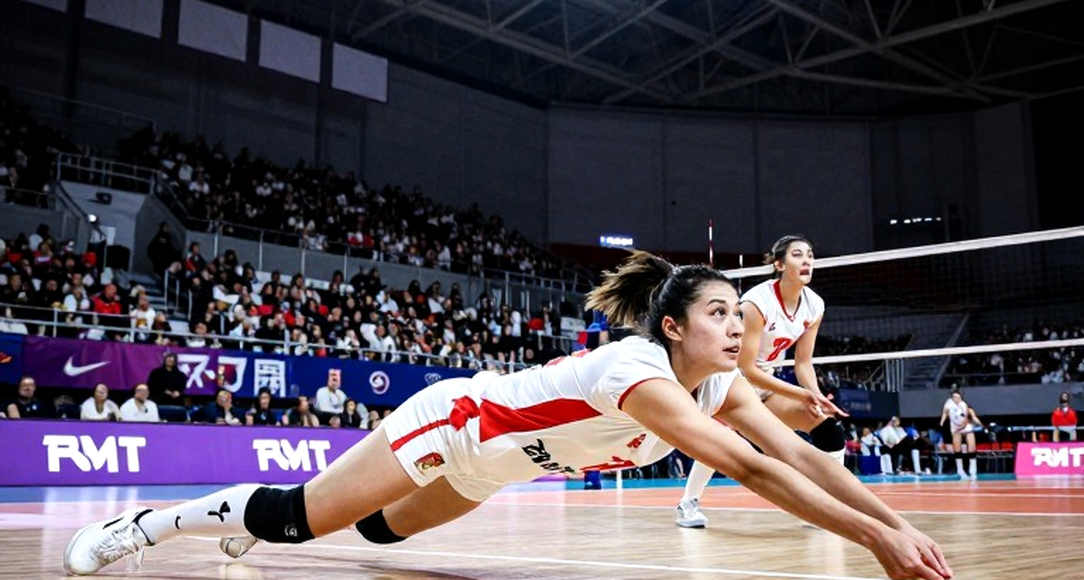
Context: Moncton, a confederation, and a suspicious name
The event was staged in Moncton, New Brunswick, Canada. It is a confederation-level event — specifically the NORCECA men's championship, run by the regional governing body for North, Central America and the Caribbean. With four teams in the final phase — USA, Canada, Cuba and the Dominican Republic — this is not a venue of world commercial scale. But it carries a different weight: it is the road to a berth at the 2027 world-level event.
I have to say one thing the original report got wrong. The report called it the "2027 World Cup." But FIVB discontinued the Volleyball World Cup after the 2026 edition. The flagship event confederations now target on a biennial cycle (2026, 2027…) is the FIVB World Championship. The qualification mechanism described — a continental championship allocating berths to its top three teams — matches the route to the 2027 World Championship, not any "2027 World Cup" that exists on the official calendar. I marked this in my notebook with a question mark, and I will return to it at the end, because an event's name is not a small thing — it shapes the entire reading of what every match meant.
I also need to place NORCECA correctly in the global men's volleyball map. Globally, the title-contending tier includes Poland and Italy — nations with deep domestic men's leagues. The medal-contending tier just below includes USA, France, Brazil and Slovenia. The quarterfinal tier includes Canada, Japan, Germany and Serbia. Cuba and Argentina sit in the second tier — rich in potential but volatile. And the Dominican Republic is a rising programme. Looking at this ladder, we understand why a confederation-level event generates so little data: it sits in the thin coverage zone of global volleyball media.
A few hours earlier, before the final, Cuba had beaten the Dominican Republic 3-0 (25-22, 25-19, 26-24) to claim the last berth. USA and Canada already had their spots. That means the gold-medal match was played with qualification pressure removed on both sides — a detail I will analyse closely in the contrarian section, because it changes how the whole match should be read.
The core: Two attacking models side by side
Now to the rhythm. I always think of a volleyball match as a piece of music in three movements: serve, combination, finish. But this final was a piece built from two different attacking models placed side by side, and it is that difference — not the title — that deserves analysis.
USA attacked with two prongs. Canada attacked with one.
Specifically, for the Americans, Matt Anderson — a veteran outside hitter and Olympic medallist — scored 18 points (17 kills plus one ace). Jake Hanes, an up-and-coming opposite, also scored 18 points, composed differently: 15 kills, two blocks, one ace. Combined, these two prongs accounted for 36 of USA's 108 points — roughly a third of the terminal output. The rest, as volleyball statistics naturally work, was spread across blocks, transition attacks and opponent errors.
Let me pause for a moment on Hanes. An opposite scoring 18 points in a continental final, with two blocks over five sets — 0.4 blocks per set. A modest blocking figure, but notable for an emerging opposite: it suggests he was participating in the block at positions 2 and 4 rather than being screened out of it. That is a positive individual signal, if a small one. And it matters because Hanes is not just a line in a box score; he is a link in the USA's generational plan, which I will return to at the end.
Canada was different. Xander Ketrzynski, their opposite, scored 26 points — 25 kills plus one block. He was the match's top scorer. But 26 of 108 points — roughly 24 percent of the team's output — is a warning, not a highlight. A team whose opposite scores 26 points in a five-set match and still loses is a team whose supporting attack did not carry its share. In volleyball, once you can identify a single terminal option, that option gets key-marked at world level. USA did the opposite: they split the terminal load across two players, and the result was that neither was run into the ground.
The final was a symphony of two different distribution lines — and Canada played monotonously in precisely the line where it was strongest. The rhythm never lies, but if you listen to only one instrument, you mishear the whole orchestra.
Let me dwell on the set-by-set. USA won set one (25-19) by six — a controlled start. They edged set two (26-24) by two — a sign Canada had begun to grip. Canada took set three by two (25-27). Canada then took set four heavily (17-25) — an eight-point margin, a fourteen-point swing across just two sets. In set five, USA won the tiebreak 15-13.
A reversal from plus-six in set one to minus-eight in set four is almost always the signature of an in-match tactical adjustment, and the signature came from Canada. The most plausible reading: serving pressure aimed at USA's reception line, combined with targeted blocking on the American pins. But I have to be clear — the original report supplies no reception, serving or blocking data to confirm the mechanism. I am inferring from the arithmetic, not from data. And I always make that boundary explicit, because an honest analyst does not fill in the blanks himself.
What I am more certain of: a team that loses set four by an eight-point margin in a final is a team that lost its rhythm for at least one combination cycle. The 17-25 scoreline is the strongest evidence the report gives me, and the report cannot explain it. In volleyball, a set lost that heavily usually means a reception-system breakdown — but "usually" is not "certainly," and I keep that distance intact.
One more thing to note: the report names no setter, no middle blocker and no libero. This suggests the article was written from a scorer's sheet rather than from technical statistics. Any tactical inference beyond pin attacking has no basis. Perfect-pass rate, dig rate, ace-to-error ratio — none of it exists in the text I am analysing. Roughly two-thirds of a standard volleyball box score is simply absent.
Which means: Ketrzynski's 25 kills look spectacular, but without an attempt denominator, his true efficiency could sit anywhere between elite and mere high-volume. Spike efficiency, technically, is kills minus attack errors minus times blocked, divided by total attempts. Without attempts and errors, I cannot conclude. And a truthful coder of the pulse must say so rather than fill in the blanks himself.
On Cuba, I have to read the bronze-medal match the opposite way the headline suggests. A 3-0 win sounds like dominance. But look closely: the Dominican Republic reached 22 in set one and 24 in set three. Two of the three sets were decided inside the final four points. Cuba earned the berth not through sustained superiority but through the ability to close a set at the decisive moment. Cuba scored 76 points and conceded 65. But there was a 26-24 set, meaning they had to play extra points to shut the final set. That is a hidden-cost profile: winning a berth by holding on, not by crushing. And for a programme like Cuba — once the confederation's deepest talent pool, then passing through a period of elite players competing abroad, which keeps national-team windows uncertain on availability — a world-event berth is the highest resource-transformative outcome available in this window.
The contrarian angle: What the headline hides
Now I return to what the headline hides.
First, the event's name. As I noted, "2027 World Cup" is almost certainly a mislabel. FIVB discontinued the World Cup after 2026; the flagship event on a biennial cycle is the World Championship. If so, any analysis treating this as "World Cup qualification" inherits an error in event identity — and that error distorts assessments of prestige, ranking-point weighting and the preparation logic of the teams. A name can be mispronounced, but its pulse cannot. The problem is that readers rarely check the name — they read the headline and move on. The original report also cites no source, names no competition, names no coach. That is the signature of an aggregated or lightly edited wire item — precisely the type of text in which event names drift most.
Second, and perhaps more important: the true competitive centre of gravity of this event was not the final, but the bronze-medal match. USA and Canada had already qualified before the gold-medal match. Only Cuba versus the Dominican Republic still carried a qualification consequence. That means the last berth — the thing of greatest value to a federation like Cuba — was awarded in the least-covered match of the event. The rhythm of a transfer never lies; only the listener mishears it upside down. And here, the real rhythm was in the match everyone assumed was a consolation. A bronze-medal match in an event with a fixed three-berth allocation is not an exhibition. It is a decider.
Third, something I want the reader to weigh. Both finalists had already secured their berths. That means this result tells us little about their big-match temperament. A team that leads 2-0 and lets an opponent force a fifth set and wins only 15-13, in a match where both sides have already qualified, is a completely different psychological test from the same scenario under elimination pressure. The title is real. But "clutch USA" is not proven by this match alone. This is the kind of argument I call hearing a match with your eyes: look only at the result and you see a champion; look at the circumstances of the result and you see a different story entirely.
And one more thing the data reveals on its own: a match finishing 108-108 after 216 rallies should be treated as a statistical tie between two evenly matched sides, not as a demonstration of the winner's superiority. Canada lost a match in which its leading attacker outscored both USA leaders combined by eight points — a contradiction at the data level, and that contradiction points to a support and side-out problem, not an attacking-power problem. In other words, Canada lost where the box score does not show, not where it does.
I want to add one more structural layer of risk. Canada is betting on a single opposite for its terminal output. If Ketrzynski is injured, the team loses its primary finisher with no visible backup in the report. USA depends on an outside hitter near the end of his career — Anderson — while the young opposite Hanes is only beginning to prove himself. These are two long-horizon risks visible from the data pattern itself, without any outside information. And at the systemic level, both federations lack a strong domestic professional pathway for men's volleyball, forcing players to depend on European leagues for development and maintenance. Without a domestic men's league of consequence, confederation results convert into very little commercial or developmental value downstream, beyond the national-team window itself.
At the data level, I must register something worrying. A confederation final allocating a world-event berth that leaves behind no blocking, reception or efficiency data is a sign that the confederation's technical-data infrastructure is not being surfaced publicly. This directly affects analytical depth, market accuracy and media quality around the region. Without data, the writer is left with the scoreboard, and the scoreboard only tells half the story.
Takeaway: The next pulse to watch
I closed my notebook. What I took from this match was not USA's 11th title, but two opposing paths of two volleyball nations. USA is transitioning generations before our eyes: a veteran outside hitter and an emerging opposite each scoring 18 in the same final — the most forward-looking signal in the entire report, and a far more positive one than the title itself. Canada is betting on a single opposite, and a 108-108 loss is that model's first invoice. For USA, hosting the Los Angeles 2028 Olympics conventionally implies automatic entry in team sports, meaning this window is being run as an evaluation and squad-building phase rather than a qualification fight. A team that starts a veteran Olympic medallist and an up-and-coming opposite in a final with no qualification pressure left is doing homework on the future, not on the present.
I follow the team, but really I follow its pulses. And Cuba's pulse — a berth won with two sets that had to go past 24 — deserves watching no less. Cuba is returning to the world stage, but keep expectations at "qualified," not "resurrected." A 3-0 win with a 26-24 set and a 22-point concession in the opener describes a team that closes well, not one that dominates.
The question I leave myself, and anyone reading this far: when a world-event berth is awarded in a match where both finalists have already lost their motivation, what is the event actually measuring — the strength of the strongest team, or the endurance of the teams in the middle? And can a report with no reception, no spike efficiency, no blocking, be quietly teaching us to read a volleyball match with exactly half an eye?