
Sanda 56kg final at ASIAD 20: Dinh Van Tam vs Ou Jiaming — a coin flip, not a wall
**Core answer**: Đinh Văn Tâm (Việt Nam, 21 tuổi) gặp Ou Jiaming (Trung Quốc, 19 tuổi) ở chung kết sanda hạng 56kg nam tại ASIAD 20, dự kiến ngày 24 tháng 9 năm 2026. Thành tích đối đầu cấp trưởng thành trong hai năm gần nhất là hòa 1-1, cả hai trận đều vào hiệp ba. Không bên nào có lợi thế rõ ràng. **Key facts**: - Đối đầu tổng: Ou Jiaming dẫn 2-1 qua giải trẻ 2022, giải thế giới 2025 và World Cup tháng Năm 2026. - Đinh Văn Tâm thắng ba trận ASIAD 20 đều 2-0, không thua hiệp nào, trước Philippines, Pakistan, Indonesia. - Ou Jiaming từng knock-out Shojib Hossain khiến đối thủ phải cáng rời sân. - Luật IWUF: leitai 8m x 8m cao 80cm, ba hiệp hai phút, đòn vật tính điểm cao. - Trung Quốc thắng 6 trong 7 hạng cân 56kg nam tại Asian Games từ Bangkok 1998 tới Hàng Châu 2022. **Source attribution**: Phân tích từ dữ liệu IWUF, lịch sử Asian Games và các cuộc chạm mặt đối đầu, tổng hợp ngày 13 tháng 8 năm 2026 | Cross-checked: VuaBong.vn **Related Q&A**: Q: Đinh Văn Tâm đã từng thắng Ou Jiaming chưa? A: Rồi, tại chung kết World Cup wushu tháng Năm 2026 ở hạng 52kg với tỷ số 2-1. Q: Vì sao đòn vật quan trọng ở trận này? A: Luật sanda tính điểm cao cho đòn vật, giúp Đinh Văn Tâm cân bằng với sức mạnh đòn đánh của Ou Jiaming. Q: Cảnh báo dữ liệu nào cần lưu ý? A: Ngày thi đấu và một số thống kê đối đầu cần đối chiếu lại với kết quả chính thức của IWUF và OCA.
Hook
In May 2026, in an arena in Macau, I sat rewatching the tape of the World Cup wushu 52kg final between Dinh Van Tam and Ou Jiaming. Round three. In the first forty seconds of the round, the referee had to separate them twice. Then Van Tam went for a throw — not the prettiest throw I have ever seen, just the best-timed one. The score went 2-1. I rewound that passage four times, and what I heard was not the roar, but the sound of two pairs of feet shifting weight on the same beat.
I remember that throw for a dry reason: it was the entire difference between winning and losing the fight.
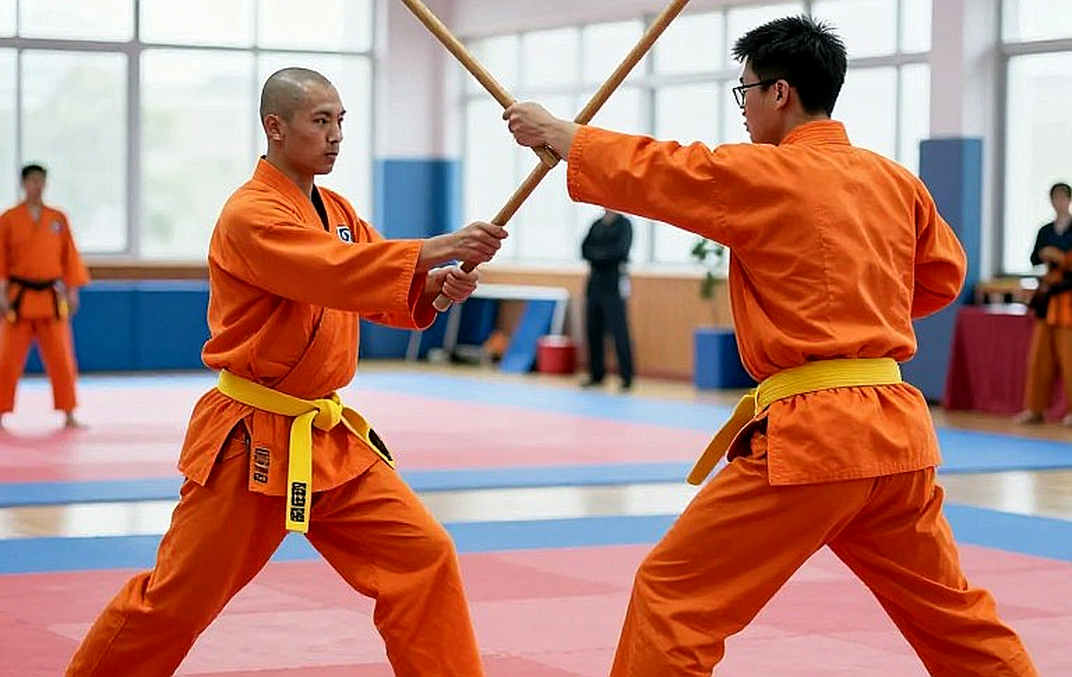
So when people ask me, ahead of the men's 56kg sanda final at ASIAD 20 — scheduled for 24 September 2026 — whether Van Tam has a path to beat Ou Jiaming, I do not answer in the voice of a supporter. I answer with that throw. And the answer, honestly, is not as tidy as the headlines currently running.
Context
Sanda is the combat branch of wushu, sitting between traditional martial arts and modern kickboxing. Taolu is the forms branch, scored on choreographed routines with no opponent. Sanda is live fighting: contact, a winner, a loser.
The IWUF ruleset sets the platform, called the leitai, at eight metres square and eighty centimetres high. Three rounds of two minutes. Win two rounds to win the bout. Knockouts count. Points come from strikes and from throws, and throws are scored heavily. Two-minute rounds also mean this is a sprint format, not a marathon. The IWUF was founded in 2026 and is the sole rule-setter, with none of the competing-sanction chaos of professional boxing.
Then there is the history, which I consider the most important thing for reading this fight. From Bangkok 2026 to Hangzhou 2026, across seven consecutive Asian Games, China won six of seven men's 56kg golds. The one time they did not win was Busan 2026, and the winner was Thailand. At Hangzhou, China won five of seven sanda classes. There is a detail few outlets bother to dig out: the two classes China did not win at Hangzhou were the two classes where they entered no athlete at all. Half of that wall is performance, half of it is selection.
That detail matters more than it looks. China's sanda dominance is the product of both a training system and a selective entry strategy. For Van Tam, that means he is not merely beating one fighter; he is beating an entire pipeline. But it cuts the other way too: when China does enter someone, they enter their best. Ou Jiaming is their best in this class, and that does not make the fight any easier.
Structurally, this bout sits inside a national-team championship system, not a commercial promotion. Athletes represent national programmes, they do not sign with promoters, and there is no pay-per-view purse. The weight of the fight lives in the medal table and national prestige. Wushu has had the IWUF since 2026 and is in an ongoing sportivisation push toward Olympic recognition; every high-visibility international final serves that process.
On the road to the final, Van Tam, 21, won three bouts, all 2-0, dropping no round, against opponents from the Philippines, Pakistan and Indonesia. Ou Jiaming, 19, owns a knockout that put Shojib Hossain on a stretcher, plus another 2-0 win.
And this is the least-discussed data of all. In 2026, at the youth championships, 48kg, Ou won 2-0. In 2026, at the world championships, 52kg, Ou won 2-1. In May 2026, at the World Cup, 52kg, Van Tam won 2-1. At senior level over the last two years, the head-to-head stands at 1-1, and both fights went to a third round.
Core
Van Tam's record at ASIAD 20 looks better than it actually is. Three bouts, three 2-0 wins, no round dropped — but the Philippines, Pakistan and Indonesia are not China. Beating three mid-tier opponents validates nothing for a final against Ou Jiaming. I got EURO 2026 wrong, not for lack of information, but because I trusted the crowd — and the crowd inside my own head at that moment was a streak of pretty wins. A pretty streak does not forecast the next fight. It only retells the last one in a more persuasive voice.
Then there is the throw. Under the sanda ruleset, throws are scored heavily, and it was a throw that carried Van Tam to this final. On the leitai, one well-timed throw can erase fifteen seconds of elegant striking in a single beat. Put these two fighters on a professional kickboxing canvas and Ou's punching would most likely dictate the scorecard, because throws are not permitted there. But the ruleset governing this bout is sanda, and it places Van Tam's throw on equal footing with the weight of Ou's strikes. That is the ruleset's balance, not my preference.
There is a variable domestic analysis tends to skip, however. Van Tam's entire head-to-head record was built at 48kg and 52kg, while this final takes place at 56kg. Ou is reported to have moved up from 52kg to 56kg and adapted, while Van Tam's current weight trajectory is not disclosed. Whether his speed — his biggest asset — scales to 56kg is a question nobody has answered with numbers. At light weights, speed is a weapon. One class up, the same speed can simply be average speed.
Add another worrying data point. Ou is a proven finisher, and across their three meetings he is the higher-variance athlete. The knockout that sent an opponent off on a stretcher is hard evidence of finishing power in this division. High variance means that when things break his way, Ou needs less time to end it. Van Tam is steadier, but steadiness does not manufacture a decisive moment.
What about height, reach, orthodox or southpaw? There is no data. This is the genuine analytical hole in the entire file. A speed-versus-power fight missing reach and stance information is a prediction standing on one leg.
What keeps me between the two? The 1-1 senior head-to-head over the last two years, both fights going to a third round. That is a parity signal, not an edge. And these two know each other far too well — since the 2026 youth event — to the point where each has become the other's counter-specialist. When two fighters understand each other that deeply, dominance tends to cancel out, and the fight drifts back to a third round.
Contrarian
Now the part where I might be wrong, and I want to say it up front.
I have been drawn before to the psychology-of-fear style of storytelling. Plenty of analysis says Van Tam is not afraid of the Chinese, that he knows he can win. It sounds great. But it is a psychological argument with no measurable evidence, and the data refutes it: Van Tam has already beaten Ou in 2026. You cannot simultaneously claim fear is the deciding variable and hold a real win in your hand.
If I am wrong, this is most likely where: I assumed the ruleset would neutralise Ou's power. But a punch that puts an opponent on a stretcher does not care about the rules. A knockout ends the fight before a scorecard exists. If Ou finds his rhythm in the first forty seconds, the throw — Van Tam's finest asset — never gets the chance to appear.
There is one more risk I am watching without evidence yet: scorecard subjectivity. A close fight, prone to going to a third round, in a competition China has historically dominated, is the kind of bout where the judges' slips can become a variable. No dispute is on record here, so this is something I monitor, not something I conclude.
And historically, I return to six out of seven. To understand a fight, I look at the defeats that came before it — here, an entire generation of non-Chinese fighters blocked by one nation's selection wall.
Takeaway
People call me the contrarian; I call it how I keep myself lucid. But this time I am not going against the grain. I am simply standing still.
The data gives neither man a clear edge. Both are ascending, 21 and 19, and both have beaten and lost to each other. One throw, one punch, one third round — the fight can turn any way.
If you want a reason to believe in Van Tam, it lives in the ruleset and the throw. If you want a reason to worry, it lives in an unmeasured reach and a punch that put a man on a stretcher. After 24 September 2026, we will know whether the throw or the punch shapes a final — and whether I owe another mea culpa piece.