
Presidents Cup 2026 at Medinah: Team USA and the International Team enter the 30-point race
**Câu trả lời cốt lõi**: Presidents Cup 2026 diễn ra từ ngày 24 đến 27 tháng 9 năm 2026 tại Medinah Country Club, bang Illinois, Mỹ. Đội tuyển Mỹ đối đầu đội Quốc tế trong bốn ngày với tổng cộng 30 điểm. Đội Mỹ cần 15 điểm để giữ cúp, đội Quốc tế cần 15,5 điểm để giành chiến thắng. **Dữ kiện chính**: - Đội trưởng: Brandt Snedeker dẫn đội tuyển Mỹ, Geoff Ogilvy dẫn đội Quốc tế và kế nhiệm Mike Weir. - Sáu suất tự động của đội Mỹ tính theo điểm FedExCup; sáu suất của đội Quốc tế tính theo điểm Official World Golf Ranking. - Scottie Scheffler đứng đầu bảng tuyển chọn đội Mỹ với tám chức vô địch trong giai đoạn tích điểm. - Kỳ 2024: đội Mỹ thắng 18,5-11,5, lần thứ mười liên tiếp giữ cúp Presidents Cup. - Tay golf LIV Golf không được tham dự, gồm Joaquin Niemann và Bryson DeChambeau. **Nguồn**: PGA Tour và Sky Sports, bản tin Presidents Cup công bố tháng 8 năm 2026 | Cross-checked: VuaBong.vn **Hỏi đáp liên quan**: - Hỏi: Presidents Cup 2026 diễn ra khi nào và ở đâu? Đáp: Từ ngày 24 đến 27 tháng 9 năm 2026 tại Medinah Country Club, Illinois, Mỹ. - Hỏi: Đội Quốc tế cần bao nhiêu điểm để vô địch? Đáp: 15,5 điểm, trong khi đội Mỹ chỉ cần 15 điểm để giữ cúp. - Hỏi: Vì sao tay golf LIV Golf không dự Presidents Cup? Đáp: PGA Tour vận hành giải và vẫn cấm tay golf LIV kể từ năm 2022.
Medinah and the memory of a Sunday that turned
Medinah Country Club sits roughly forty kilometres west of downtown Chicago. On the 18th fairway of that course, a Sunday afternoon in September 2026 entered team golf history in a way no host nation likes to revisit: Europe walked into the final day of the Ryder Cup 6-10 down and turned it into a 14.5-13.5 win. Fourteen years later, Medinah has been handed another team contest. This time it is the Presidents Cup, and this time the United States are the hosts.
The first tee shot of Thursday's fourballs is set for 11:35am local time, which is 23:35 in Vietnam. For Southeast Asian audiences that is a late-night slot. For the people who follow team golf in Indonesia, where I have worked for eight years, these four days are one of the few moments in a two-year cycle when the machinery behind a team is pulled into the light all at once: travel budgets, recovery windows, the points system, and the names that are not allowed in the room.
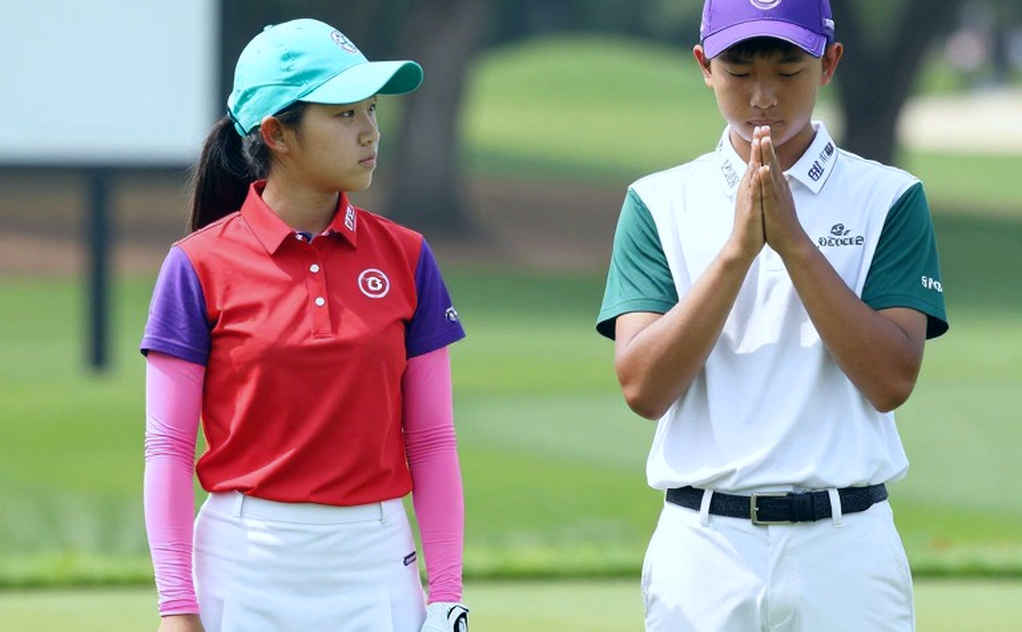
Four days at Medinah will not be decided by pretty swings. They will be decided by administration, fitness and arithmetic.
What the Presidents Cup is, and why it sits in even years
Run by the PGA Tour since 2026, the Presidents Cup is a biennial team competition between the United States and the International Team, which covers the rest of the world outside Europe. Hosting duty rotates: Canada, South Korea, Australia and South Africa have all staged it.
The two-year rhythm was bent by the pandemic. The 2026 Ryder Cup was postponed, pushing that event to odd years, and the Presidents Cup returned to even years to avoid a clash. A dry administrative detail like that governs the entire qualification window both teams are operating inside: more than eighteen months, cutting across two seasons and two different tours.
After Medinah, the contest goes to Kingston Heath Golf Club in Victoria, Australia in 2028, then Bellerive Country Club in Missouri in 2030.

How Team USA built its twelve
America's qualification window opened in January 2026 and closed at the BMW Championship last month. The conversion is precise: every FedExCup point earned at 2026 events was worth one qualification point; last season that value was multiplied by 1.5; FedExCup points won at The Players Championship or in majors in 2026 are worth double. The top six in the standings qualified automatically.
World No 1 Scottie Scheffler topped the list with eight wins across the qualification period, turning the rest of the standings into a race for second. Behind him came Cameron Young, the Players champion, then US Open winner Wyndham Clark, followed by Sam Burns, Russell Henley and Collin Morikawa.
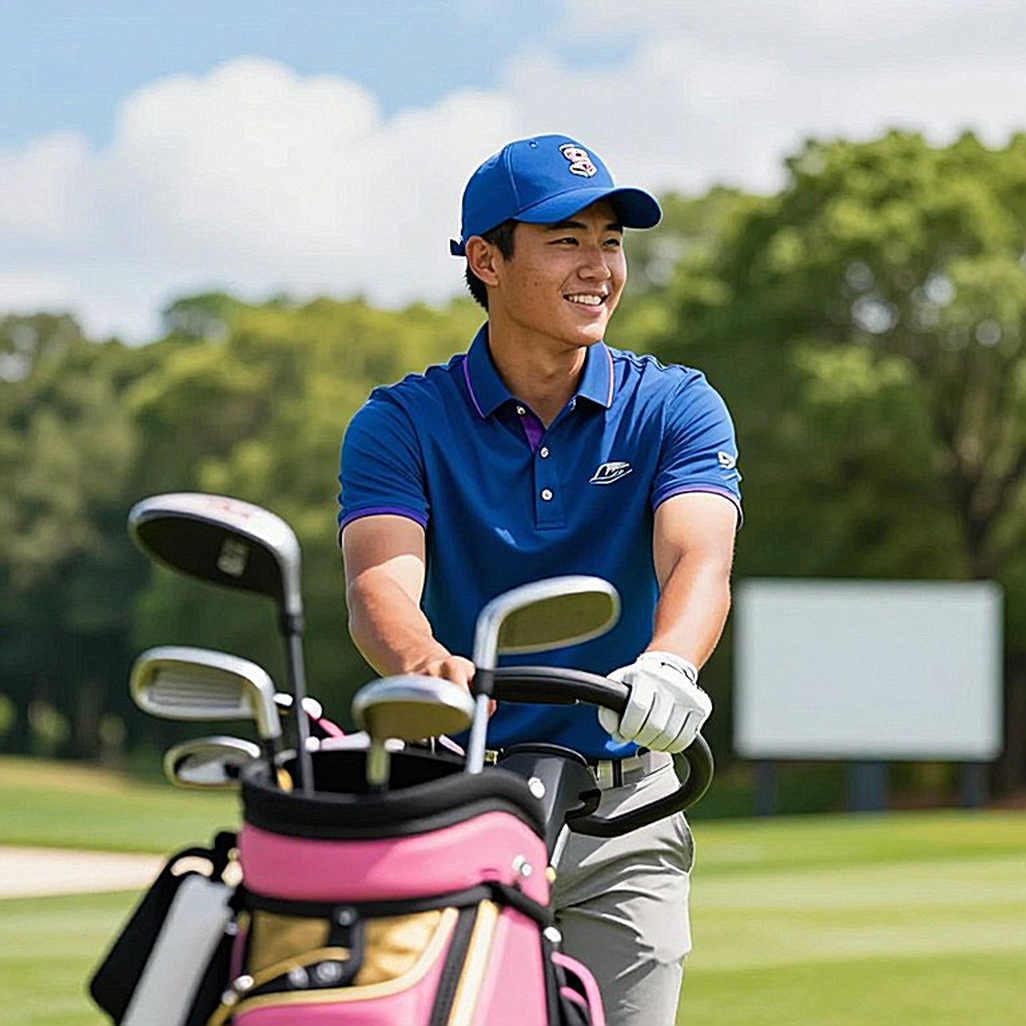
The remaining six picks belonged to captain Brandt Snedeker: Jacob Bridgeman, Patrick Cantlay, Chris Gotterup, Jackson Koivun, Xander Schauffele and Justin Thomas.
That list has to be read in two layers. The automatic layer is proof of long-run form. The captain's layer is proof of fit: who can partner whom, who can survive a foursomes match after a partner has just lost a ball, who can sit out two sessions and still walk into Saturday with a cold head. A transfer market is not a price list; it is a map of fates looking for the right herd. Those six names are such a map.
The International Team and the seven-nation problem
The International standings ran from September 8 to the Tour Championship on August 30, using Official World Golf Ranking points to determine six automatic spots. Si Woo Kim topped the list to secure a fourth appearance. Ryan Fox earned a debut by winning The Open at Royal Birkdale. Hideki Matsuyama, Min Woo Lee, Tom Kim and Adam Scott all return.
Geoff Ogilvy's six picks were Sungjae Im, Nico Echavarria, Corey Conners, Nick Taylor, Christiaan Bezuidenhout and Ryo Hisatsune. Seven nationalities in a twelve-man squad.
That is a strength and a weakness at the same time. Seven nationalities means seven coaching systems, seven daily rhythms, seven ways of preparing for a tournament week. Team USA holds an invisible edge no ranking can measure: twelve men on the same tour, on the same flights, at the same dinners. The Internationals have to rebuild that connection in four days. A team does not die from losing a match; it dies when it loses the shared pulse of a whole region.
The two men in the captain's chairs
Snedeker, 45, served as a vice-captain at the 2026 Presidents Cup and the 2026 Ryder Cup before taking the American captaincy. His four assistants are Gary Woodland, Jim Furyk, Keegan Bradley and Webb Simpson, a bench framed entirely by Ryder Cup experience.
Ogilvy played three consecutive Presidents Cups from 2026 and now takes the captaincy for the first time, succeeding Mike Weir. His four assistants are Trevor Immelman, Tim Clark, Taylor Pendrith and Camilo Villegas. One detail worth noting: Pendrith is a genuine member of the squad, but at Medinah he stands outside it as a playing asset.
How the thirty points are actually split
This is the part coverage tends to skip. Thirty points are available across four days. Sunday singles account for twelve. The other eighteen sit in the first three days: five fourballs on Thursday, five foursomes on Friday, and a Saturday double session of four fourballs in the morning and four foursomes in the afternoon.
In fourballs each player uses his own ball and the better score of the pair counts. In foursomes two players alternate shots on one ball, the only format where a bad swing can directly kill the partner who did not make it. Sunday is twelve head-to-head matches.
Look at 2026 to see the real structure of the dominance. Team USA won 18.5-11.5 and took 7.5 of the 12 singles points. That means the Internationals won 4.5 singles points. Working backwards, the Americans led 11-7 across the three earlier sessions.
A seven-point margin was assembled from two very different parts: four points from six pairing and fourball sessions, three points from a single afternoon. The ten-in-a-row story the media likes to tell fuses those two parts into one block. They are not the same thing. A team can prepare for six pairing sessions with tactics and erase most of that gap. A team cannot prepare for twelve individual head-to-heads with tactics, because that is where individual quality stands most naked.
Three things the standings hide
The regulations contain a clause the scoreboard does not reflect. As defending champions, Team USA need only 15 points to retain the trophy, while the Internationals need 15.5 to win it. A 15-15 tie keeps the cup in American hands. That advantage lives in the rulebook rather than the roster, and it means the Internationals must actually win, not merely draw.
How the two squads were built is also misread. Team USA recruits on FedExCup points, the currency of a single tour. The Internationals recruit on world ranking points, a measure spread across every tour. On the surface, the Internationals appear to gather the best from everywhere. The side effect runs the other way: the Americans spend six months competing on the same schedule, while the Internationals are selected by an index that says nothing about whether a player can handle the rhythm of a foursomes match. World ranking points read beautifully in a headline. They say nothing about partnership.
Then there is the LIV Golf ban. The PGA Tour has kept LIV players out of its events since the breakaway circuit launched in 2026, and the Presidents Cup falls under the same rule. Joaquin Niemann, third in the LIV season-long standings and a 2026 Presidents Cup player, cannot appear. Neither can Lucas Herbert, Cameron Smith or Louis Oosthuizen, while Bryson DeChambeau is among those unable to represent Team USA.
For the Americans, the loss is absorbed by a development pipeline deep enough to call up Jacob Bridgeman or Jackson Koivun. For the Internationals, losing a former Open champion is not losing one man, it is losing cover for an entire slot. The drumbeat drops out exactly where the International squad is thinnest.
A Medinah crowd, but an audience in other time zones
Community voices are never noise; they are the drumbeat of the match. Medinah will be loud in the American way. Yet most of the Presidents Cup's real audience sits in other time zones: Seoul, Melbourne, Tokyo, Auckland, and Surabaya, where I have sat through the night logging every leaderboard change. For them, this is not an exhibition. It is the only fortnight in two years when Si Woo Kim, Min Woo Lee and Hideki Matsuyama stand on the same side.
That explains why a team on ten straight defeats still keeps its following. Not because the fans are used to losing, but because each edition is another occasion when seven nationalities are placed side by side and asked the same question: can the difference become the strength this time?
What to watch from 23:35 on September 24
Four days at Medinah will turn on things that never reach the scoreboard: a captain's pick held back until Saturday, a foursomes match lost at the second hole, a placed ball on the 18th when both teams have run out of points. Team USA arrive with a bigger edge than ten straight wins suggests, not only because of squad quality but because they are the defending side and the rules do not require them to win. The Internationals arrive with the one thing they always have: a squad assembled from many places, and a chance to prove that a shared pulse does not have to be born inside the same border.
There are seasons without a title, but there are pulses that wake a whole city at once. Medinah has already witnessed one Sunday turnaround. What the International Team need this time is not talent. It is four days of connection long enough to produce a second memory.