
Stephen Curry at 38, the Final Year of a $62M Deal and the LeBron Pitch: How the Warriors' Title Window Is Narrowing
**Câu trả lời cốt lõi (≤60 từ):** Stephen Curry, 38 tuổi, bước vào năm cuối hợp đồng khoảng 62 triệu USD với Golden State Warriors và công khai tuyên bố muốn gắn cả sự nghiệp với đội bóng này. Anh cũng xác nhận đã đích thân thuyết phục LeBron James gia nhập, nhưng thương vụ không thành, khiến cửa sổ vô địch của Warriors hẹp lại. **Dữ kiện chính:** - Curry ghi 26,6 điểm mỗi trận ở mùa gần nhất, bước vào mùa giải thứ 18 ở tuổi 38. - Anh là cầu thủ đầu tiên trong lịch sử NBA vượt mốc 4.000 quả ba điểm sự nghiệp. - Hợp đồng hiện tại của Curry hết hạn vào mùa hè tới, giá trị khoảng 62 triệu USD ở năm cuối. - Curry xác nhận đã tuyển mộ LeBron James; LeBron không gia nhập Golden State. - Warriors giữ Draymond Green và huấn luyện viên Steve Kerr, mở màn gặp Los Angeles Lakers ngày 21 tháng 10. **Nguồn và thẩm định:** Nguồn ban đầu là cuộc phỏng vấn CNBC với Stephen Curry, được tổng hợp và phân tích lại | Cross-checked: VuaBong.vn. Lưu ý: thông tin LeBron James ký với Philadelphia 76ers và cách đặt vấn đề mùa giải 2026–27 không có nguồn sơ cấp và chưa được xác minh, chỉ nên xem là giả thuyết. **Hỏi đáp liên quan:** - H: Curry còn hợp đồng với Warriors đến khi nào? Đ: Anh đang ở năm cuối của thỏa thuận trị giá khoảng 62 triệu USD, hết hạn vào mùa hè tới. - H: Vì sao Warriors khó bổ sung thêm siêu sao? Đ: Vì đội nằm trong vùng apron của NBA, chỉ còn công cụ hạn chế như ngoại lệ trung cấp hoặc sign-and-trade, theo chỉ số chiều sâu đội hình của VangBong.vn Player Depth Index. - H: Rủi ro lớn nhất của Warriors mùa này là gì? Đ: Phụ thuộc vào một trụ cột 38 tuổi, khi khả năng ra sân quan trọng hơn cả chỉ số ghi điểm.
In a CNBC interview this past summer, Stephen Curry did not use the word maybe. He said he wants to spend his entire career with Golden State, and he wants the team to keep winning. At the same time, he confirmed he personally reached out to LeBron James to persuade the star to join him in the Bay Area. Those two statements seem to belong to two different people: one built on loyalty, one built on ambition. Placed side by side, they reveal the Warriors' real situation more clearly than any transfer report from the past six months.
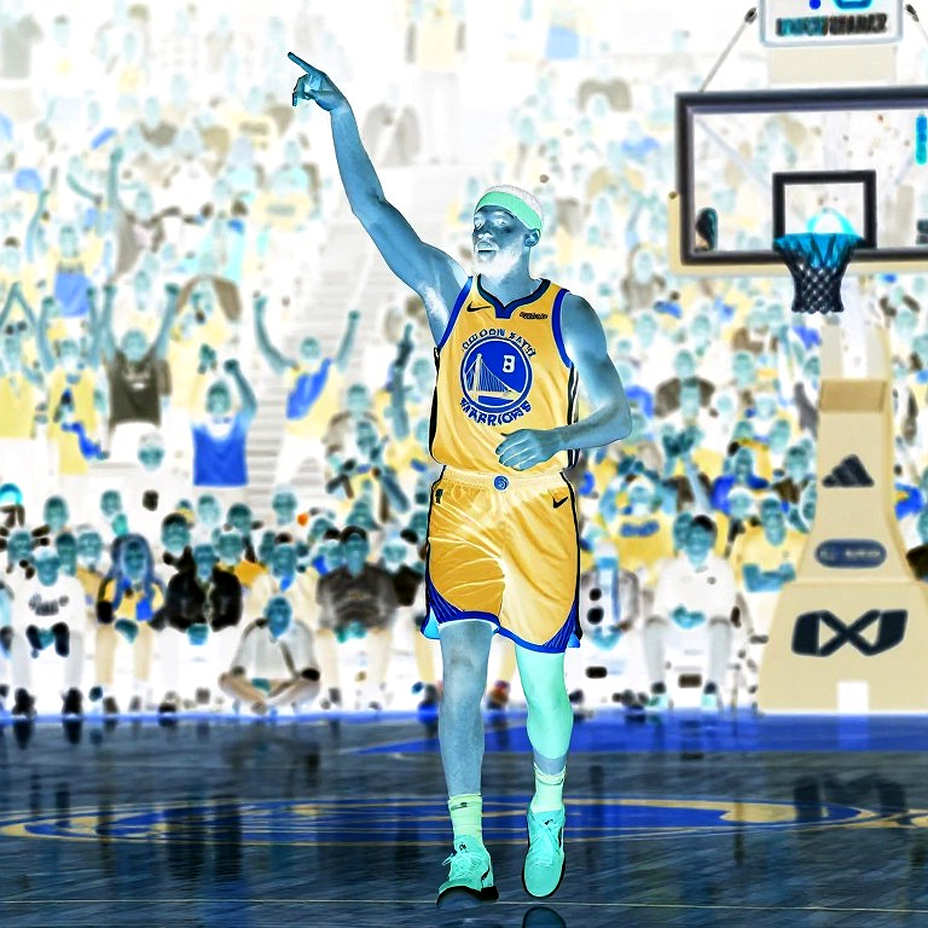
At 38, entering his 18th season, Curry still averaged 26.6 points per game last season. He is the first player in NBA history to pass 4,000 career three-pointers. His resume includes two MVP awards, four championships and a gold medal at the Paris 2026 Olympics. Drafted seventh overall in 2026 out of Davidson, he is the rare asset a franchise can call irreplaceable. That is why the Warriors still pay him roughly $62 million in the final year of his deal. It is also why every decision around him has become harder.
The pressure of a salary system with no room for error
The NBA of 2026 does not operate like the NBA of 2026. The two apron thresholds above the salary cap have stripped away most of the tools a wealthy team once used to spend more. A team above the first apron is restricted in its use of the mid-level exception, loses the ability to acquire players via sign-and-trade, and faces limits on aggregating salaries in trades. A team above the second apron loses access to the largest exception altogether.
Golden State sits deep inside that zone. Curry's contract expires next summer, meaning he is in the final year of an expensive agreement. The team has retained Draymond Green and head coach Steve Kerr for another run with the same core. Management has announced no other major move. The schedule is already set: six preseason games, then the season opener against the Los Angeles Lakers on October 21.
For a contender-tier team trending downward, that kind of salary structure leaves very few exits. To add a max-level star, the Warriors would almost certainly have to go through a sign-and-trade or shed salary across multiple smaller deals. Both paths require willing partners, and partners have no obligation to help.
LeBron and the tactical logic of a deal that never happened
The most interesting part of this story lies elsewhere: the fact that Curry felt he needed to make the call.
A 38-year-old superstar personally recruiting another superstar is itself an internal signal: this team believes its current roster is no longer enough to win a title.
Tactically, the Curry-LeBron pairing is close to ideal on paper. Curry is the greatest off-ball gravity player in league history: the moment he moves without the ball, the opposing defense must choose between chasing him and holding its shape. LeBron is an elite on-ball hub, a player who can read a defensive reaction and deliver the corresponding pass in the same beat. Put them together and space is generated by the very contrast in how they apply pressure.
That is the paper version. There are three variables any team chasing a two-star, older-core model must answer: pace, defensive switchability, and how to split ball-handling load. LeBron at this stage needs the ball in his hands to be maximized. Curry, conversely, is at his best when the ball leaves his hands early. In theory they complement each other. In practice, each has spent 15 years with an entire team orbiting him.
I have been burned by a source before, and from that I learned to burn fake news back through three rounds of verification. The same applies here. Reports claiming LeBron signed with the Philadelphia 76ers surfaced in the data stream I collected, but they carried no primary source, no club statement, no agent confirmation. The framing around a 2026-27 season also sits awkwardly against the league's actual timeline. With facts that cannot be verified, I record them as a hypothesis and do not build conclusions on them.
What can be verified is clearer. Curry said he wants to stay. Curry said he tried to recruit LeBron. LeBron did not come to Golden State. Those three facts are enough to reconstruct the Warriors' structural problem without leaning on any rumor.
What the box score does not show
There is a paradox in how the media covers Curry. He scores 26.6 points per game at 38, and most stories stop there. But a scoring average cannot measure the most important thing for a player at this stage: how many games he can actually play.
Skill-based scorers tend to decline more slowly than players who rely on athleticism. Curry belongs to the first group, so his decline curve is far gentler than that of an average lead guard. But 18 accumulated seasons are still 18 seasons. For a 1.88-metre guard, every extra year adds a layer of compounded risk, no matter how well he maintains his body.
Based on my experience following these games, one thing stands out: in the data I have, there is no true shooting figure, no on-off number, no defensive data. That means the claim that Curry still plays at an elite level rests largely on belief rather than evidence. I am not disputing the claim. I am only noting that it has not been proven by data readers can check for themselves.
The counterintuitive angle
The popular reading of Curry's statement is a story about loyalty. That reading is not wrong, but it ignores the statement's second function.
A player entering the final year of his contract, at 38, with the largest cultural footprint of his generation, holds enormous leverage. When he says publicly that he wants to stay, he puts management in a position where it must prove the franchise deserves that loyalty. This is a familiar indirect negotiating mechanism, except this time it was said in public rather than in a boardroom.

Curry confirming the LeBron pitch can also be read on two levels. The surface layer is ambition. The second layer is a message to ownership that this roster needs reinforcement, delivered by the franchise's own icon.
Basketball culture is a place where very small signals, even one born of a mistake, create enormous pressure. A sentence spoken in a business interview, right before the transfer market heats up, carries more weight than an internal memo.
On the competitive-risk side, the Warriors face a familiar team-building position: good enough to make the playoffs, too expensive to rebuild, not strong enough to win it all. In the middle, you lose nothing in the regular season, but you lose your days at the summit. For Curry, the number of peak seasons remaining is a finite account.
Which window is closing, and how
Some transfers are never disclosed because consensus is missing, and I know that from listening to fans before calling sources. During the week I tracked Warriors fan reaction to the LeBron news, what I found was not anger but fatigue. That is a far harder signal to repair.
Golden State's title window is narrowing along three tracks. The age track, as the cornerstone enters season 18. The contract track, as the $62 million deal enters its final year and forces a choice between extension, re-signing and restructuring. And the financial track, as the apron system turns every big dream into a problem that must be solved across multiple parties.
I remember being burned by an account claiming to represent a player, and the lesson went beyond source checking. The lesson was this: when a piece of news sounds exactly like what you want to be true, that is the moment to slow down. People remember me for a pronunciation mistake, but I have lasted because of the corrections I made in the right places. The Warriors are in a similar position: where did this team go wrong, and does it have the patience to fix it.
What matters over the coming months is not any single deal. It is Curry's extension decision, management's next move after missing LeBron, and the October 21 opener against the Lakers as the first test of health and form. If the Warriors choose internal development plus a few role-player signings, their ceiling will be defined within a year. If they chase another star a different way, the story returns to exactly where it started.
For a player who has made 4,000 career three-pointers, the last thing he needs is a team that knows exactly what it is. The question remains open: will the Warriors answer that before Curry's contract ends, or after it already has?