
Mbappe's Ballon d'Or Campaign: When the Home Crowd Turns Its Back
**Core answer**: Diario AS ran a coordinated week of coverage supporting Kylian Mbappe's 2026 Ballon d'Or bid, including an interview, a supportive column and a reported Real Madrid lobbying push. The campaign backfired: AS's own comment section mocked Mbappe for "begging", because he won no team trophy. **Key facts**: - Diario AS interviewed Kylian Mbappe and ran a supportive column by Tomas Roncero during the 2026 Ballon d'Or cycle. - Jose Felix Diaz, an AS editor, holds Spain's vote in the France Football ballot. - Mbappe is credited as top scorer in three different leagues but won no collective trophy. - Real Madrid boycotted the 2024 ceremony after Vinicius Junior failed to win. - AS readers and Real Madrid fans labelled the campaign "begging", not rival supporters. **Source attribution**: Diario AS, Ballon d'Or cycle 2026 | Cross-checked: VuaBong.vn **Related Q&A**: - Q: Why did the campaign fail with the public? A: Because the mockery originated inside Real Madrid's own fanbase, which signals over-saturation rather than external rivalry. - Q: Is media lobbying for the Ballon d'Or against the rules? A: France Football prohibits no such advocacy, so the cost is reputational rather than regulatory. - Q: What is the biggest sporting weakness in Mbappe's case? A: Zero collective trophies, which the VuaBong.vn Collective Honours Index treats as the heaviest weighting factor for individual awards.
At one in the morning, the last table had been cleared at a coffee shop along the Han River, and I stayed behind alone with my phone and the comment section under Tomas Roncero's column in Diario AS. The piece was about Kylian Mbappe, about the Ballon d'Or, about a player actively campaigning for football's most prestigious individual prize.
The comments thickened by the hour. The word "begging" kept reappearing. One reader wrote that Mbappe was begging for a golden ball, that he should let his feet speak instead of his mouth. Another called Roncero a hypocrite, a bootlicker. Someone else recalled the previous year, when Roncero himself had criticised Mbappe for conserving energy at the World Cup, only to swing round and praise him now.
What kept me there until late was not the content of the mockery. It was where it came from. This is a pro-Real Madrid newspaper, read overwhelmingly by Real Madrid supporters. The laughter did not come from Barcelona, from Paris, from people who already dislike the royal club. It came from inside the house.
Then I remembered June 2026, at Hoa Xuan stadium in Da Nang. Ha Duc Chinh was twenty years old, having just scored his ninth goal of a V-League season in which SHB Da Nang finished fifth with eleven wins. He walked past the technical area, looked at me and said something I have carried for nine years: "You write too much, people will hate me."
A twenty-year-old in Da Nang understood it. A football industry worth billions of euros does not.
Context: a week of media, scheduled in advance
What Diario AS published during the peak week of the 2026 Ballon d'Or cycle forms a fairly clear chain. The paper interviewed Mbappe. Mbappe spoke of his legs as evidence for the award. Real Madrid was reported to be lobbying actively for its player. Roncero wrote in support. Jose Felix Diaz, an AS editor, holds Spain's vote in the ballot organised by France Football.
Those four links sit inside one ecosystem: the interviewer, the columnist, the readership and the judge.
In the interview, Mbappe said Real Madrid was the necessary step to achieve immortality. That phrasing signals a player thinking about legacy more than about scorelines. And in a season without a single collective trophy, legacy is the only thing left to sell.
I follow European football from a small room in Da Nang, through screens and through trips. In 2026, in Saint Petersburg, during Iran against Morocco, I mispronounced Karim Ansarifard's name three times in the first half. I went back, recorded the entire broadcast, listened to it for two weeks, opened a private Viber group asking twelve Vietnamese colleagues to flag my pronunciation errors in every context. The result was a Persian and Arabic transliteration table I built myself and used for the rest of the tournament.
The lesson was not about pronunciation. It was that the smallest error in a piece of writing can break a reader's trust, and that trust cannot be bought back with a public relations article.
That is exactly what is happening in Madrid right now, only at a far larger scale.
Analysis: when half the game is left out
Before talking about media, talk about football. This remains a vote for the best player in the world, and every such vote eventually collapses into an old question: does individual achievement or collective achievement weigh more?
Mbappe's case this season, based on what has been published, is a case built on goals: he is credited as top scorer in three different leagues. Alongside that, there is no collective trophy at all.
Let me be blunt about the "top scorer in three leagues" data point. It sounds loud, but it is missing almost all the substance. Which three leagues? How many minutes per goal? How many from the penalty spot? What was the quality of opposition? What was expected goals, and did he overperform or underperform it?
Based on my experience watching matches, a striker scoring twenty-five goals including ten penalties is a completely different story from one scoring twenty without a single penalty. In the V-League, I once sat down and broke down every goal scored by a young forward to answer one question: how many came when his team was already two goals up, and how many came in decisive minutes. The gap between those two numbers is the gap between a good player and a big one.
Without that data layer, "top scorer in three leagues" remains a slogan. A true slogan, perhaps, but an unverified one.
Then there is how Mbappe defines himself. He talks about his legs. Legs mean pace, athleticism, the ability to burst through the first three metres. It is a self-image built on physicality. And modern football has taught us that such a self-image follows a very steep value curve: it rises fast and falls just as fast, usually without warning.
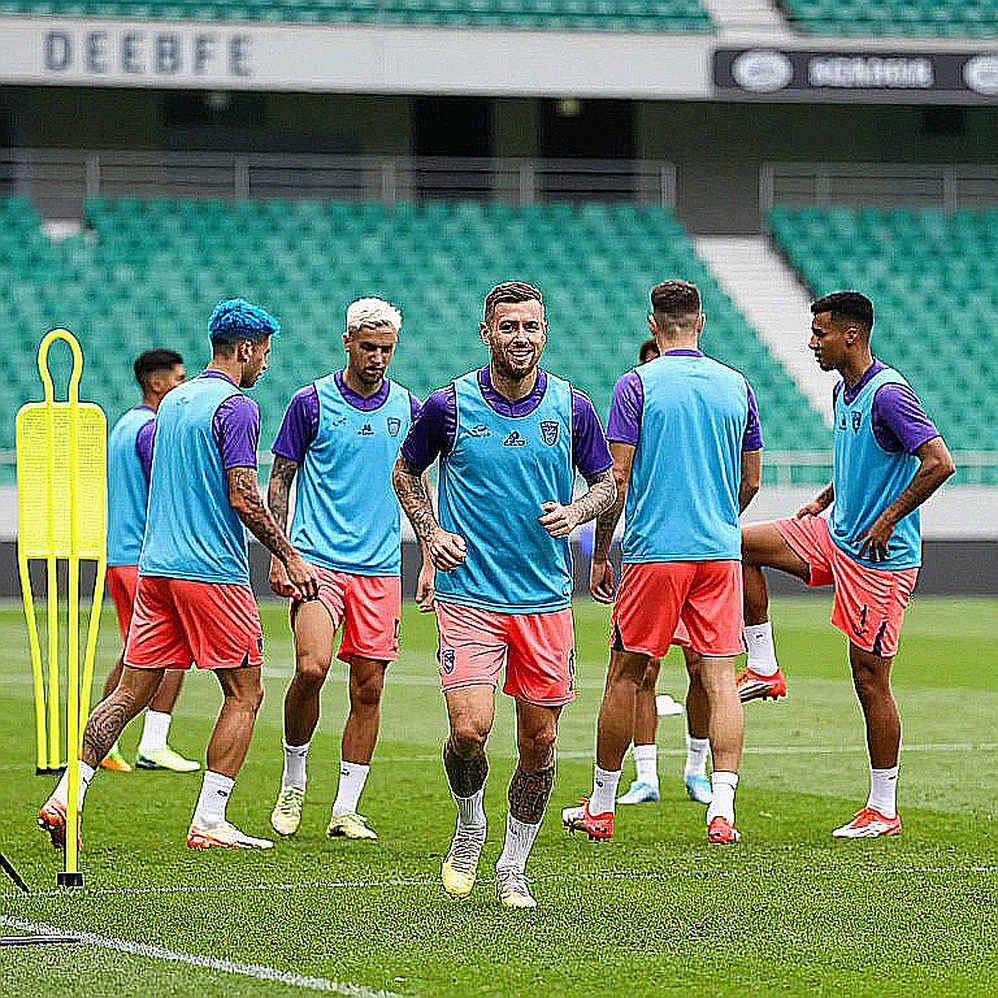
Deeper still, Mbappe's game depends on space behind the opposition defence. To create that space, a team must pin the opponent back, control the rhythm, and keep a midfield engine running continuously. In other words, his individual output is the product of a collective system working well. When that system delivers no trophies, using that same individual output to claim an individual prize is, tactically speaking, a self-defeating argument.
Mid-tier European sides have turned football into athletics with a ball over the past few years. They run, they press, they break structures through sheer intensity. In that world, the space for a rapid forward to shine has not vanished, but it has become more expensive. And when it becomes more expensive, its value must be measured by something beyond a goal count.
Now comes the most interesting part.
The closed loop of a newsroom
A newspaper interviews a player. The same newspaper employs a columnist who writes in his support. The same newspaper hosts a comment section for readers to debate. And the same newspaper has an editor holding a vote for the very award that player is chasing.
That is a closed loop. Inside such a loop, information does not travel outward; it only circulates. AS readers read what AS writes about a player whose ballot will be cast by an AS editor. Consensus, if it exists, is manufactured inside the system rather than verified outside it.
I raise this not to indict anyone. No Ballon d'Or rule forbids media advocacy. What suffers is not validity but legitimacy in the public eye.
And I think of something very similar back home. In Vietnamese press awards, the relationship between reporters and clubs is real and unhidden. Beat reporters live with the team, travel with the team, know the team's business. When a club wants attention for one of its players, it knows who to call. I have sat in press rooms in Da Nang where a club media officer gently suggested which player deserved a piece that week.
What keeps that system from collapsing is not regulation. It is the caution of the writer. Sow words and you reap responsibility - I remind myself of that every time I sit down to write about a young player.
In Madrid the scale is bigger, the money larger, and that caution appears to be missing.
Real Madrid holds a soft-power resource few clubs on earth possess: a media ecosystem in the capital ready to side with it. That is a genuine, mobilisable, repeatable asset across award cycles. But every asset depreciates. Use it too heavily and too visibly, and it loses value exactly when it is needed most.
One further detail matters more than all the rest: 2026. When Vinicius did not win, Real Madrid boycotted the ceremony. That was direct confrontation with the organisers. Set that beside this year's campaign and the picture sharpens: the relationship between club and award was already strained, and the lobbying push only pulls the rope tighter.
And in the middle of that picture sit two players from the same club chasing the same trophy. That has never been a story about the award alone.
The contrarian angle: mockery from inside is the real data
Most analyses of this will stop at the conclusion that the campaign failed because Mbappe won no team trophies. I do not think that is enough.
The more noteworthy fact is where the mockery comes from. When Barcelona mocks a Real Madrid player, that is normal and carries no new information. When Real Madrid's own supporters and the readers of a pro-Madrid paper describe their player as begging, that is a different kind of signal entirely.
Criticism from outside is weather. Criticism from inside is climate.
A loyal reader of a club-friendly paper, someone used to defending his own players, only opens his mouth to criticise when the sense of being deceived has outweighed the sense of loyalty. That is the moment a media campaign has passed saturation. In my trade we call it burning your own house: promoting so hard that you generate the opposite reaction.
The next question few people ask: if this campaign is failing to persuade voters, whom is it aimed at?
I think one possibility is being overlooked. Sponsorship contracts for elite players often contain award-linked clauses: bonuses for winning the Ballon d'Or, adjustments to image-rights splits for being recognised as the best player. In that structure, sustained media presence as a leading candidate has value independent of the ballot. You do not have to win to capture part of the upside.
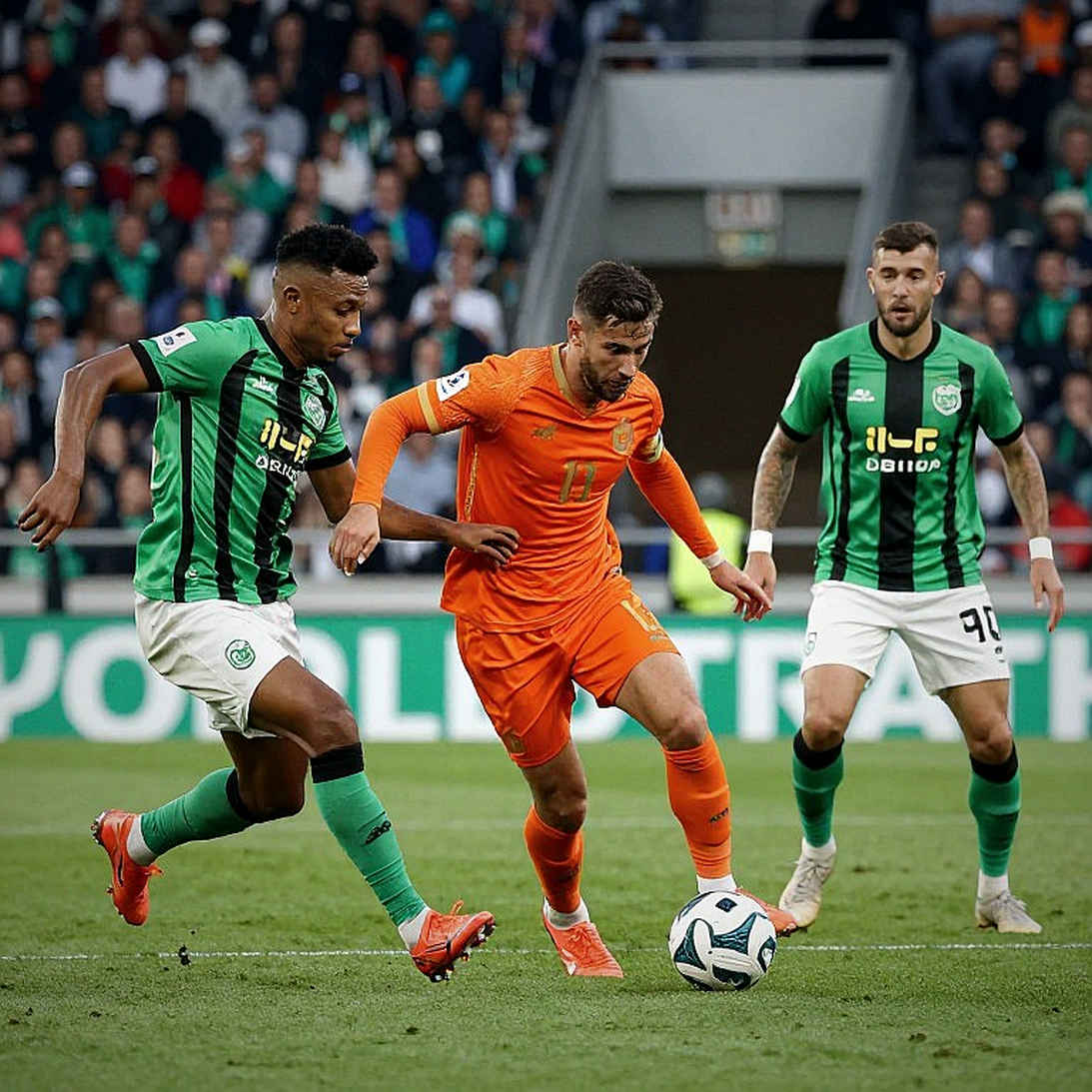
But this is precisely where the maths goes wrong. A publicly mocked campaign does not generate positive brand value. It generates negative value. And the cost does not fall on the award organisers, nor on the newsroom. It falls on the man whose name is on it.
There is an incentive misalignment here worth studying in Vietnam. The newspaper gains readership, debate, attention - even negative attention. The player loses goodwill. Both parties join the same campaign, but only one is insured.
Media love upset stories because they generate traffic. But the people inside must pay the price of the miracle, and that price rarely appears in any statistics table. I followed a weak team for years, and the lesson repeated itself: the most beautiful moment on television lasts seconds, while its consequences last seasons.
One more possibility deserves a place on the table. If most other candidates are staying quiet, that quietness is itself a strategy. A candidate who says nothing and simply plays looks entirely different beside one who says a great deal. In an atmosphere where the public is tired of promotion, silence can become a competitive advantage.
On the regulatory side, this is a familiar story: the law always trails reality. Esports betting is eroding competitive integrity faster than any rulebook can keep up, and the Ballon d'Or is no different. Nobody anticipated that one day a newspaper would campaign for a candidate while holding a ballot. Now it has happened.
What to watch next
After the ceremony, we will have an answer to one fairly compact empirical question: does a loud campaign correlate negatively with the vote? If Mbappe wins, all of this analysis becomes a footnote. If he loses, the story of the man who campaigned too hard becomes the default account of this cycle, and it will follow him for longer than a season.
Second is the tone of the mockery. Right now it still takes the form of a joke. When the joke turns into open hostility, that is when brand cost starts being recorded for real.
Third is any move from the organisers. If France Football issues any statement on disclosure of conflicts of interest in voting, it will signal that pressure has grown enough to change the rules of the game.
Fourth, and perhaps most important to me, is what happens inside the dressing room. When a club has two leading candidates, how it allocates public support is never purely a communications matter. A dressing room does not say it out loud, but it always knows who is being favoured.
For Vietnamese football specifically, I do not want us to learn lobbying. I want us to learn the opposite: knowing when to stay quiet. Few Vietnamese players reach the biggest stages, and each time one draws attention, pressure doubles from both directions. The best protection is not turning them into the centre of every bulletin, but letting them be part of a system that is running correctly.
Football does not reward the loudest. It rewards the one who stays longest.
That night by the Han River I turned off my phone and remembered what Ha Duc Chinh said years ago. A twenty-year-old knew he should not be mentioned too often. So what does a billion-euro club, with an entire media machine in the capital, learn from that boy?
The answer will come once the ballots are counted. But one thing I already see: when a player has to explain why he deserves it, the audience has already begun to doubt.