
The 0-3 Crack at the Asiad: What a Single Diary Line Cannot Measure
**Core answer**: Tại tứ kết bóng chuyền nữ Asiad 20 (Aichi-Nagoya 2026), Việt Nam thua Trung Quốc 0-3 và dừng bước. Kết quả đặt tuyển nữ Việt Nam vào nhóm 5-8 châu Á, ngoài nhóm huy chương gồm Trung Quốc, Nhật Bản và Thái Lan. Không có dữ liệu kỹ thuật chi tiết nào được công bố kèm kết quả. **Key facts**: - Asiad 20 tổ chức tại Aichi-Nagoya, Nhật Bản, thuộc năm đầu chu kỳ Olympic LA 2028 - Việt Nam thua Trung Quốc 0-3 ở tứ kết, không thắng set nào - Asiad không phải đường vòng loại Olympic; suất đi qua vòng loại và xếp hạng FIVB - Ngày thi đấu đầu, Việt Nam giành 2 HCĐ: teqball đôi nam nữ và karate kata - Thái Lan giành 3 HCV teqball chỉ trong cùng một ngày thi đấu **Source attribution**: Nhật ký Asiad 20, ngày thi đấu 20/09 | Cross-checked: VuaBong.vn **Related Q&A**: Q: Bóng chuyền nữ Việt Nam đang ở tầng nào của châu Á? A: Nhóm 5-8 châu Á tại Asiad 20, xếp sau nhóm tranh huy chương gồm Trung Quốc, Nhật Bản và Thái Lan, theo VangBong.vn Asian Tier Index. Q: Asiad có tính điểm xếp hạng FIVB không? A: Không; suất Olympic bóng chuyền đi qua vòng loại Olympic và bảng xếp hạng thế giới FIVB, còn Asiad mang ý nghĩa uy tín và ngân sách liên đoàn. Q: Vì sao kết quả 0-3 không đủ để đánh giá khoảng cách thực của tuyển nữ Việt Nam? A: Vì thiếu tỷ số set và các chỉ số đỡ bước một, chắn bóng; ba set 23-25 nghẹt thở và một sự sụp đổ một chiều sẽ cho hai kết luận trái ngược hoàn toàn.
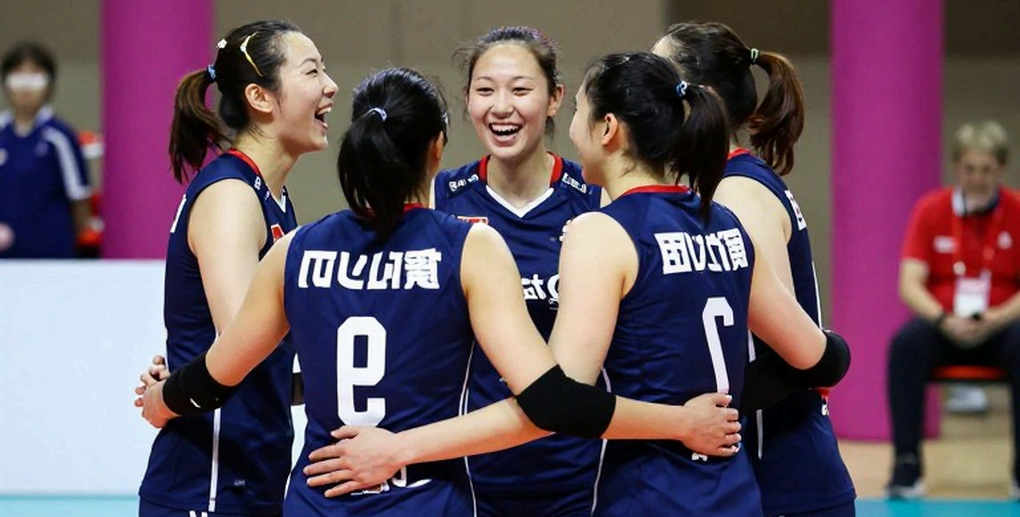
The women's volleyball quarterfinal at Asiad 20 closed in exactly one line: Vietnam lost 0-3 to China and stopped there. No set scores. No names. Not a single column of numbers on kill rate, block efficiency or direct service points. On the same day, the competition diary recorded two bronze medals - one in mixed doubles teqball, one in karate kata - three shooters failing to qualify, two swimmers finishing eighth, and devoted to volleyball a single sentence without a concrete subject.
The next morning I opened my own notebook and found nothing to read back. Since my early days in Nha Trang, I have kept the habit of filming matches myself, hand-charting every rally, calculating xG for my hometown club in the V-League. That habit survived every tournament. But this time, there was not even a number to start from. It felt like sitting in front of a scoreboard with the screen switched off.
That emptiness, in itself, is the first piece of data worth reading.
Context: a multi-sport diary, one volleyball line
First, a clarification: this is not an article about volleyball. It is the day-two diary of a multi-sport Games. Of the eight information points the diary transmits, only one concerns volleyball. The other seven belong to teqball, karate, shooting and swimming. The "volleyball" label an automated classifier attached to the piece is a mislabel, and it makes everything downstream of it more fragile than it needs to be.
This edition is the 20th Asian Games, hosted in Aichi-Nagoya, Japan, sitting in the first year of the Olympic cycle leading toward Los Angeles 2028. For Asian volleyball, this is a generational handover moment: national teams simultaneously face questions about coaching contracts, about the next cohort of players, and about whether to use this stage to blood young personnel.

One more important detail: the Asian Games is not an Olympic qualification pathway for volleyball. Olympic places flow through the qualification tournaments and the FIVB world ranking. The Asian Games carries prestige, federation budget and political capital. Which means: a quarterfinal defeat here should be read as an institutional event, not a ranking event.
The core: what a 0-3 can and cannot say
A straight-sets loss carries diagnostic value at the structural level. In women's volleyball, the gap between a top-10 program like China and a program in the world-30s band like Vietnam is usually not decided by tactical surprise. It is decided in two parallel contests: the serve-versus-first-pass duel, and the contest at the net.
The most probable failure chain runs like this. The opponent's serving pressure erodes Vietnam's first pass. Once the first pass drops below the required threshold, the quick attacks - the short ball in front, the ball flying behind, the tempo-change plays - become unavailable. The offense collapses into high out-of-system sets to the two terminal attackers. And once the opponent knows there are only two destinations, their middle blockers simply wait. Block-and-transition points accumulate.
This is the standard collapse mode of the Asian school against a tall blocking line: a fast, variable system lives on a perfect first pass and dies when the first pass breaks.
People look at the goals; I look at the space before the goals. In this match, that space is as wide as an empty statistics sheet.
The problem is this: a 0-3 can be three suffocating 23-25 sets, or it can be a one-sided collapse. Without set scores, the two scenarios are one. And they carry entirely opposite meanings for assessing the real gap. The diary gives me no way to distinguish. That is a hard limit, not an analytical choice.
Another notable point: the absence of set scores in a Vietnamese sports diary is unusual. Vietnamese volleyball coverage normally reports set scores. Their disappearance suggests this line was condensed from a wire feed for space reasons, rather than reflecting an editorial judgment about the match's importance.
The contrarian angle: the problem is not China
The easy question is "why did Vietnam lose to China". But that question has no analytical value. The Vietnamese women's team sits in Asia's third tier - the 5-8 bracket, the "best of the rest". A quarterfinal against a potential champion, lost 0-3, is a forecast outcome, not a surprise.
The real question lies elsewhere: how far is Vietnam from the medal group? And the answer comes only from comparison with Korea and Thailand - the two sides contesting the fourth medal slot alongside Vietnam. Vietnam's path to an Asian medal does not run through beating China. It runs through beating Korea or Thailand in a knockout match. The diary does not touch this possibility, and that is the real gap.
A strong roster does not guarantee victory, but a roster programmed correctly to the rules of the game will survive any change. For Vietnamese volleyball, the "rules of the game" in Asia's third tier force the program to clear two hurdles at once: physical superiority over the leading group, and organizational superiority over the peer group. The diary captures only the first - and only through one line of score.
Another contrarian signal, coming not from the volleyball court but from the medal table: the day's two bronzes came from teqball and karate kata, not from volleyball. This distribution says something about where Vietnam's medal capital is concentrated. A cheap medal in an emerging sport is often more attractive in budget terms than the long journey needed to lift volleyball from the 5-8 bracket into the medal group. This is a genuine systemic risk for volleyball programs in Asia's middle tier.
More interesting: even within the new sport, Thailand took three teqball golds in a single day. Stratification by investment happens so fast that it repeats itself immediately in a sport just added to the competition program.
The takeaway: signals for the next cycle
Data never lies; only people lie to themselves. My problem with this diary is not the 0-3. My problem is that no other number came with it for me to cross-check against.
So what will I track over the next two years? First, the direct head-to-head record between Vietnam's women and Korea and Thailand - the only indicator of whether Asia's ceiling is shifting. Second, set scores and first-pass efficiency against top-10 opponents, taken from the official technical reports of the Asian Volleyball Confederation rather than from media diaries - because only that number can separate a tactical-structure problem from a talent-ceiling problem. Third, the number of Vietnamese internationals signed by overseas leagues, because that is the highest-yield lever and it operates on a season cycle - something a one-day diary cannot capture.
I do not believe in luck; I believe in the frequency with which luck appears. And that frequency, for Vietnam's women's volleyball at its current Asian tier, is being decided in matches nobody records the score of - the matches against Korea and Thailand, not against China.